%22%2F%3E%3C%2Fpattern%3E%3C%2Fdefs%3E%3Crect%20width%3D%22100%25%22%20height%3D%22100%25%22%20fill%3D%22url(%23ph45t1xg)%22%2F%3E%3Crect%20width%3D%22100%25%22%20height%3D%22100%25%22%20fill%3D%22url(%23ph45t1xp)%22%2F%3E%3Ctext%20x%3D%2250%25%22%20y%3D%2250%25%22%20text-anchor%3D%22middle%22%20dominant-baseline%3D%22central%22%20fill%3D%22rgba(255%2C255%2C255%2C0.95)%22%20font-family%3D%22Georgia%2C%20'Times%20New%20Roman'%2C%20serif%22%20font-weight%3D%22700%22%20font-size%3D%22320%22%20letter-spacing%3D%22-0.02em%22%3EDAP%3C%2Ftext%3E%3C%2Fsvg%3E)
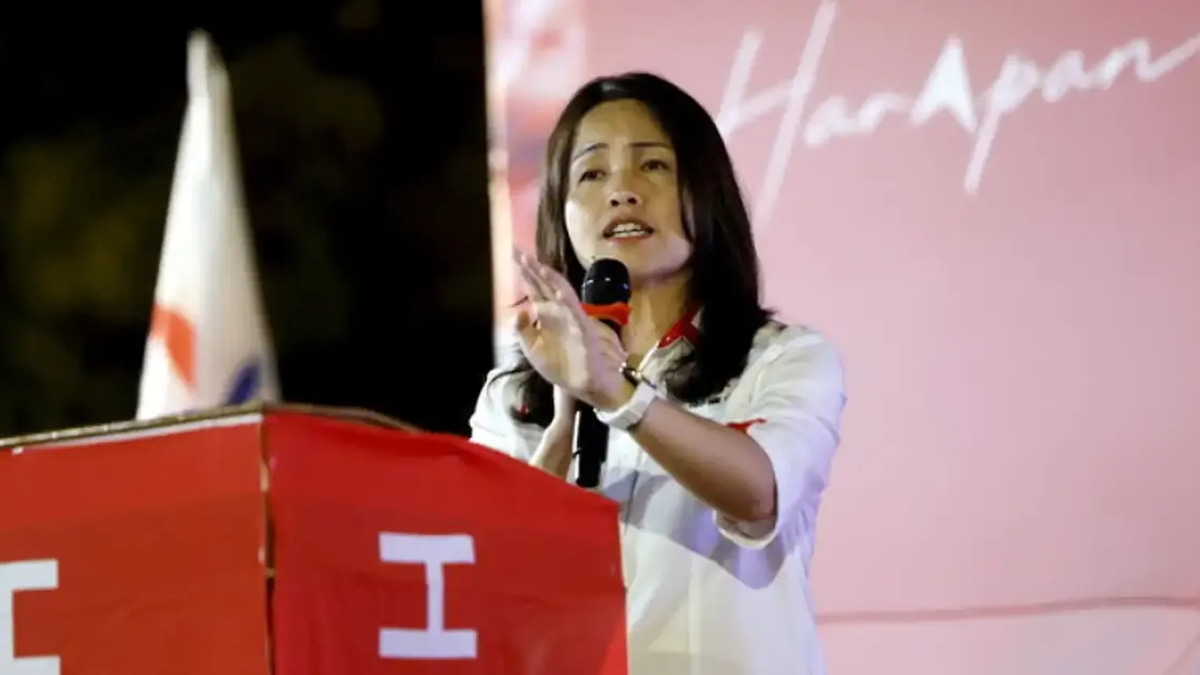
As Johor gears up for a closely watched state election on July 11, Johor DAP chairman Teo Nie Ching has sounded the alarm over a coordinated disinformation campaign targeting the opposition coalition's campaign materials. The party has documented instances where its promotional posters for potential candidates have been deliberately altered to misrepresent them as Muslim women wearing headscarves, a manipulation technique designed to inflame communal sensibilities and discourage certain voter blocs from supporting Pakatan Harapan.
The tactic represents a sophisticated approach to undermining opposition momentum in what is shaping up to be a competitive three-cornered contest in Malaysia's second-largest state by population. By doctoring images to suggest a religious or cultural shift in the opposition's candidate profile, the perpetrators aim to exploit latent anxieties within non-Malay communities about representation and identity. Teo, who also serves as Deputy Communications Minister, characterised the campaign as both despicable and a fundamental disrespect towards women, arguing that trivialising religious attire through manipulation crosses an ethical line that all democracies should reject.
The timing of these allegations carries particular weight given the compressed campaign calendar. The Election Commission designated June 27 as nomination day, leaving candidates and parties mere days to register their representatives before the official campaign period intensifies. This compressed timeframe potentially amplifies the impact of misinformation, as there is limited opportunity for fact-checking infrastructure to debunk false claims before they take root in the electoral narrative. For voters trying to make informed decisions, the proliferation of doctored materials complicates an already complex political landscape.
Teo's response reflects DAP's broader positioning as a multiethnic, values-driven party committed to transcending narrow communal politics. By explicitly acknowledging Muslim religious sensitivities and defending the dignity of Islamic practice, the party attempted to flip the script on the smear campaign, arguing that the manipulators—not DAP—were disrespecting both religion and women. This rhetorical move aims to reframe the controversy as one about democratic integrity and mutual respect rather than allowing it to devolve into intercommunal finger-pointing.
The context of Malaysian electoral competition helps explain why such tactics persist despite their transparency. Johor has long been a BN stronghold, with the coalition maintaining control of 40 of the 56 state seats before the assembly was dissolved on June 1. Pakatan Harapan's 12 seats represent a growing but still minority position, while Perikatan Nasional's three seats and MUDA's single seat suggest a fragmented opposition landscape. For BN and its allies, maintaining dominance requires both consolidating existing support and peeling away potential opposition voters. Divisive smear campaigns serve that purpose by creating the impression that the opposition harbours hidden agendas or poses risks to community harmony.
The allegation also highlights how digital tools have democratised propaganda in ways that complicate traditional fact-checking. Poster manipulation requires minimal technical skill in the age of accessible photo-editing software, enabling any motivated actor to generate plausible-looking false materials without sophisticated coordination or resources. This decentralisation of propaganda creation means that identifying responsible parties becomes difficult, and distinguishing between officially sanctioned campaigns and opportunistic freelance attacks becomes nearly impossible.
From a Southeast Asian perspective, Malaysia's experience with electoral misinformation offers cautionary lessons. The region has witnessed numerous elections where communal tensions were weaponised through false imagery and doctored media. Indonesia, Thailand, and the Philippines have all grappled with similar challenges as candidates and parties exploit religious, ethnic, and gender anxieties to mobilise voters. What distinguishes Malaysia's approach, at least in this instance, is the visibility of the counter-narrative—Teo's public denunciation of the tactic itself became newsworthy, allowing voters to assess both the allegation and the response.
The broader question facing Johor voters is whether democratic discourse can be insulated from such manipulation, or whether these tactics have become an inevitable feature of competitive electoral politics. Teo's call for harmony, unity, and peace resonated with abstract democratic ideals, yet the specific mechanics of voter persuasion often operate at a more primal level, tapping into fears and identities rather than reasoned deliberation. The success of such smear campaigns depends not on their plausibility but on whether they reinforce voters' existing biases or anxieties about the opposition.
For Malaysian democratic institutions, the incident underscores the importance of strengthening media literacy and fact-checking infrastructure during election periods. When doctored images circulate without authoritative correction, they can shape political perceptions regardless of their factual accuracy. The Election Commission, broadcast regulators, and social media platforms all play roles in either amplifying or dampening the spread of such materials, yet their effectiveness remains contested and inconsistent.
As Johor voters head towards polling day on July 11, the state election will reveal whether smear tactics alter electoral outcomes or whether voters have developed sufficient immunisation against such divisive manoeuvres. The composition of the next Johor state assembly will likely depend on far broader factors—economic performance, governance record, and national political currents—rather than the success or failure of any single campaign tactic. Yet the persistence of such allegations suggests that political actors, whatever their public proclamations about democratic values, continue to view them as worthwhile investments in the struggle for power.