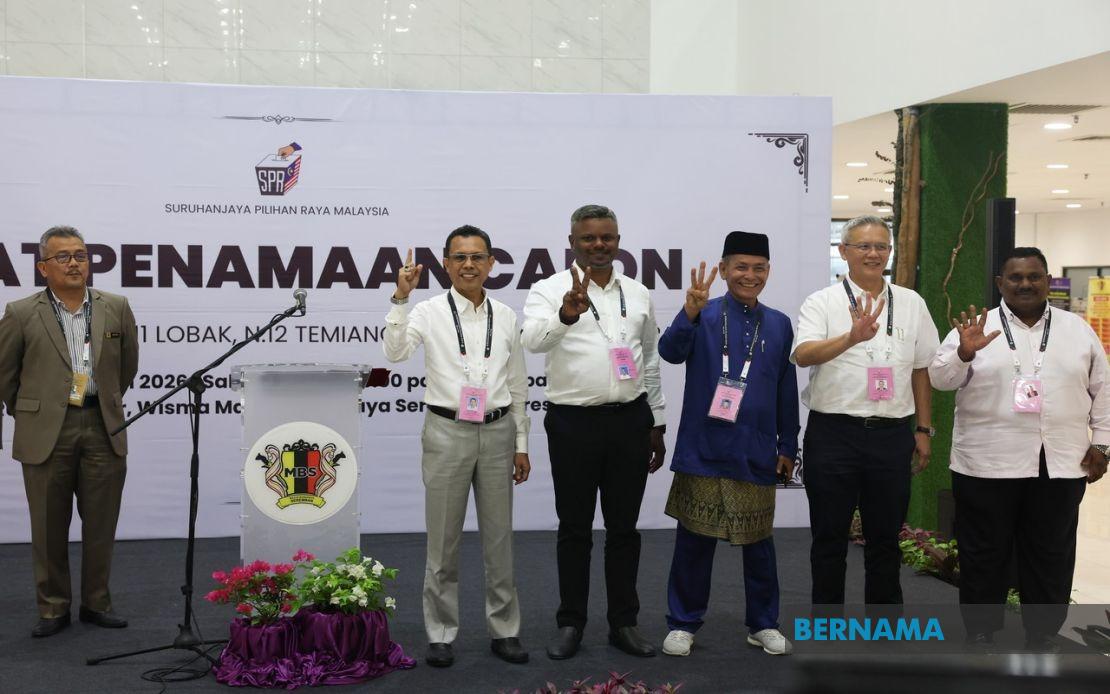
The Nilai state assembly seat has emerged as one of the most hotly contested constituencies in the forthcoming 16th Negeri Sembilan state election, presenting a formidable challenge for incumbent DAP legislator and party National vice chairman J. Arul Kumar. The crowded nomination field reflects intensifying political competition across Negeri Sembilan, where multiple coalitions are vying for dominance in the state assembly's 36 seats.
Arul Kumar's bid for re-election will require him to navigate a particularly fragmented contest against four other candidates announced at the nomination centre in Wisma Bandaraya Seremban. His challengers include Zamani Ibrahim representing Berjasa, Barisan Nasional's Datuk Lai Chien Kong, Bersatu's Datuk V. Saravana Kumar, and independent aspirant Omar Mohd Isa. The diversity of the field suggests that no single opposition force has consolidated support behind a unified challenger, potentially fragmenting anti-PH votes across multiple candidates.
Election returning officer Datuk Masri Baharuddin announced the final candidate roster following the nomination deadline, formally confirming what observers had anticipated as one of the election's most competitive battlegrounds. The multiplicity of contenders reflects broader patterns across the state, where Pakatan Harapan, Perikatan Nasional, Bersatu, and independent voices are competing fiercely for voter support. In Malaysian electoral contexts, five-cornered contests typically create unpredictable outcomes where vote-splitting among opposition candidates can occasionally benefit the incumbent, though such advantages are never assured.
Several other constituencies are also shaping up as close contests. In Sikamat, Pakatan Harapan's Nor Azman Mohamad, serving as political secretary to the Menteri Besar, will contest a three-way race against Perikatan Nasional's Datuk Razali Abu Samah and Bersatu's Datuk Tun Faisal Ismail Aziz. Notably, independent candidate Bujang Abu withdrew from the Sikamat contest at the eleventh hour, reducing what would have been a four-candidate field. Such last-minute withdrawals can signal internal negotiations or strategic reassessments by candidates regarding their prospects.
The Lenggeng constituency presents another competitive scenario where Pakatan Harapan's Zarinna Abu Zarin faces incumbent Barisan Nasional assemblyman Datuk Mohd Asna Amin and Bersatu challenger Zool Amali Hussin. This three-cornered configuration demonstrates the persistent triangular competition between PH, BN, and Bersatu that characterises contemporary Negeri Sembilan politics. Such contests often hinge on local issues, constituency-specific grievances, and the personal popularity of individual candidates rather than broader state or national trends.
In contrast, the Lobak seat appears destined to become a straightforward two-candidate duel between incumbent Chew Seh Yong representing Pakatan Harapan and Perikatan Nasional's Dr P. Kumar. Such binary contests, relatively uncommon in recent Malaysian elections, tend to produce clearer mandates and can attract higher voter engagement when the ideological or policy differences between candidates are sharply drawn. Lobak's bipolar configuration differs significantly from the fragmentation evident in constituencies like Nilai and Sikamat.
Temiang is configured as a three-cornered contest featuring Pakatan Harapan's Ho Weng Wah, who holds the position of political secretary to the Transport Minister, against Barisan Nasional's Datuk Leaw Kok Chan and Bersatu's Fazly Hamid. Ho's position within the federal government apparatus may provide organisational resources and media visibility, though such advantages do not guarantee electoral success at the state level where local considerations often predominate. Ampangan similarly involves three candidates: Muhammad Nazri Kassim from Pakatan Harapan and director of Yayasan Negeri Sembilan, alongside Perikatan Nasional's Datuk Dr Mohamad Rafie Malek and Bersatu's Noor'azah Harun.
The dissolution of the Negeri Sembilan state assembly on June 5 set in motion the electoral process leading to the August 1 polling date, with early voting scheduled for July 28. The 36-seat legislature represents a significant political prize, as control of the state government carries implications for resource allocation, development projects, and administrative authority across the state. Election outcomes in Negeri Sembilan frequently influence broader peninsular political dynamics, given the state's position within the federal structure and its symbolic importance to various political coalitions.
The proliferation of multi-cornered contests across numerous constituencies suggests that Negeri Sembilan voters will face genuinely competitive elections in many areas. Unlike situations where dominant parties face token opposition, constituencies like Nilai present voters with meaningful choices among candidates representing distinct political organisations and potentially differing policy approaches. The fragmentation of the opposition vote, however, introduces an element of electoral unpredictability, as vote-splitting can produce outcomes that reflect neither clear mandate nor coherent voter preferences.
For Pakatan Harapan specifically, retaining seats in contested constituencies such as Nilai will require mobilising not merely base supporters but also persuading swing voters and ensuring strong turnout among sympathetic demographics. Arul Kumar's experience as an incumbent assemblyman provides some advantage in terms of constituency presence and constituency service track record, though such incumbency benefits have proven unreliable in recent Malaysian elections. His position as National vice chairman of the DAP also potentially provides access to party machinery and campaign resources.
The electoral competitive landscape across Negeri Sembilan reflects broader patterns of political flux characterising Malaysian democracy in the post-2018 period. The fragmentation visible in constituencies like Nilai, where five candidates contest a single seat, indicates that traditional two-coalition frameworks have partially given way to more complex multi-party competition. This evolution creates both opportunities and vulnerabilities for established parties, requiring sophisticated campaign strategies and careful attention to local factors that shape voter preferences.
As campaigning intensifies over the coming weeks, candidates and parties will focus on differentiating themselves and identifying constituency-specific issues capable of mobilising voters. In the Nilai contest particularly, Arul Kumar's campaign will need to consolidate support within traditional PH constituencies while potentially expanding appeal among swing voters concerned about development, economic opportunities, and governance quality. The ultimately unpredictable nature of five-cornered contests means that while statistical analysis can identify probable patterns, electoral surprises remain always possible in Malaysian politics.

