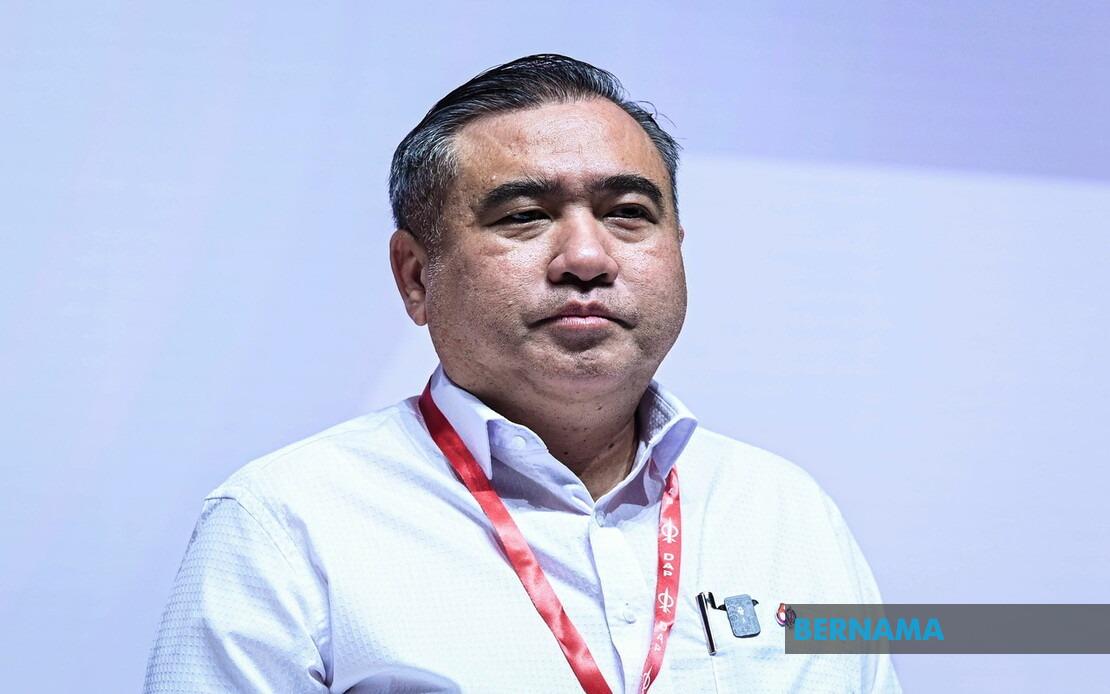
The Democratic Action Party has pledged to amplify its members' expectations for bolder executive action, funnelling critical feedback from its recent national conference directly into government decision-making structures. Speaking at the Putrajaya International Convention Centre following the 2026 DAP Party Conference, secretary-general Anthony Loke indicated the party would use its ministerial positions to advocate for the governance style rank-and-file members are demanding. The move signals that despite reaffirming its commitment to the Unity Government framework, DAP intends to leverage internal party sentiment as a tool for policy influence.
The party's conference featured an unusual degree of intra-party transparency, with delegates granted space to voice reservations about both government performance and party direction. Rather than suppressing dissent, DAP leadership framed the open debate as democratic engagement, collecting criticisms that will now feed into Cabinet discussions. This approach reflects an attempt to balance party discipline with the democratic legitimacy derived from grassroots consultation, positioning DAP as an internally pluralistic coalition partner within Malaysia's broader government structure.
Loke emphasised that the calls for more decisive and assertive action extended to both the party institution and the government itself. This dual focus suggests delegates view DAP's effectiveness partly through the lens of how forcefully it represents party interests within Cabinet. The implicit message is that DAP must not appear passive or subordinated within the Unity Government framework, even as it maintains formal commitment to the coalition. Such positioning becomes especially important for a Chinese-majority party navigating multiracial governance complexities, where perceptions of advocacy strength can affect community confidence.
The quantitative backing for continued participation in the Unity Government proved overwhelming. Of 2,106 ballot papers distributed, 1,857 delegates voted to remain while 242 opposed, representing an 88 per cent mandate with seven spoilt votes. This substantial majority provides DAP leadership with legitimacy to continue government participation while simultaneously honouring the dissenting 12 per cent. Loke's explicit commitment to protect minority voices from retribution reflects conscious effort to maintain party cohesion despite fundamental disagreement on coalition strategy.
The significance of this democratic exercise extends beyond internal DAP dynamics. For a government coalition built on multiple competing interests, the willingness of component parties to conduct transparent membership votes and subsequently channel results into policy advocacy represents both institutional strength and potential friction points. DAP's decision to institutionalise this feedback loop through Cabinet channels could establish precedent for how coalition partners manage internal pressure and grassroots expectations within unified government structure.
Loke pushed back against opposition characterisations suggesting DAP uses party conferences to impose its agenda on other coalition partners or the Prime Minister. He contended that reforms under discussion—including separation of Attorney-General and Public Prosecutor roles, prime ministerial term limits, and anti-corruption measures—represent shared commitments already agreed across Pakatan Harapan and the broader Unity Government, not DAP impositions. This framing attempt becomes crucial in Malaysian political context where charges of particular parties seeking dominance or special privileges carry considerable weight.
The invocation of election manifestos and coalition agreements as foundation for current reform agendas represents a legitimacy strategy particularly relevant to Malaysian governance. By anchoring proposed changes in publicly articulated campaign promises, DAP seeks to insulate its advocacy from accusations of opportunism or unilateral agenda-setting. This approach acknowledges that in multiparty coalitions, policy initiatives require broader consensus framing rather than single-party ownership, particularly when those initiatives involve institutional restructuring affecting executive power.
The conference outcome carries implications for DAP's positioning within Pakatan Harapan and the wider government coalition. An 88 per cent vote to remain while simultaneously demanding more assertive governance sends a calibrated message: the party commits to coalition participation but expects tangible policy returns. This negotiating posture suggests DAP will actively press for reform implementation in coming months, using the conference mandate as evidence of member backing for such demands. Malaysian observers should monitor whether these Cabinet-level conversations produce visible policy movement on constitutional and institutional reforms, as failure would undermine both DAP's internal credibility and the conference's democratic exercise.
The protection afforded to the 242 dissenting delegates—approximately 11.5 per cent of voters—reflects evolving norms within Malaysian political parties regarding internal dissent. Rather than marginalisation, Loke emphasised respect for democratic process and minority positions. This tolerance contrasts with historical patterns in Malaysian politics where internal opposition to party leadership decisions frequently triggered disciplinary action. Such evolution, if sustained, could gradually reshape how component parties within coalitions manage internal diversity while maintaining coalition discipline.
DAP's decision to systematically aggregate and channelise grassroots feedback through formal government structures represents institutional innovation within Malaysian coalition governance. Rather than allowing conference decisions to remain symbolic party endorsements, leadership commits to treating them as working mandates that influence Cabinet-level negotiations. This approach potentially strengthens DAP's hand in future coalition discussions while demonstrating to members that their conference participation translates into tangible advocacy at highest government levels.
The broader context involves navigating distinct expectations across DAP's diverse membership base. Urban professionals, Chinese business communities, civil society activists, and working-class supporters each bring different reform priorities and governance expectations. The conference mechanism provides controlled outlet for these varied interests while centralised Cabinet channelling allows leadership to prioritise and sequence demands strategically. This apparatus becomes particularly valuable for parties managing complex internal coalitions across multiple constituencies and ideological perspectives.
Looking forward, the effectiveness of DAP's Cabinet advocacy will determine whether this conference-to-Cabinet transmission mechanism enhances party legitimacy or generates frustration. If reforms move forward visibly and attributably to DAP pressure, the party strengthens its position within both government and society. Conversely, if demands stall without explanation, delegates may interpret this as evidence that party's government participation yields insufficient influence—potentially shifting future conference votes. The stakes thus extend beyond immediate policy outcomes to the fundamental viability of DAP's Unity Government participation strategy.

