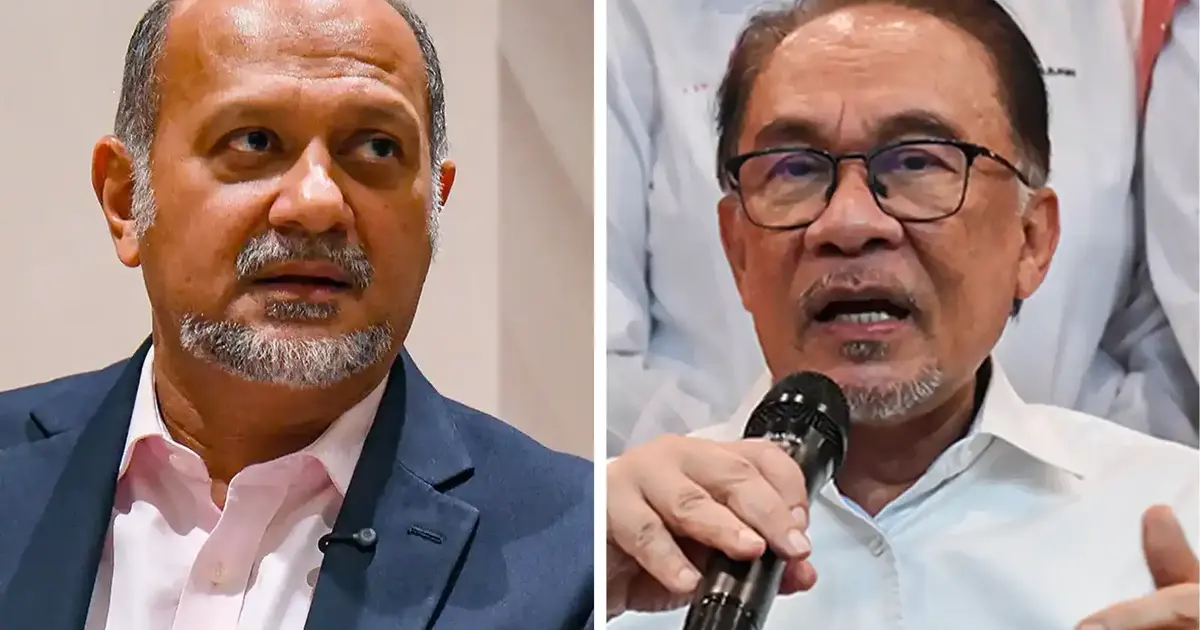
The Democratic Action Party has intensified pressure on Prime Minister Anwar Ibrahim's administration by setting a clear deadline of year-end for passage of several critical constitutional and legislative reforms, signalling growing impatience within the ruling coalition over the pace of institutional change. DAP chairman Gobind Singh Deo has outlined a specific agenda that places separation of the Attorney-General and Public Prosecutor positions at the forefront, alongside the introduction of term limits for the prime minister—reforms that would represent significant structural shifts in Malaysia's governance architecture.
These demands reflect deeper concerns within DAP about the concentration of executive power and institutional independence in Malaysia's legal and political system. The separation of the AG and PP roles has long been championed by civil society organisations and progressive political parties as essential to ensuring prosecutorial independence and reducing the potential for political weaponisation of the justice system. The party's insistence on this timeline suggests it views these reforms as non-negotiable elements of the broader institutional renewal that underpinned Pakatan Harapan's original reform agenda when it first came to power in 2018, albeit briefly.
Beyond these headline demands, Gobind Singh Deo has emphasised the urgency of amending the Security Offences (Special Measures) Act 1997, commonly known as Sosma, and revising the Peaceful Assembly Act. Both pieces of legislation have attracted sustained criticism from human rights organisations and opposition voices for provisions deemed to grant excessive discretionary powers to law enforcement and to restrict the exercise of constitutional freedoms. DAP's inclusion of these amendments in its reform package indicates that the party is positioning institutional accountability and civil liberties as central to its political agenda within government.
The timing of DAP's ultimatum carries particular significance in Malaysia's current political context. The party has historically served as a vocal advocate for constitutional limitations on executive power, and this deadline represents a test of whether Anwar's administration can deliver on reform commitments made during the 2022 transition of power. DAP's backing remains crucial to the stability of the current federal government, and setting explicit deadlines signals that the party is willing to escalate pressure if its reform priorities are not prioritised in the legislative calendar.
Amendments to Sosma have been discussed for years but have moved slowly through parliamentary procedures. Critics argue that the Act's broad detention provisions and evidentiary standards diverge significantly from ordinary criminal law, creating a framework in which national security justifications can override standard protections afforded to accused persons. Reform efforts have encountered resistance from security agencies and conservative political forces who contend that counterterrorism frameworks require enhanced investigative tools. The Peaceful Assembly Act similarly remains contentious, with civil society groups and opposition figures maintaining that its registration requirements and permit systems effectively restrict rather than facilitate constitutional assembly rights.
For the Anwar administration, these demands place competing priorities in tension. The government has signalled commitment to institutional reform, yet faces practical constraints in negotiating amendments that require supermajority support in Parliament when the composition of ruling and opposition benches remains relatively evenly divided. Constitutional amendments in Malaysia require a two-thirds majority, a threshold that demands broad political consensus and creates leverage for opposition parties or coalition members to extract concessions or block measures they oppose.
The Attorney-General and Public Prosecutor separation specifically addresses an institutional arrangement that concentrates significant prosecutorial discretion in a single office. Under current structures, the Attorney-General serves simultaneously as chief legal advisor to government and head of the prosecution system, creating inherent conflicts of interest that could facilitate the use of criminal law for political purposes. Introducing separate, independently appointed officials would require constitutional amendment and restructuring of the Attorney-General's Chambers, necessitating coordination across multiple government agencies and careful consideration of transitional arrangements.
Prime ministerial term limits represent an even more fundamental constitutional intervention. Malaysia's system currently imposes no formal limits on how long an individual may serve as Prime Minister, distinguishing it from several other Commonwealth democracies. Introducing such limits would require amending Article 40 of the Federal Constitution and would carry implications for political succession planning and the temporal scope of any sitting Prime Minister's authority. The measure appeals to democratic reformers concerned about the personalisation of executive power yet faces obvious resistance from incumbent leadership.
DAP's public deadline announcement serves multiple functions within coalition dynamics. It establishes clear expectations for supporters who expect swift institutional transformation, signals to potential coalition partners the party's commitment to its core principles, and provides leverage in internal government negotiations over budget allocation and legislative priorities. Conversely, it creates political risk if the party's demands go unmet, potentially prompting DAP to recalculate its strategic positioning within the federal coalition.
The broader context for these demands includes Malaysia's ongoing democratic consolidation following the intense political turbulence of 2020-2022, when successive changes of government, partisan conflicts over executive authority, and disputes concerning constitutional interpretation dominated national discourse. DAP's reform agenda reflects a vision of institutional architecture designed to prevent recurrence of patterns in which executive power operated with minimal checks or transparency requirements. Whether the current administration can accommodate these demands within its political constraints and resource priorities remains unclear, but DAP's year-end deadline ensures that institutional reform will remain a focal point of coalition negotiations and parliamentary debate through the remainder of 2024.

