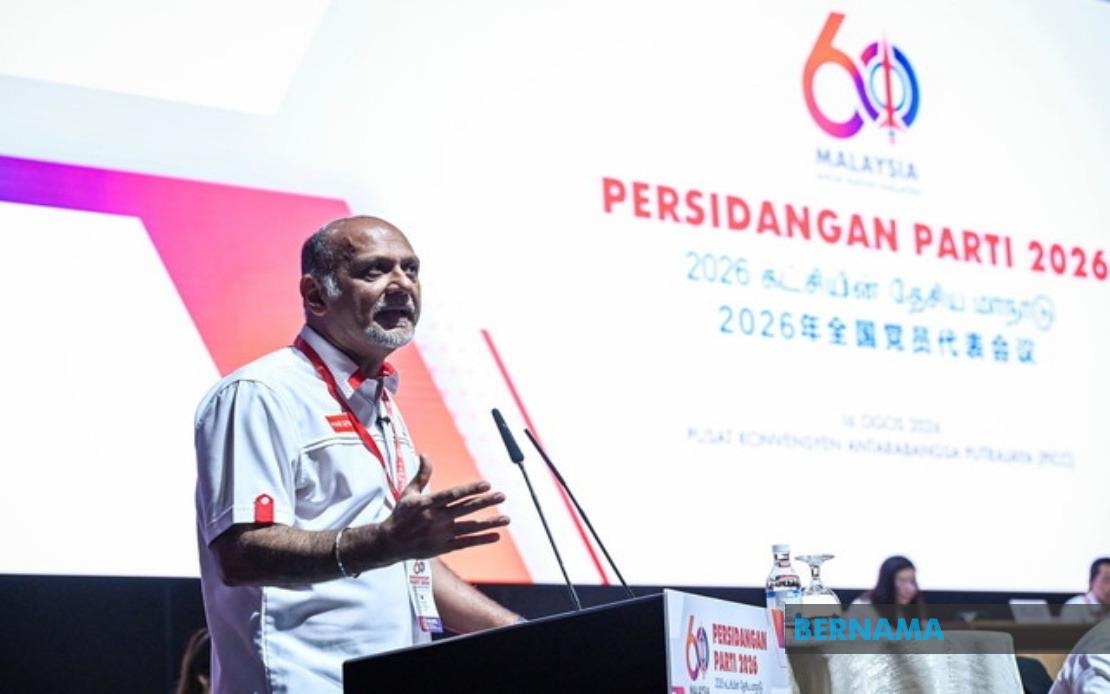
DAP leadership has called for a fundamental reassessment of the party's strategic direction in light of recent state election outcomes, signalling a shift toward pragmatism within the ruling coalition. Speaking at the party's 2026 conference in Putrajaya, national chairman Gobind Singh Deo acknowledged that electoral performance has forced a reconsideration of how the party moves forward, marking a candid admission that the organisation must adapt to Malaysia's shifting political terrain. The Democratic Action Party, one of the three pillars supporting the Pakatan Harapan-led Unity Government, faces mounting pressure to demonstrate tangible achievements while maintaining relevance among an increasingly discerning electorate.
The timing of this strategic pivot arrives at a critical juncture for DAP, nearly four years into its participation in the coalition administration. The party has had sufficient opportunity to evaluate what it has accomplished and where efforts have fallen short during this period, providing a natural point to recalibrate priorities before pursuing its agenda further. This self-examination reflects growing recognition within DAP circles that sustaining momentum as part of a multi-party government requires different tactics than those employed while in opposition, where the party could advocate for sweeping transformation without the constraints of coalition management.
Gobind's emphasis on achievable rather than aspirational reforms represents a significant recalibration from the party's traditional approach. Rather than attempting to implement DAP's entire electoral manifesto through sheer political will, the chairman proposes identifying specific measures that command agreement across the coalition's various components, ensuring that implemented changes are durable and genuinely transformative rather than symbolic gestures vulnerable to reversal. This approach acknowledges the political reality that Pakatan Harapan comprises organisations with sometimes divergent priorities, and imposing unilateral change risks destabilising the alliance itself.
Among the institutional reforms DAP considers achievable is a proposal to convene a special parliamentary sitting dedicated to amending crucial legislation. The Democratic Action Party specifically targets the Security Offences (Special Measures) Act 2012, legislation that civil liberties advocates argue has been misused to suppress legitimate dissent. Complementing this are proposed amendments to the Peaceful Assembly Act 2012, which similarly carries implications for democratic freedoms. The party also advocates separating the powers of the Attorney General and Public Prosecutor, a structural reform designed to reduce opportunities for partisan manipulation of the judiciary.
Another institutional reform gaining DAP support is establishing a constitutional limit on prime ministerial tenure to two five-year terms. This measure, which would require constitutional amendment, seeks to prevent the concentration of executive power in a single leader's hands and establish an expectation of institutional renewal. These proposals collectively indicate DAP's positioning of institutional architecture as central to its reform agenda, reflecting the party's traditional focus on strengthening democratic guardrails and reducing centralised authority.
Gobind articulated that these institutional modifications carry significance beyond their technical content, serving as demonstrations that the Unity Government genuinely prioritises reform and transparent governance rather than merely perpetuating existing power structures. For a coalition that displaced an entrenched administration partly through promising transformational change, showcasing concrete institutional improvements addresses growing public perception that the government has become insufficiently distinct from its predecessor. Such reforms, if implemented, would provide measurable evidence that the coalition's tenure has meaningfully altered Malaysia's governance framework.
Economic concerns feature prominently in DAP's recalibrated strategy, with Gobind acknowledging that government policy must directly address the material challenges confronting Malaysian households. The party recognises that electoral performance increasingly correlates with citizens' assessments of whether their economic circumstances have improved, a shift from previous elections where political institutions received greater emphasis. By prioritising measures that demonstrably ease household financial strain, DAP aims to rebuild electoral credibility among voters increasingly focused on cost-of-living pressures.
Paralleling the emphasis on domestic economic relief is the party's sustained attention to political stability as an instrument for attracting foreign investment. Gobind argues that demonstrable governance improvement and reduced political uncertainty create conditions encouraging international capital flows, which in turn generate employment opportunities across the economy. This investment-focused rationale for stability appeals to coalition partners with varying economic constituencies and reflects DAP's understanding that sustained economic growth requires both immediate relief measures and longer-term structural improvements to investor confidence.
The conference proceedings themselves will determine DAP's immediate future through a delegate vote on whether the party should remain within the government alliance through the completion of the 16th Parliament's term. This motion, to be tabled by party secretary-general Anthony Loke, represents more than procedural formality; it reflects genuine debate within DAP regarding the costs and benefits of continued coalition participation. The secret ballot mechanism ensures delegates can express authentic preferences without pressure from organisational hierarchy, indicating that party leadership genuinely respects member opinion on this consequential question.
The fact that such a motion requires consideration reveals tensions within DAP's strategic alignment. Participation in government inevitably requires compromises that alienate elements of the party's traditional support base, particularly activists who view coalition participation as co-optation. Conversely, withdrawing from government would return DAP to opposition status, eliminating opportunities to implement preferred policies and potentially weakening the broader reform agenda that Pakatan Harapan represents. The internal debate reflects this genuine dilemma rather than theatre, explaining why party membership opinion carries decisive weight.
DAP's strategic reconsideration occurs as the party approaches its 60th anniversary, a moment typically prompting institutional reflection on founding principles and contemporary relevance. For a party that has consistently positioned itself as an advocate for institutional reform, democratic participation, and equitable governance, the question becomes whether continued government participation advances these goals more effectively than opposition status would. The answer likely depends on whether the achievable reforms Gobind emphasises can be realised during the remainder of the current parliamentary term.
The broader significance of this reassessment extends beyond DAP alone to the stability and direction of the Unity Government itself. Should DAP remain committed to the coalition while simultaneously becoming more selective about which reforms it pursues, this could strengthen rather than weaken the alliance by reducing expectations of comprehensive transformation and creating more modest, attainable targets. Alternatively, if the party's internal deliberations reveal that delegates favour withdrawal, the coalition's composition would fundamentally alter, with implications for Malaysia's political stability and policy direction extending well beyond the current parliamentary cycle.

