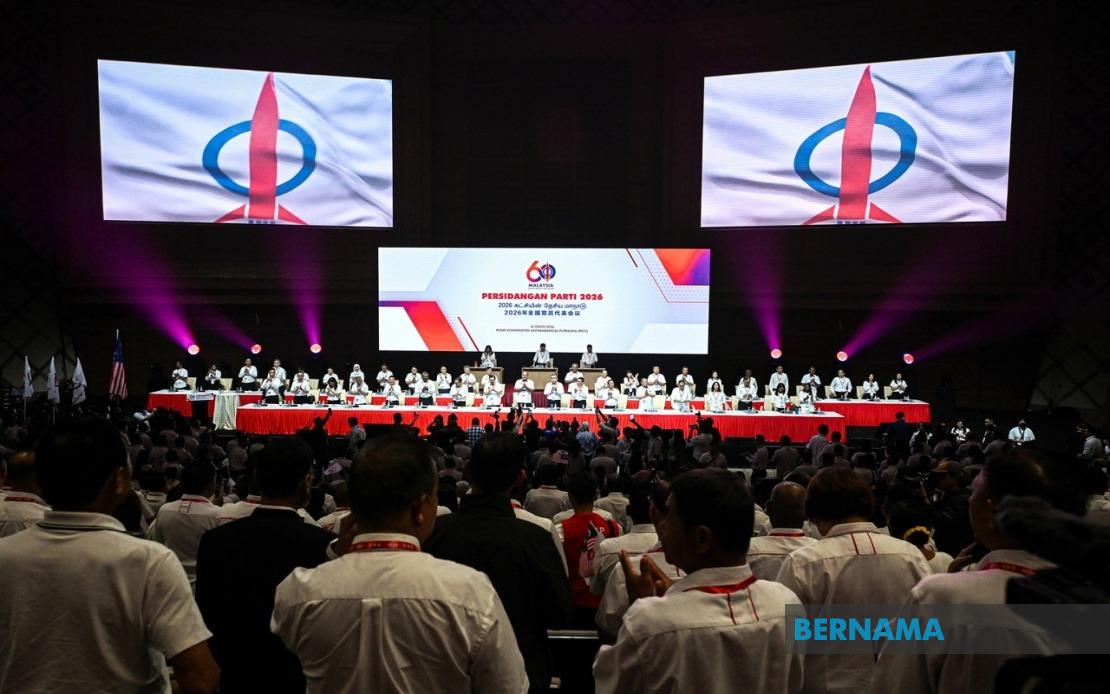
The Democratic Action Party strengthened its commitment to the Unity Government coalition as state delegates overwhelmingly endorsed continued participation in the federal administration during the party's 2026 National Conference at the Putrajaya International Convention Centre. The decision by representatives from all corners of Malaysia reflects broader deliberations within the party over whether to maintain its role in Prime Minister Datuk Seri Anwar Ibrahim's cabinet or step back from the governing bloc before the next general election.
During two days of debate, fourteen state-level delegates articulated a consistent message: withdrawing from government would undermine the mandate voters granted in recent elections and abandon the opportunity to deliver on promised institutional reforms. The arguments presented went beyond simple political calculation, touching on fundamental questions about governance, renewal, and the party's credibility with an electorate that has shifted its support in recent years. These discussions carry particular weight for Malaysia's political landscape, where coalition stability directly influences investor confidence and the capacity to pursue long-term economic and administrative reform.
Perak delegate Jason Ng Thien Yong emphasised that despite electoral setbacks in various state contests, the party must make the "right decision" to remain and implement meaningful reforms from within the system. He acknowledged that the Unity Government itself carries inherent weaknesses, yet argued that remaining in office provides the platform for continuous change rather than the alternative of opposition benches. This argument reflects a pragmatic calculation that incremental progress from inside the coalition outweighs the political risks of early withdrawal and potential early elections.
Veteran DAP figures added weight to this perspective. Pahang's Leong Ngah Ngah framed the decision as a test of political maturity, pointing to measurable successes achieved during three years of Unity Government administration. The argument that staying demonstrates confidence in the party's capacity to rebuild support proved persuasive among delegates who worry that abandoning government now would signal panic rather than conviction. For regional observers, such internal cohesion within one of Malaysia's oldest political parties suggests that the coalition may weather criticism over economic performance and delivery speed.
Selangor delegate Muhammad Shakir Amerr Mohideen directly connected continued governmental participation to the party's electoral recovery, arguing that good governance and demonstrable work performance represent the most effective mechanism for regaining voter confidence in areas where the party previously lost ground. This perspective recognises that Malaysian voters increasingly evaluate parties on administrative competence rather than rhetoric, making ministerial service and policy implementation crucial for restoration of electoral support. The approach aligns with broader regional trends where institutional performance increasingly determines political survival across Southeast Asia.
The case for remaining also emphasised practical communication challenges. Melaka delegate Jason Tze-Xi Nathan noted that withdrawal would force the party to explain to voters why it abandoned power, a message significantly more difficult to articulate than continuing efforts at reform. This concern reflects the political reality that opposition narrative requires constant counter-messaging, whereas government participation allows parties to point to concrete policy outcomes and budgetary allocations. For ordinary Malaysians worried about cost of living and corruption, such tangible results matter more than factional political disputes.
Delegates from constituencies across the country—from the peninsular states to Sabah and Sarawak—voiced variations on similar themes. Sabah's Yap Wui Lip added a federalism dimension, emphasising that remaining in government enables the party to advocate for implementation of Malaysia Agreement 1963 rights, a critical issue for East Malaysian voters. His contribution illustrated how national coalition decisions intersect with regional concerns, particularly the constitutional frameworks governing Sabah and Sarawak. These federalism issues have consistently shaped Malaysian politics and cannot be effectively pursued from opposition benches without access to federal machinery.
The breadth of geographic support—with delegates from Kelantan, Terengganu, Sarawak, Kedah, Negeri Sembilan, Johor, Kuala Lumpur, Perlis and Penang all endorsing the position—demonstrates that the coalition-staying argument transcends regional political divisions. Even in states where DAP faces stronger opposition parties or has experienced recent electoral decline, delegates prioritised coalition stability and reform implementation over the temptation of opposition renewal. This geographic coherence suggests the party's central leadership can claim genuine grassroots support rather than imposed decisions.
Secretary-general Anthony Loke's closing remarks introduced a crucial qualification into the debate: continuing government participation does not constitute a "blank cheque" to either the Central Supreme Committee or the Prime Minister. Loke explicitly stated that remaining in coalition binds the party to ongoing commitments for reform and renewal, framing the decision not as surrendering scrutiny but as maintaining internal leverage while pursuing substantive change. This framing matters significantly for DAP's internal party cohesion, as it prevents hardline reformers from viewing the decision as betrayal of principles. The party thus positioned itself as both loyal coalition member and independent force for transformation.
With 4,264 delegates from 1,704 eligible branches preparing to vote by secret ballot, the party faced a genuine test of grassroots opinion despite apparent leadership consensus. Secret voting procedures protect delegates from perceived pressure and allow authentic expression of reservations. The fact that leadership permitted robust debate before the vote—rather than enforcing party discipline beforehand—suggests confidence in grassroots support for coalition continuation. For Malaysian politics generally, such internal party democracy, however imperfect, contrasts with more authoritarian party structures elsewhere and contributes to Malaysia's continuing democratic stability.
The timing of this decision during the party's sixtieth anniversary celebrations underscored DAP's evolution from opposition movement to governing party. As one of three core components of Pakatan Harapan alongside PKR and Amanah, DAP's decision to remain directly affects the coalition's long-term viability and credibility with investors, civil servants, and international observers. A fractured coalition would complicate economic management and potentially trigger early elections—precisely the destabilising outcome that delegates across Malaysia voted to prevent.
The vote therefore represents more than internal party mechanics. It signals to financial markets, regional governments, and the Malaysian electorate that the governing coalition retains cohesion and commitment to completing its term. For businesses planning infrastructure investments and foreign investors evaluating Malaysia's political stability, such signals prove essential for long-term decision-making. The delegates' decision ultimately reflects judgment that Malaysia's political system functions better when governments remain stable enough to complete policy cycles, even while facing criticism over pace of reform and economic outcomes.

