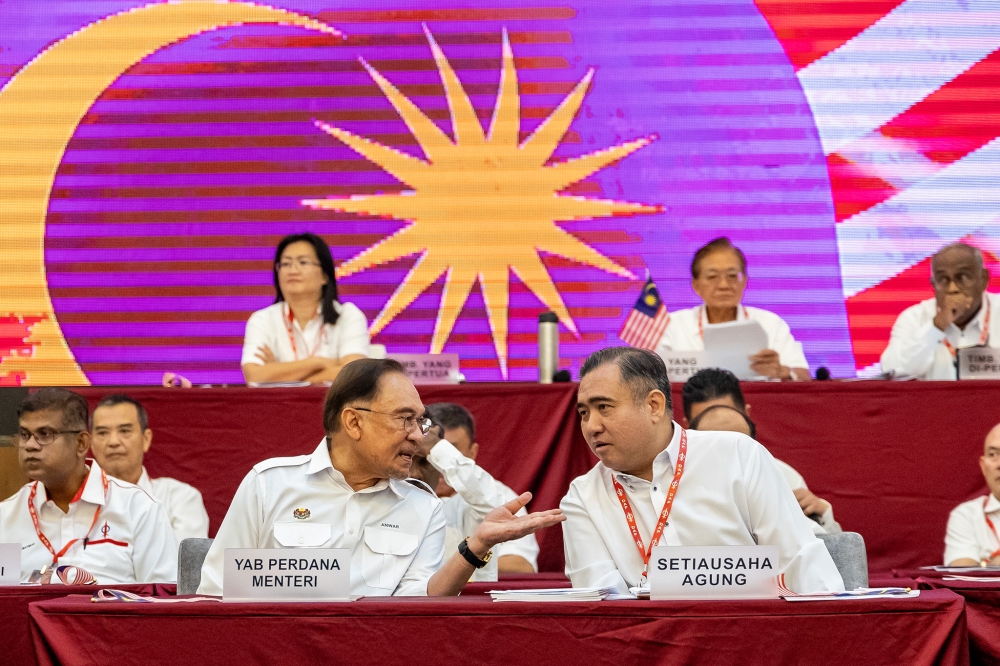
Transport Minister Anthony Loke has categorically dismissed speculation that the Democratic Action Party would abandon its partnership in Prime Minister Datuk Seri Anwar Ibrahim's Pakatan Harapan administration, emphasizing that the coalition remains intact despite internal pressures. Speaking in Kuala Lumpur on Wednesday, Loke indicated that while DAP members harbour concerns about the velocity of policy changes, the party recognizes the inherent trade-offs involved in leading a multi-party government.
The clarification comes as tensions within the ruling coalition periodically surface, with DAP's reform-minded base sometimes growing impatient over legislative progress. As one of the coalition's more liberal-leaning parties, DAP has historically championed institutional accountability, transparency, and social modernization—goals that can conflict with the more cautious approach preferred by larger coalition partners. Yet Loke's statement signals that party leadership views staying engaged as preferable to withdrawal, which would destabilize the government and eliminate DAP's voice in shaping policy direction.
Governance in Malaysia's current political configuration requires constant negotiation among ideologically diverse partners. Pakatan Harapan, formed to contest the 2018 election, brought together the moderate Islamist PKR, the secular Chinese-majority DAP, and the Malay-Muslim coalition Amanah. This architectural diversity has proven both a strength—preventing any single viewpoint from dominating—and a recurring source of friction. When coalition partners hold divergent visions on matters ranging from religious freedom to economic intervention, advancing any agenda demands consensus-building that inevitably slows implementation.
Loke's comments effectively acknowledge this reality. By describing slower reforms as "the price of governing," he frames incremental progress not as failure but as a rational cost of coalition politics. This framing matters for DAP's grassroots, many of whom have mobilized for rapid change and may interpret delays as betrayal. The minister's message is that DAP influences outcomes from within the government more effectively than it could from opposition.
The timing of Loke's remarks reflects broader concerns within Pakatan. Recent months have seen public disagreements on issues including religious extremism, federal-state autonomy, and economic restructuring. Each episode prompts observers to question whether the coalition can endure beyond its current term. For DAP specifically, there is organizational pressure: the party's urban, educated voter base expects aggressive pursuit of party principles, while remaining in government requires flexibility that sometimes disappoints that base.
Moreover, Loke's assurance provides important stability signalling to investors, civil service institutions, and neighbouring governments. Coalition fracturing would trigger political uncertainty, potentially unsettling financial markets and complicating Malaysia's economic recovery. Southeast Asia's regional architecture also depends on Malaysia maintaining predictable governance; abrupt shifts in the ruling coalition could reverberate across ASEAN partnerships and bilateral relationships.
Historically, Malaysia's coalitions have demonstrated resilience through crisis precisely because members calculated that internal unity served their interests better than dissolution. Barisan Nasional sustained itself for decades despite internal rivalries because breaking apart seemed costlier than accommodation. Pakatan now faces a similar calculus: each partner—PKR, DAP, and Amanah—retains more power within the coalition than any would command alone, even if individual preferences go unsatisfied.
The substantive challenge remains designing a governance model where reform-minded and consensus-oriented factions coexist productively. Some institutional innovations could help: clearer internal mechanisms for coalition decision-making, designated policy domains where particular parties lead, and transparent timelines for major initiatives. These tools could transform the coalition from a fragile arrangement into a stable framework that both accommodates DAP's activist elements and respects coalition partners' concerns.
Loke's intervention also carries implications for Malaysia's broader political narrative. The country has experimented with coalition politics repeatedly since independence, yet each incarnation carries lessons. Pakatan's success or failure will influence how future Malaysian coalitions structure themselves. If the current government can demonstrate that ideologically mixed partnerships can deliver competent administration and selective reform, it validates a model that might otherwise seem unwieldy.
For Southeast Asian regional observers, Malaysia's coalition stability matters for ASEAN leadership continuity and bilateral commitments. A Malaysian government consumed by internal conflict diminishes the country's capacity to contribute meaningfully to regional initiatives. Conversely, a stable coalition—even one moving at moderate pace—enhances Malaysia's ability to pursue consistent external policy and maintain the institutional strength that underpins regional cooperation.
The immediate significance of Loke's statement lies in its reassurance that DAP sees value in remaining within the government structure despite frustrations. This commitment, articulated by a senior minister, reduces near-term speculation about coalition fracturing. However, the underlying tensions that prompted questions about DAP's allegiance have not vanished; they remain latent, resurging whenever coalition members find themselves on opposing sides of sensitive issues.
Looking forward, the sustainability of this arrangement depends on whether the coalition can credibly point to achievements that justify compromises to its members. Infrastructure development, fiscal management, and education reforms can provide such evidence. If, conversely, governance stalls while internal divisions deepen, pressure on DAP to reconsider its participation would intensify. For now, Loke's declaration sets the coalition's trajectory toward continued partnership, albeit one where patience and pragmatism will be tested repeatedly.

