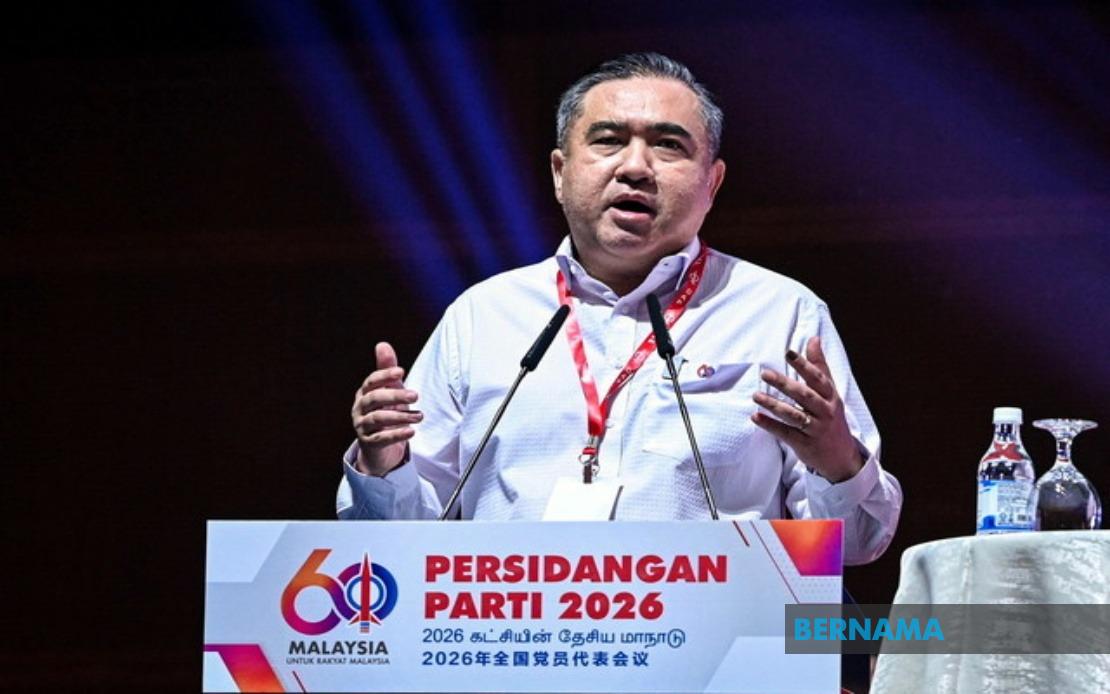
The Democratic Action Party has committed itself to continuing as a partner in Malaysia's federal government through the completion of the current parliamentary cycle. The decision, made at DAP's 2026 Party Conference on August 16 at the Putrajaya International Convention Centre, represents a significant show of unity within the party as it navigates its role within the broader coalition that currently governs the nation.
Party secretary-general Anthony Loke brought the matter before delegates through a special motion, reflecting DAP's commitment to transparent decision-making on major strategic questions. The voting mechanism employed at the conference — a secret ballot rather than the more traditional voice or show-of-hands vote — underscored the importance party leadership placed on ensuring both the integrity and confidentiality of the process. This procedural choice signals DAP's awareness of the sensitivity surrounding coalition dynamics and its desire to provide members with a mechanism free from peer pressure or public scrutiny.
The numerical outcome left little room for ambiguity. Of the 2,106 ballot papers distributed, 1,857 delegates voted to maintain government participation while 242 opposed the move, with seven ballots rendered invalid. The 88.2 percent support rate among those present represents a decisive mandate for the party's leadership to continue its cooperative arrangement with other coalition partners. Cha Kee Chin, who served as Conference Speaker, announced these results to the assembled delegates, confirming that approximately 4,264 representatives from 1,704 branches nationwide had been eligible to participate in the vote.
DAP's presence within the current government structure reflects the party's significant political weight within the coalition. The party holds five ministerial portfolios, with Anthony Loke serving as Transport Minister, a position that carries substantial influence over one of the country's critical infrastructure sectors. Steven Sim oversees the Entrepreneur and Cooperatives Development portfolio, while Gobind Singh Deo manages the Digital portfolio — a growing area of governmental focus as Malaysia seeks to advance its digital economy. Nga Kor Ming's responsibility for Housing and Local Government touches on policy areas directly affecting urban and suburban Malaysian communities, and Hannah Yeoh's role within the Prime Minister's Department underscores DAP's access to senior decision-making circles.
Beyond ministerial ranks, DAP has positioned seven of its members in deputy ministerial roles, extending the party's influence across multiple governmental functions. This representation spans diverse policy domains including communications, agriculture, education, and finance. The depth of DAP representation across government portfolios suggests the party has become deeply integrated into the administration's machinery, a reality that both strengthens its influence and creates interdependencies that complicate any potential exit from the coalition.
For Malaysian political observers and regional analysts, DAP's decision carries implications beyond the party itself. The overwhelming delegate vote demonstrates that rank-and-file party members, at least as represented at the conference, perceive continued coalition participation as strategically valuable rather than compromising. This internal consensus provides stability to the government at a time when coalition politics in Malaysia remain delicate, with various partners constantly calculating their individual advantage and influence.
The timing of this decision, occurring at a point well into the current parliamentary term, reflects the natural political lifecycle of coalition governments in Malaysia. By securing a clear internal mandate, DAP provides its coalition partners with assurance regarding its reliability through the conclusion of the 15th Parliament's term, though the precise end-point of that term remains subject to political calculation and potential dissolution scenarios. This stability allows other government components to plan their medium-term strategies with greater certainty regarding DAP's continued participation.
The delegate vote also carries significance for DAP's internal governance and decision-making culture. By choosing to submit a major strategic question to party members rather than reserving it to the leadership, DAP has demonstrated a commitment to intra-party democracy that contrasts with decision-making patterns in some other Malaysian political formations. This approach, while potentially time-consuming and occasionally unpredictable in outcome, enhances the party's credibility when it claims to represent genuine constituent interests rather than merely projecting leadership preferences onto a passive membership.
From a regional perspective, DAP's continuance within Malaysia's federal government reinforces patterns of multiethnic coalition politics that distinguish Malaysia from some other Southeast Asian democracies. The party's significant representation among Malaysian Chinese voters, combined with its willingness to work cooperatively within broader coalitions, demonstrates the viability of ethnic-based political parties operating within non-zero-sum governmental frameworks. This model contrasts with either winner-take-all systems or configurations where particular communities face systematic exclusion from higher-level governance.
Looking forward, the delegate mandate provides DAP with strategic flexibility in negotiations with coalition partners regarding resource allocation, policy priorities, and governance roles. The party can point to demonstrated grassroots support for its continued participation when advocating for particular governmental positions or policy outcomes. Simultaneously, the sizable minority voting against continuation — while representing only about 11 percent of voting delegates — suggests that internal debates about the appropriate scope and nature of DAP's coalition participation will likely persist, even as the party officially commits to remaining through the current parliamentary term.

