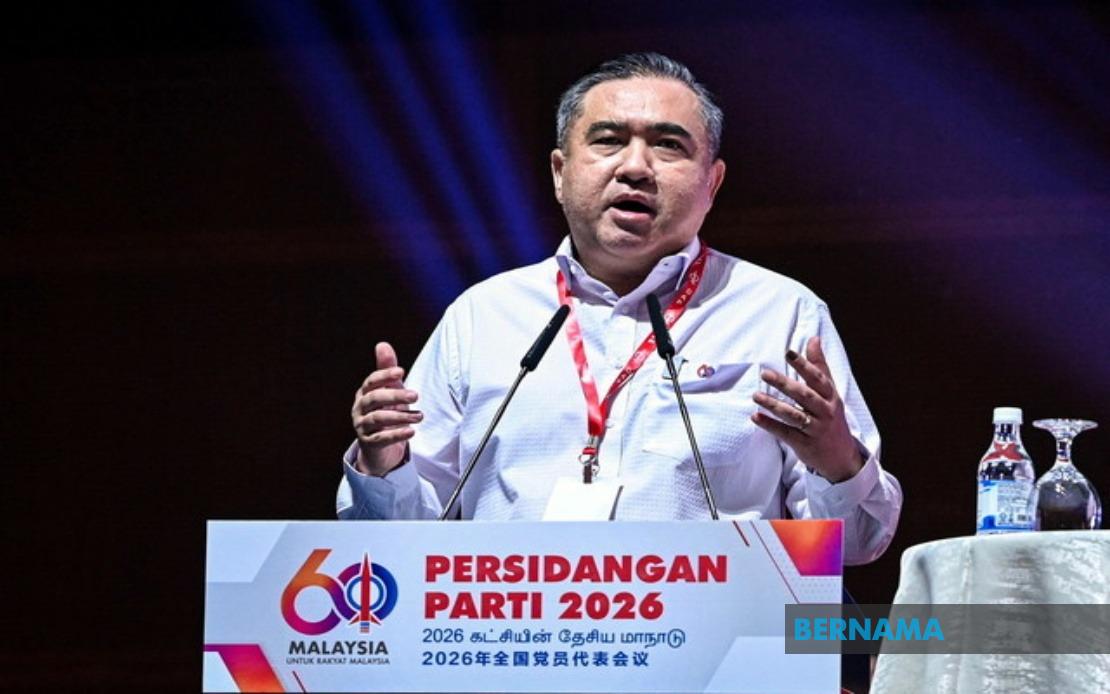
In a major endorsement of Prime Minister Datuk Seri Anwar Ibrahim's reform agenda, the Democratic Action Party declared its unwavering support for the government's intention to repeal the Universities and University Colleges Act (AUKU) 1971. The announcement came from DAP secretary-general Anthony Loke during his policy address at the party's 2026 National Conference held at the Putrajaya International Convention Centre on August 16, reinforcing the party's positioning as a driver of systemic change within Malaysia's coalition government.
Loke emphasised that DAP's participation in government extended beyond securing ministerial positions, framing the party's role as one fundamentally oriented toward national transformation and delivering on long-standing commitments. The AUKU repeal represents a particularly resonant victory for the party, which has maintained a consistent stance on student freedoms and democratic space on university campuses throughout its decades in opposition. The decision to advance this reform now signals both the government's receptiveness to civil society pressure and DAP's ability to translate electoral influence into policy outcomes.
Anwar's announcement of the AUKU repeal came during the PKR 2026 National Congress, where he indicated the Cabinet would formally consider the proposal the following week. The Prime Minister attributed the decision to memoranda and representations submitted by student leaders seeking comprehensive legislative changes. This consultation process underscores an emerging pattern within the current administration of engaging student activism rather than suppressing it, a notable departure from the statute's original intent when enacted in the early 1970s.
The AUKU, now in its fifth decade of operation, has undergone seven amendments since 1971, each reflecting evolving understandings of student rights and institutional governance. The most recent amendments demonstrate the incremental nature of reform efforts under previous administrations. A 2012 revision permitted students to engage in political party activities beyond campus grounds, acknowledging that blanket prohibitions had become untenable in a modernising society. The 2024 amendments further eroded the Act's restrictive architecture by transferring disciplinary authority from vice-chancellors to dedicated Student Disciplinary Committees, introducing procedural safeguards against arbitrary enforcement.
These interim changes also authorised Student Representative Councils and affiliated student bodies to conduct fundraising and accept donations according to existing regulatory frameworks, addressing longstanding grievances about financial autonomy. Despite these piecemeal modifications, advocates contended that the legislation's underlying structure remained fundamentally at odds with contemporary standards of academic freedom and democratic participation observed in comparable universities across the Asia-Pacific region.
Loke used the occasion to expand DAP's reform vision beyond AUKU, calling on the government to pursue parallel initiatives in higher education equity. His reference to ensuring equal tertiary opportunities irrespective of racial background reflects persistent concerns within the party about affirmative action policies that, critics argue, entrench rather than diminish educational disparities. This linkage between political freedoms and meritocratic access suggests the DAP intends to maintain momentum on education reform across multiple dimensions, positioning the AUKU repeal as merely the opening chapter in a broader reorientation of tertiary policy.
For Malaysian students and university administrators, full repeal carries significant implications. Currently, the Act circumscribes political organising, public protest, and certain forms of expression that would be protected speech in civil society. Elimination would necessitate comprehensive recalibration of institutional policies governing student conduct, potentially triggering conflicts between university leadership and student movements as these bodies establish new norms without statutory guardrails. International experience suggests that expanded campus activism frequently correlates with more robust institutional governance and heightened accountability, though transition periods can prove contentious.
The political economy of this reform also merits attention. DAP's enthusiastic backing reflects the party's base composition—urban, educated, younger constituencies for whom student representation constitutes an authentic electoral concern. By positioning itself as the principal advocate for AUKU repeal, DAP reinforces its brand as a progressive force whilst simultaneously appeasing constituencies that view the Act as a Cold War relic incompatible with modern democratic practice. This alignment with student aspirations carries particular strategic value given university campuses' historical role as incubators of political movements across Southeast Asia.
Regionally, Malaysia's move toward relaxing campus speech restrictions occurs alongside varied trajectories in adjacent economies. Thailand's universities operate under different constraints imposed by national security legislation, whilst Singapore maintains relatively tight controls on student political expression through different mechanisms. The Malaysian repeal thus represents a distinctive regional choice toward greater institutional pluralism, potentially establishing a comparative reference point for advocates of academic freedom elsewhere in Southeast Asia.
The Cabinet's consideration of the formal repeal proposal carries institutional weight beyond mere symbolism. Once advanced through standard legislative procedures, repeal would require parliamentary passage, providing additional platforms for debate about the appropriate boundaries between student activism, institutional autonomy, and state interest. The government's readiness to place this contentious question before parliament after decades of incremental amendment suggests genuine commitment to substantive change rather than cosmetic revision, though implementation details regarding successor frameworks remain to be clarified.
Looking forward, the AUKU repeal decision establishes a template for how DAP intends to operationalise its role within coalition government. Rather than accepting inherited policy architecture, the party signals willingness to challenge foundational statutes when they conflict with its constitutional vision. Whether this approach extends to other contentious domains—police accountability, media freedom, religious legislation—remains uncertain, but the AUKU trajectory demonstrates that sustained advocacy combined with electoral leverage can precipitate meaningful institutional reform even in states with entrenched bureaucratic structures.
The timing of Loke's remarks during DAP's party conference also serves internal organisational functions, communicating to party cadres and members that participation in government yields tangible policy victories aligned with the party's fundamental commitments. This reinforcement of party identity and ideological coherence proves particularly valuable for DAP, which must continually justify its coalition participation to constituencies sceptical of compromise. By anchoring government engagement to substantive reform narratives, the party maintains internal cohesion whilst signalling to voters that it has not abandoned its foundational principles in pursuit of ministerial privilege.

