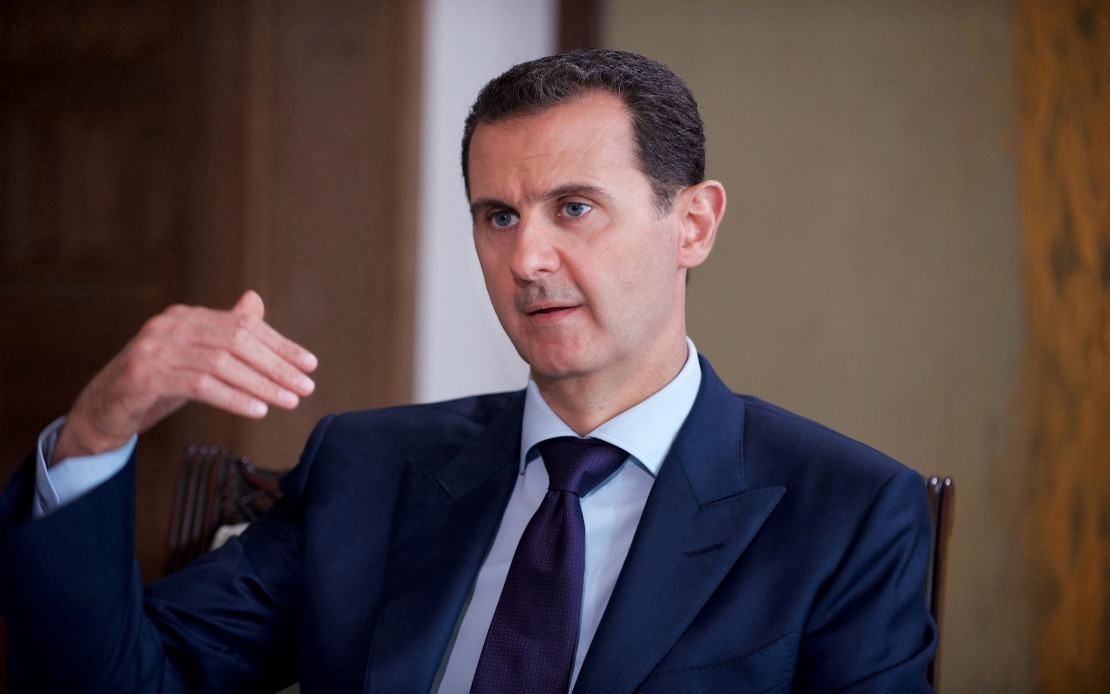
A criminal tribunal in Damascus has handed down a death sentence against former Syrian President Bashar al-Assad in absentia, marking a significant moment in Syria's pursuit of accountability for alleged atrocities committed during the nation's prolonged conflict. The Fourth Criminal Court's verdict, delivered on Tuesday by Judge Al-Aryan, represents the first major judicial finding against the ex-leader since his flight from the country in 2024. The conviction encompasses multiple grave charges including premeditated murder affecting numerous individuals, systematic torture, unlawful detention, and overarching crimes against humanity.
The judgment rested substantially on witness testimony that established Assad's position as the paramount decision-maker in orchestrating the alleged wrongdoings. According to the court's reasoning, the former president deliberately weaponised state machinery—deploying security forces, intelligence apparatus, and government institutions—to execute and perpetuate these violations across Syrian territory. This finding directly implicates the central leadership in actions typically attributed to lower-level officials, establishing command responsibility within Syria's judicial framework. The characterisation of Assad as the ultimate architect distinguishes this ruling from previous accountability efforts that may have focused on individual perpetrators or sectional units.
Syria's transitional justice landscape remains extraordinarily complex, with multiple jurisdictions asserting claims over alleged perpetrators and victims. Domestically, the reconstituted judiciary has begun functioning under new administrative structures, though its legitimacy and independence remain contested internationally. The Damascus court's authority to try cases in absentia reflects Syrian legal tradition but raises questions about procedural fairness and due process standards. International observers have emphasised that while symbolic significance attaches to formal convictions, enforcement and broader reconciliation mechanisms will determine whether accountability translates into meaningful justice for survivors and bereaved families.
The absence of Assad from Syrian territory since August 2024 complicates enforcement of any sentence. The former president's current whereabouts remain officially unconfirmed, though regional geopolitical considerations have limited immediate prospects for his apprehension. The jurisdiction question extends beyond Syria's borders, as various international bodies and foreign governments maintain distinct legal positions regarding Assad's culpability and potential prosecution. The United Nations has documented extensive evidence of systematic violations throughout the conflict, yet establishing universal jurisdiction or securing extradition would require unprecedented international coordination.
For Malaysia and other Southeast Asian nations, the Damascus verdict underscores ongoing tensions between state sovereignty and accountability for atrocities. The region has grappled with comparable questions following transitions in Cambodia, East Timor, and Myanmar, where courts have sought to balance national reconciliation with justice for victims. Assad's case demonstrates how transitional societies navigate between retribution and restoration, particularly when perpetrators retain state support or external protection. Malaysian policymakers and civil society observers have tracked Syria's institutional reconstruction as a cautionary example of how quickly state capacity can fragment and how difficult reassembling legitimate governance structures becomes.
The conviction's implications extend across Syria's fractured political landscape. Various armed factions, regional powers, and international actors maintain competing visions for Syria's future, and the judicial reckoning represents only one dimension of broader post-conflict state-building. Survivor communities face ongoing displacement, trauma, and material deprivation that formal sentencing cannot immediately address. The reconstruction of Syrian institutions—including security forces, judiciary, and civilian administration—proceeds alongside memory work and documentation efforts aimed at preventing future violations.
Regionally, the Damascus ruling affects diplomatic calculations among neighbouring states and powers with interests in Syria. Turkey, Israel, Jordan, Lebanon, and Iraq maintain distinct relationships with various Syrian actors and possess divergent positions on transitional justice frameworks. The court's assertion of jurisdiction signals Syria's intention to reclaim judicial authority, though its capacity to enforce judgments remains constrained by practical and political limitations. International humanitarian law frameworks intersect with regional power dynamics in ways that complicate straightforward accountability mechanisms.
The broader context of Syria's conflict—spanning more than a decade with an estimated half-million deaths, millions displaced internally and as refugees, and widespread destruction of infrastructure—has created unprecedented demands for justice. Multiple accountability mechanisms have been proposed, including international tribunals modelled on precedents from Yugoslavia, Rwanda, and Cambodia. However, geopolitical obstacles, resource constraints, and fundamental disagreements about Syria's political future have impeded establishment of comprehensive transitional justice institutions. The Damascus court's verdict represents one jurisdiction's unilateral assertion of authority rather than part of coordinated international accountability architecture.
For survivors and families of victims scattered across the region and globally, formal convictions carry symbolic weight despite enforcement challenges. Documentary evidence increasingly establishes systematic patterns of violation attributable to command structures, though translating findings into tangible consequences for alleged perpetrators remains arduous. The Damascus judgment contributes to an expanding body of judicial and investigative findings that collectively establish unprecedented documentation of the conflict's dynamics. This evidentiary foundation may prove consequential if circumstances eventually permit more comprehensive international proceedings.
Syria's judiciary faces enormous reconstruction tasks alongside accountability functions. Courts require capacity-building, personnel training, physical infrastructure repair, and institutional independence guarantees to function credibly. The tension between swift justice and careful due process, between national solutions and international frameworks, and between accountability and reconciliation will likely shape Syrian transitional justice for years. The Assad sentence exemplifies how individual trials proceed within this broader context of systemic institutional challenge and competing visions for post-conflict governance and healing.

