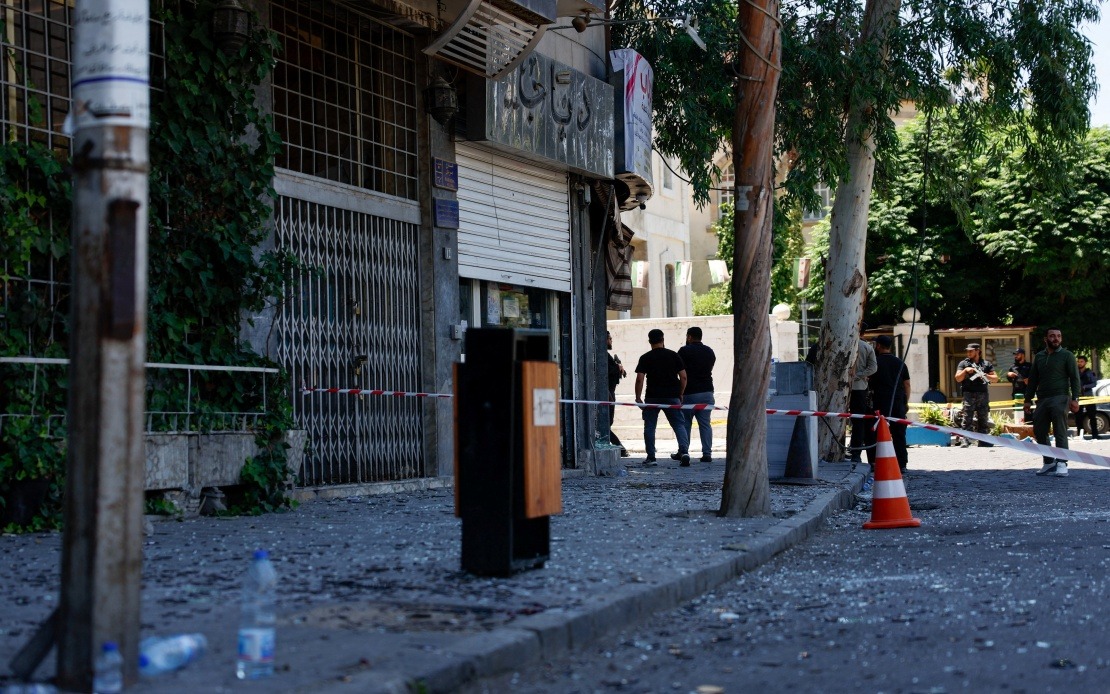
Two improvised explosive devices detonated in Damascus on Tuesday, leaving at least 18 people wounded including four members of the police force, according to Syrian authorities. The blasts occurred near the accommodation where French President Emmanuel Macron was lodging during his landmark visit to the war-torn nation, triggering widespread concern across the Syrian capital. The Élysée Palace in Paris immediately issued confirmation that Macron had not been harmed in the incident, though the timing and location of the explosions raised serious security questions during such a high-profile diplomatic engagement.
According to the British-based Syrian Observatory for Human Rights, the sequence of events unfolded with alarming speed. An initial explosion was followed within seconds by a second, considerably more powerful blast, both striking in proximity to Macron's hotel. The rapid succession suggested either coordinated timing by those responsible or the detonation of devices positioned strategically to maximize impact. Emergency services and ambulance crews descended on the scene with urgency, while security personnel quickly established cordons around the affected vicinity to prevent further civilian access and secure the area for investigation.
Macron's visit represents a watershed moment in international diplomacy toward Syria, marking the first time a sitting European Union leader has travelled to Damascus since 2010. His arrival on Monday evening signalled a potential thaw in Western relations with the Syrian government, with both nations conducting detailed bilateral talks at the presidential palace. The timing of the explosions, occurring during these delicate negotiations, raised uncomfortable questions about the stability of the security environment and the various actors operating within Syria who may view such diplomatic rapprochement with hostility.
The Interior Ministry's account, channelled through official Syrian news outlets, confirmed the casualty figures and classified the devices as improvised explosive ordnance. Four police officers numbered among those injured, suggesting the blasts may have targeted security installations or personnel rather than civilian infrastructure, though this remains under investigation. The nature of such devices typically indicates limited-scale operations, distinguishing this incident from the larger-scale attacks that plagued Damascus during the height of the Syrian civil war.
Macron's decision to remain at the presidential palace rather than abandon his visit demonstrated diplomatic resolve, though it also raised eyebrows regarding the calculated risk assessment made by his security apparatus. French officials have positioned the visit as part of broader efforts to re-engage with Syria following years of international isolation. However, the explosions underscored the persistent instability and security challenges that continue to characterise the Syrian capital, even as the most intensive phases of military conflict have subsided.
For Malaysia and Southeast Asia, the incident carries implications regarding how regional powers might navigate renewed engagement with conflict-affected states. The region has witnessed its own experiences with violent extremism and improvised explosive devices, making the security dimensions of Macron's mission particularly resonant. The attack raises questions about whether Syria's stabilisation has progressed sufficiently to warrant high-level diplomatic visits, or whether such missions remain inherently hazardous undertakings in a complex post-conflict environment.
The explosions also reflect ongoing tensions within Syria regarding the legitimacy and international acceptance of Bashar al-Assad's government. Various Syrian opposition groups and international actors maintain reservations about normalising relations with Damascus, and the timing of the blasts may not be coincidental. Understanding who carried out the attack would require sustained investigation, but the incident demonstrates that consensus around Syria's political future remains fractured, with different factions pursuing conflicting agendas.
From a regional security perspective, the incident highlights vulnerabilities in protecting high-profile international delegations within unstable environments. France's decision to proceed with the visit despite known risks reflects confidence in Syrian government security assurances, yet the explosions exposed cracks in those assurances. For other nations considering diplomatic initiatives toward Syria, the message is ambiguous—engagement is possible, but tangible risks persist.
The broader context involves Syria's lengthy civil conflict, which claimed hundreds of thousands of lives and displaced millions from their homes. While major combat operations have largely concluded, the country remains fractured along sectarian, ethnic, and political lines. International recognition of Assad's legitimacy has gradually increased, yet spoiler groups and various armed factions continue to operate with varying degrees of autonomy, making complete security assurances difficult to guarantee.
Macron's presence in Syria should be understood as part of France's strategic recalibration toward the Middle East, seeking influence and partnerships in a region where French interests remain significant. However, the explosions serve as a reminder that diplomatic normalisation cannot simply erase years of conflict and underlying tensions. The injured, including those police officers, represent the human cost of operating within such environments, even when the primary target of any attack remains unclear.

