Cuban President Miguel Diaz-Canel launched a scathing critique of new American sanctions against his country on Friday, characterizing the measures as part of a resurgent campaign of political persecution he equates with 1950s McCarthyism. Speaking via social media platform X, the Cuban leader accused Washington of orchestrating a coordinated assault on what he termed a global "radical left," marking the latest flashpoint in the decades-long antagonism between Havana and the United States.
Diaz-Canel's condemnation extends beyond conventional Cold War rhetoric. He drew explicit parallels between current US policy and what he described as the revival of "Hitlerite fascism," alongside references to Operation Condor, the notorious coordinated campaign of state terror conducted by right-wing military dictatorships across South America during the 1970s and 1980s. The Cuban president's invocation of these historical comparisons underscores his framing of present geopolitical tensions as part of a broader ideological struggle transcending traditional bilateral relations.
The Cuban leader articulated a fundamental concern about the weaponization of ideological accusations, questioning whether charges levelled against leftist movements serve primarily as justification for escalating American pressure. His argument suggests that labeling political opponents as threats to national security has become the pretext through which Washington legitimizes increasingly restrictive measures against Cuban society. This rhetorical strategy seeks to reframe sanctions not merely as foreign policy tools but as manifestations of systematic ideological persecution.
Beyond bilateral grievances, Diaz-Canel articulated a broader geopolitical vision in which the "philosophy of dispossession" associated with transnational far-right alliances constitutes the paramount danger to global stability. He attributed multiple international crises to this ideological current, including the Israeli military campaign in Gaza, extrajudicial killings in various nations, the deaths of migrants at international borders, military strikes on Iranian infrastructure, and the six-decade American embargo on Cuba itself. By situating these disparate issues within a unified analytical framework, the Cuban president attempted to mobilize international sympathy around a narrative of systemic injustice perpetrated by aligned conservative powers.
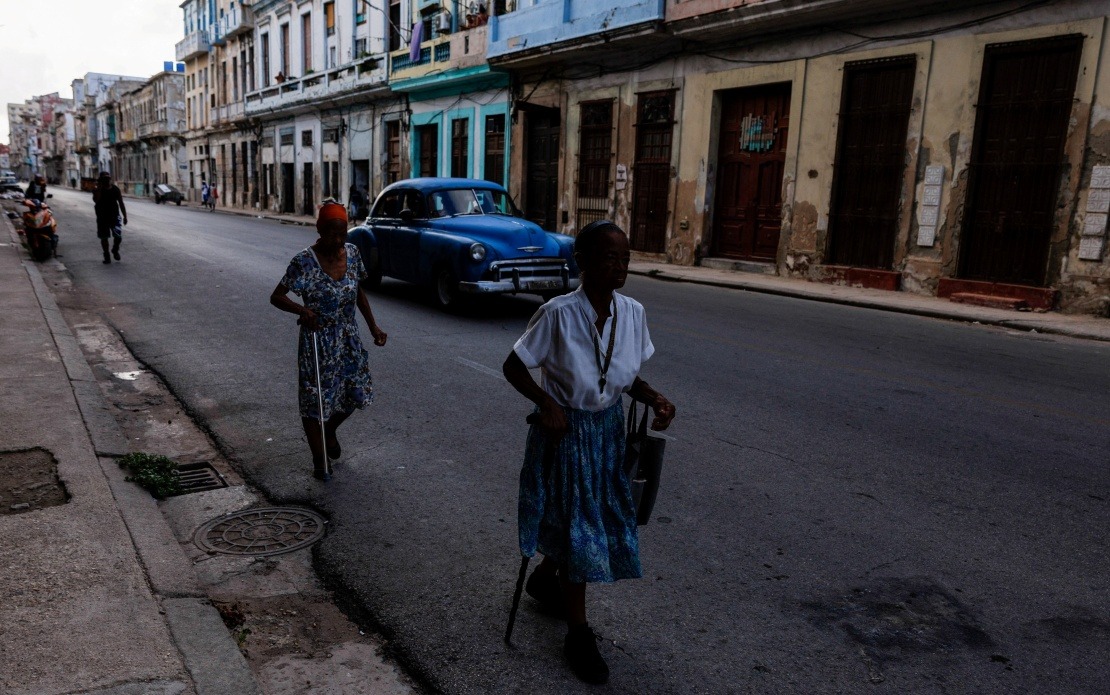
The timing of Diaz-Canel's denunciation coincides with Cuba's descent into its most severe economic contraction in recent memory. The island nation is enduring unprecedented hardship characterized by acute fuel shortages and chronic electricity deficits that have rendered normal economic and social functioning increasingly precarious. Official Cuban statistics reveal that the economy contracted sharply during the first half of 2026, accompanied by average daily power interruptions lasting approximately twenty hours, with the cumulative electricity shortage reaching 1,955 megawatts at peak deficit periods.
Cuban authorities attribute substantial responsibility for this economic deterioration to intensified American pressure rather than structural domestic mismanagement. Government officials maintain that Washington has systematically disrupted petroleum supplies destined for the island, persuaded international corporations to cease commercial dealings with Cuban enterprises, and constructed barriers preventing Havana from accessing global financial markets and credit facilities. These allegations, while disputed by American policymakers, reflect how the Cuban government frames its economic crisis as externally imposed rather than internally generated.
The Trump administration has implemented a series of escalatory measures targeting Cuban governance structures. In May 2026, President Donald Trump signed an executive order imposing fresh sanctions against specific Cuban officials and state entities, citing claims of governmental repression and alleged threats to American national security interests. Earlier, in January 2026, Trump had signed another executive order declaring a national emergency and establishing mechanisms to impose tariffs on merchandise originating from countries that supply petroleum to Cuba, effectively expanding the economic weaponry deployed against the Caribbean island.
These policy escalations represent a continuation and intensification of strategies developed during Trump's initial presidency, when his administration reversed the warming diplomatic trajectory established during the Obama years. The current iteration of sanctions reflects a conviction among American policymakers that political pressure remains an appropriate instrument for compelling governmental change in Havana, despite decades of evidence suggesting that embargo strategies have neither destabilized the Cuban regime nor catalyzed popular uprising against it.
For Malaysian and Southeast Asian observers, this ongoing American-Cuban confrontation offers instructive lessons regarding the capacity of external sanctions regimes to reshape internal political dynamics. While Cuba's socialist governance structures remain distinctive within the contemporary global system, the broader pattern of economic coercion generating nationalist consolidation rather than systemic change mirrors patterns evident elsewhere. The Cuban example suggests that sustained international pressure, particularly when perceived as ideologically motivated, may strengthen regime cohesion by enabling governments to externalize blame for economic dysfunction.
Moreover, Diaz-Canel's explicit connection between American foreign policy toward Cuba and broader interventionist patterns deserves consideration in regional contexts. The Cuban president's reference to Operation Condor, while historically situated, invokes memories of American-aligned authoritarianism that shaped Latin American political trajectories. Southeast Asian nations, numerous of which have experienced American military and intelligence involvement during Cold War and post-Cold War periods, may recognize parallels to their own historical experiences with external power projection.
The Cuban government's rhetorical strategy of situating its struggle within a broader anti-imperialist and anti-racist international framework reflects calculated diplomatic positioning. By connecting Cuban grievances to Palestinian suffering, migrant deaths, and Iranian security concerns, Havana attempts to construct solidarity networks transcending traditional state-to-state relationships. This approach proves particularly significant given Cuba's limited hard power capabilities and its consequent dependence upon soft power, moral authority, and coalition-building among non-aligned nations.
Looking forward, the trajectory of American-Cuban relations under the Trump administration remains uncertain. Historical precedent suggests that American sanctions regimes targeting Cuba are unlikely to achieve their stated objectives of compelling governmental transformation. Simultaneously, the Cuban economy's evident fragility creates genuine humanitarian risks for the island's population. Whether sustained diplomatic rupture proves sustainable alongside catastrophic economic conditions, or whether pragmatic negotiation eventually supersedes ideological confrontation, will substantially influence both Cuban internal developments and broader hemispheric geopolitical configurations.

