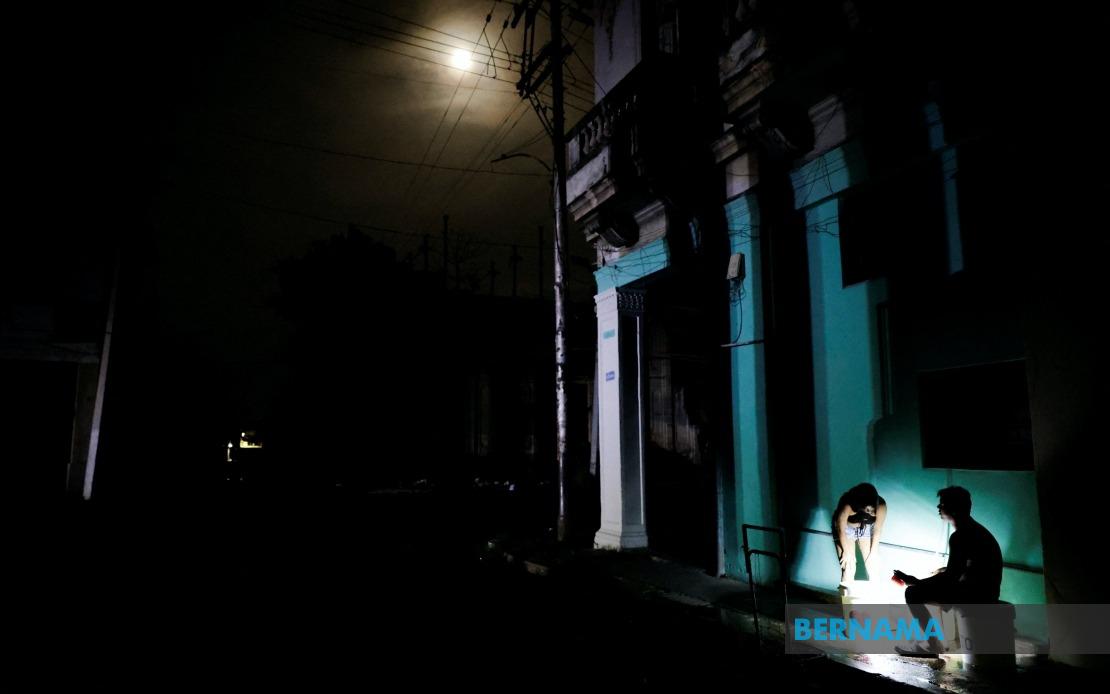
Cuba's electricity system has failed once again, leaving the entire nation without power in what authorities have confirmed as a complete grid collapse. The state-owned utility disclosed the nationwide blackout on Sunday without elaborating on the underlying cause of the system failure, according to reports citing CNN. This latest incident represents the first recorded outage of the month, yet it forms part of an accelerating pattern that has seen the Caribbean nation experience three separate nationwide blackouts during July alone, underscoring the critical fragility of Cuba's energy infrastructure.
The repeated failures carry serious implications for ordinary Cubans, whose daily routines have become fundamentally dependent on the erratic availability of electricity. Residents have adapted their lives around the unpredictability of power supply, timing essential activities such as cooking, laundry, and internet access to coincide with whatever hours electricity remains available. The extended summer season compounds these hardships, as citizens struggle to maintain adequate cooling in their homes without knowing when power will be restored. This cycle of uncertainty has effectively transformed electricity from a guaranteed utility into a scarce commodity that must be rationed and sought out opportunistically.
The deterioration of Cuba's power system reflects deeper structural challenges within the island's energy sector. The infrastructure, built during an earlier era and now showing its age, lacks the capacity to meet current demand while simultaneously struggling with maintenance backlogs and aging generation facilities. External pressures including geopolitical isolation and limited access to international financing have constrained the government's ability to invest in modernisation or repair programmes. The situation has become acute enough that authorities can no longer dismiss the problem as temporary, instead acknowledging it as a persistent crisis requiring systemic intervention.
Recognising the urgency of the situation, the Cuban government has begun implementing economic reforms designed to alleviate energy shortages while simultaneously stimulating broader economic activity. Prime Minister Manuel Marrero Cruz announced in July that the authorities had authorised the country's inaugural venture involving foreign investment specifically intended to facilitate the importation and distribution of fuel. This represents a significant departure from Cuba's traditional economic model and signals an openness to external partnerships previously considered politically controversial.
Beyond fuel initiatives, the government has simultaneously expanded the scope for private enterprise in related sectors. Nearly two hundred businesses have now received approval to participate in wholesale fuel distribution, a substantial delegation of supply-chain responsibility to the private sector. These measures collectively suggest that policymakers have concluded that state control alone cannot resolve the energy deficit, necessitating broader market participation. Additionally, lawmakers have greenlit reforms permitting private investment in the tourism industry, indicating a wider liberalisation agenda aimed at generating foreign currency and stimulating economic dynamism.
However, Marrero has tempered expectations regarding the timeline for improvements, explicitly cautioning that results will materialise only gradually. His acknowledgment that the most challenging phase of implementation is beginning suggests awareness that initial reforms may not immediately translate into visible relief for ordinary citizens. The government has embraced a pragmatic stance in managing public expectations, recognising that transforming an energy system of this scale requires sustained effort and coordinated action across multiple domains.
For Malaysia and other Southeast Asian nations observing Cuba's crisis, the developments carry cautionary implications. While Malaysia's energy infrastructure benefits from relative abundance and more developed private sector participation, the Cuban experience illustrates how even middle-income nations can face sudden systemic collapse when investment lags, infrastructure ages without modernisation, and external constraints limit access to capital. The case study demonstrates the necessity of continuous infrastructure renewal and the risks of delayed investment in power generation and transmission capacity. Regional policymakers might view Cuba's trajectory as a warning about the consequences of underestimating long-term energy demands or deferring critical maintenance.
Moreover, the political dimensions of Cuba's energy crisis merit consideration within a broader Southeast Asian context. The government's movement toward foreign investment and private-sector involvement, driven by necessity rather than ideological preference, illustrates how resource scarcity can force pragmatic policy shifts. This dynamic has relevance for various Southeast Asian governments navigating questions about optimal balances between state control and private participation in critical infrastructure. Cuba's experience suggests that energy security ultimately transcends ideological positioning when the alternative is widespread disruption to citizen welfare.
The cascading blackouts have intensified pressure on the Cuban government to demonstrate tangible progress toward stabilising the grid. With citizens experiencing multiple complete outages within consecutive months, public patience is finite, and authorities face mounting accountability for delivering results. The reforms announced represent both a genuine attempt to address root causes and a political necessity—failure to stabilise electricity supply threatens broader social cohesion and economic productivity. The months ahead will reveal whether the combination of foreign investment, private-sector expansion, and tourism liberalisation generates sufficient resources and efficiency gains to restore reliable power generation.
Cuba's accelerating energy crisis also reflects vulnerabilities inherent in island economies with limited energy diversity and restricted access to international markets. The nation's heavy historical reliance on specific fuel sources and trading partners has left it exposed when geopolitical circumstances constrain supply. For regional policymakers in Southeast Asia with their own island nations and vulnerable supply chains, the Cuban situation underscores the strategic importance of energy diversification, investment in renewable capacity, and the maintenance of multiple sources of external supply and partnership. The path forward for Cuba involves not merely solving the immediate crisis but fundamentally restructuring its energy system to enhance resilience and sustainability.

