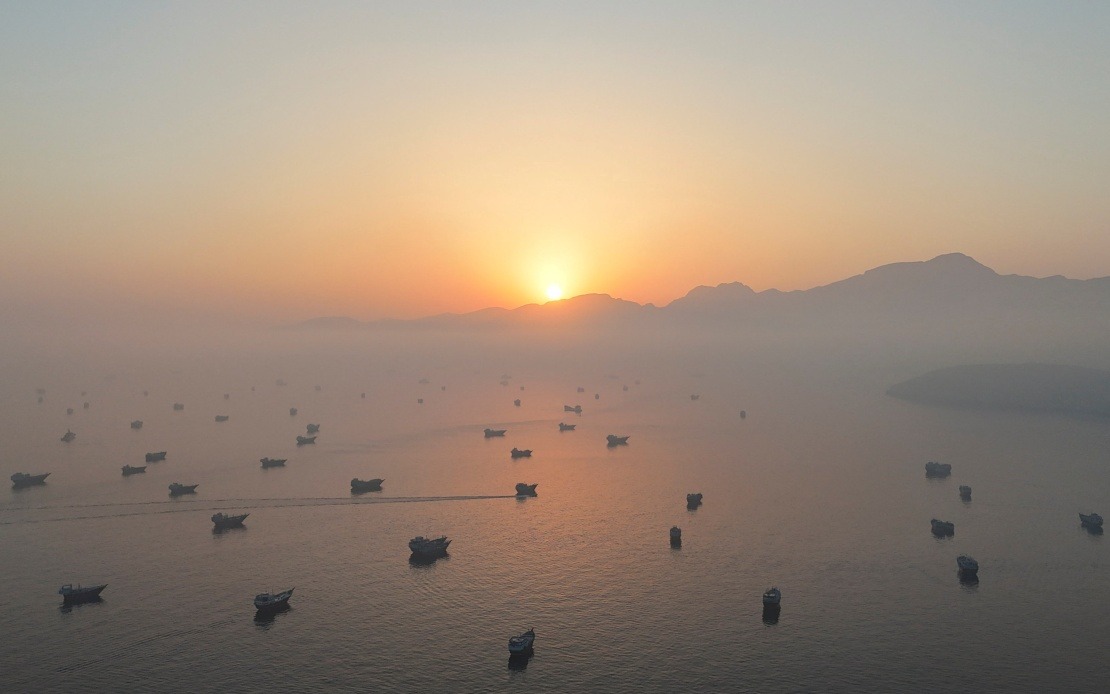
The Comprehensive and Progressive Agreement for Trans-Pacific Partnership has thrown its weight behind recent diplomatic progress between the United States and Iran, particularly efforts to restore unobstructed passage through the Strait of Hormuz and ensure the continuity of international energy commerce. The bloc's 12 member states—Australia, Brunei, Canada, Chile, Japan, Malaysia, Mexico, New Zealand, Peru, Singapore, the United Kingdom and Vietnam—made their position clear through a joint ministerial statement following virtual discussions held on Friday, 26 June in Singapore.
The statement reflects mounting concern within the trading partnership that prolonged tensions in the Middle East could inflict serious damage on global economic stability. The Strait of Hormuz, a critical chokepoint through which roughly one-third of the world's seaborne oil passes, has been a flashpoint in recent years. Disruptions there threaten not merely energy security but the supply chains underpinning manufacturing, transportation and agriculture worldwide. For Southeast Asian nations like Malaysia and Vietnam, which depend heavily on stable energy prices and uninterrupted petroleum imports, the stakes are particularly high.
The ministers acknowledged that far more than crude oil hangs in the balance. Petroleum derivatives including diesel, natural gas, petrochemical feedstocks and fertilisers all transit these waters. A sustained blockade or security crisis would ripple across multiple economic sectors simultaneously. Developing economies in Southeast Asia and the Pacific region would face compounded hardship—inflated energy costs, disrupted farming output and constrained manufacturing capacity. By endorsing the reopening initiative, CPTPP members are essentially recognizing that energy security today is inseparable from food security and industrial resilience.
Central to the bloc's message is an unequivocal commitment to the principle of freedom of navigation enshrined in international maritime law, specifically the United Nations Convention on the Law of the Sea. This legal framework provides the architecture for predictable, rules-based commerce at sea. The ministers stressed that maintaining open and secure sea lanes—free from arbitrary interference or military blockade—represents not a favour but a fundamental requirement for functioning global trade. By anchoring their statement in UNCLOS, CPTPP members positioned their stance as a defence of established international order rather than a partisan stance in regional disputes.
The bloc further called upon all nations to refrain from imposing trade restrictions that lack clear justification under international agreements. This language, while diplomatically measured, carries a subtle warning to any actor considering unilateral sanctions or blockades that harm innocent third parties. For smaller trading nations in Southeast Asia, this reaffirmation of rules-based trade provides crucial reassurance that their access to global markets and resources will not be held hostage to external geopolitical quarrels.
Particularly significant is CPTPP's recognition of the Partnership On Wide Energy and Resources Resilience Asia, commonly known as POWERR Asia. This initiative seeks to build more robust energy supply chains by fostering coordination between energy producers and consumer nations. Rather than relying on a single corridor—such as the Hormuz route—diversified sourcing and transportation networks reduce systemic risk. For Malaysia, which sits at the heart of Southeast Asia's maritime trade networks, supporting such resilience-building efforts aligns with the nation's strategic interest in maintaining stable regional commerce.
The ministers explicitly acknowledged the particular vulnerabilities of small-island developing states, especially those in the Pacific region. These economies, many of which are CPTPP members or partners, face acute energy security challenges due to their isolation and limited alternatives for supply. A single disruption to shipping lanes can cripple their economies. By highlighting this concern in an official statement, the bloc signals that equitable burden-sharing in maintaining global maritime security benefits wealthy trading nations and vulnerable island states alike.
The timing of the CPTPP statement underscores how geopolitical instability intersects with ongoing supply-chain crises. Global commerce has not fully recovered from the shocks of the COVID-19 pandemic, semiconductor shortages and earlier port congestion. Fresh disruptions to energy flows would compound these existing pressures and delay economic recovery across the Indo-Pacific region. For Malaysian manufacturers and exporters, who depend on predictable input costs and reliable logistics, this reaffirmation of commitment to free trade and open markets carries immediate relevance.
Moreover, the statement's emphasis on collective action to address current supply-chain disruptions reflects a broader strategic calculation among CPTPP members. The 12 nations represent roughly 13 per cent of global GDP and span three continents. By acting together to uphold rules-based trade and advocate for open shipping lanes, they amplify their diplomatic weight. This coordinated stance is more likely to influence outcomes than individual appeals. For smaller members like Brunei and Singapore, participating in a unified CPTPP position multiplies their voice in international forums.
The virtual format of the ministerial meeting itself warrants note. Conducted online rather than in-person, it demonstrates that CPTPP members prioritise consensus-building and rapid coordination even when diplomatic travel proves inconvenient. This operational flexibility has become hallmark of the bloc's functioning during the pandemic era and reflects its evolution as a genuinely functioning multilateral institution capable of responding to crises.
For Malaysia and other Southeast Asian CPTPP members, the broader implication is that their alignment with a major trading coalition provides leverage in addressing regional security challenges. The Strait of Hormuz, while not in Southeast Asian waters, profoundly affects the region's prosperity. By anchoring a CPTPP stance on maritime security and energy trade, Malaysian policymakers gain diplomatic partners in advocating for stability and adherence to international law—principles that serve Southeast Asia's interests in an era of rising geopolitical tensions.
The statement ultimately represents a calculated assertion that prosperity depends on predictability, that markets function best when rules are transparent and enforced fairly, and that even trading blocs with divergent interests can find common ground on fundamentals. As the global economy navigates continued uncertainty, this message carries weight.

