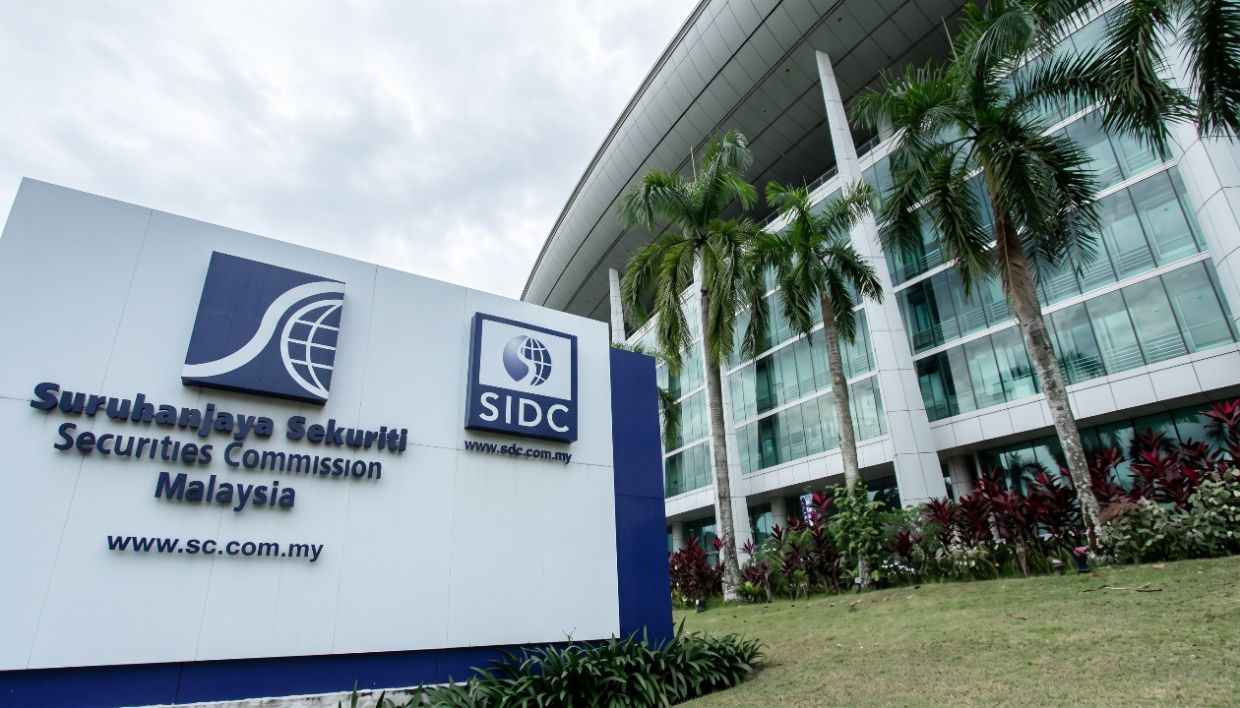
Malaysia's appellate judiciary has dealt a significant blow to businessman Wong Shee Kai, commonly known as Ricky Wong, by dismissing his challenge to a sweeping asset freeze worth RM169.2mil. The three-judge bench of the Court of Appeal, led by Justices Datuk Ravinthran N. Paramaguru, Datuk Dr Choo Kah Sing and Datuk Leonard David Shim, rejected appeals filed by Wong, his associate Teh Sew Wan and their corporate vehicle Wong SK Holdings Sdn Bhd on Monday. The decision represents a critical juncture in a protracted civil enforcement action pursued by the Securities Commission Malaysia (SC), which has been investigating alleged breaches of securities regulations spanning nearly a decade.
The appellate court's ruling affirmed the existing injunction framework established by the High Court, which has progressively tightened restrictions on the respondents' financial assets and property holdings. An initial ex parte injunction was granted on May 8, 2020, giving the SC considerable leverage in its enforcement proceedings. Subsequently, on April 28, 2022, the High Court upgraded this to a more comprehensive inter partes injunction following full adversarial hearings, broadening the scope of frozen assets to encompass up to RM169.2mil. This dual-stage injunctive process reflects the regulator's confidence in establishing a prima facie case of wrongdoing while simultaneously preventing potential dissipation of disputed assets during the pendency of litigation.
The injunction itself operates as a powerful procedural tool that extends beyond merely freezing liquid assets. The court order explicitly prohibits any person from knowingly facilitating or permitting transactions involving the appellants' assets and properties, creating a comprehensive barrier against indirect transfers or beneficial ownership arrangements. Such prohibitions are standard in complex financial crime cases, as they close potential loopholes through which assets might be spirited away via intermediaries or layered transactions. The breadth of the restriction underscores judicial concern about the sophistication of potential evasion strategies available to well-resourced respondents.
The underlying civil suit that prompted this enforcement action stems from alleged contraventions of the Capital Markets and Services Act 2007 (CMSA), Malaysia's primary securities legislation. Specifically, the SC alleges violations of Section 179 of the CMSA, which addresses various forms of securities fraud and market manipulation. The regulator initiated proceedings in 2020, but the case remains in active trial phase at the Kuala Lumpur High Court, with substantive hearings scheduled to resume on September 1, 2026. This extended timeline is not uncommon in complex securities litigation involving multiple parties, voluminous documentary evidence, and intricate financial transactions that require meticulous examination and expert testimony.
The appellate judgment carries implications for Malaysia's broader enforcement architecture in securities regulation. The SC's legal victory demonstrates that Malaysian courts continue to support robust injunctive relief in civil fraud cases, recognising the legitimate need to preserve the corpus of disputed assets pending final resolution. This approach aligns with international best practices in securities enforcement, where asset preservation is considered essential to ensuring that any eventual judgment can be satisfied rather than rendered nugatory by asset dissipation. The message to potential wrongdoers is unambiguous: Malaysian courts will not readily overturn asset-freezing orders simply because appellants contest their legal foundation.
Wong's legal representation, led by prominent attorney Tan Sri Muhammad Shafee Abdullah from Messrs Shafee & Co, mounted a robust defence, while Teh Sew Wan was represented by Tan Sri Cecil W. M. Abraham from Messrs Cecil Abraham & Partners. The SC's case was presented by Mohd Hafiz Mohd Yusoff and Loo Kit Ming Keith, with external counsel Datuk Lim Chee Wee and Kwan Will Sen from Messrs Lim Chee Wee Partnership providing specialized litigation support. The quality of legal representation on all sides reflects the complexity and stakes involved in this proceeding, which touches upon fundamental questions regarding regulatory overreach, due process, and asset rights.
The Court of Appeal additionally dismissed the appellants' attempt to set aside the original ex parte injunction, a procedural move that sought to unwind the entire enforcement action from its inception. This refusal to disturb earlier orders suggests that the appellate court found no sufficient grounds to second-guess the High Court's earlier determination that the SC had demonstrated a serious issue to be tried and that the balance of convenience favoured asset preservation. Such deference to lower court injunctive decisions is typical unless appellants can demonstrate manifest error or procedural unfairness, a high threshold rarely met in practice.
The court imposed costs of RM200,000 against the appellants, payable to the SC. While not an astronomical sum relative to the quantum of assets at stake, the cost order serves a dual function: compensating the regulator for successful litigation and creating a modest financial disincentive against frivolous appellate challenges. In enforcement actions, costs awards also reflect judicial disapproval of resistance deemed to lack merit, signalling to the financial sector that regulatory proceedings should be taken seriously rather than dismissed as nuisances to be contested at every procedural stage.
A complicating factor in this case is Wong's apparent absence from Malaysia. The SC has publicly stated that Wong remains at large and is also the subject of criminal charges under the Anti-Money Laundering, Anti-Terrorism Financing and Proceeds of Unlawful Activities Act 2001, in addition to the CMSA violations alleged in the civil suit. This overlap between civil enforcement and criminal investigation creates a complex landscape wherein the regulator must simultaneously pursue asset recovery through court orders while also supporting law enforcement agencies investigating predicate offences. The SEC has appealed to members of the public to provide information regarding Wong's whereabouts, indicating that locating him has proven challenging despite the intensity of the investigation.
The convergence of securities fraud allegations with anti-money laundering concerns suggests that the underlying conduct may involve not merely regulatory violations but potentially more serious criminality involving proceeds of unlawful activity. Malaysian regulators have become increasingly sophisticated in tracing cross-border asset flows and in applying proceeds-of-crime legislation to securities fraud cases. The prolonged trial timeline extending to 2026 provides ample opportunity for further developments, including possible criminal prosecutions that could inform the civil proceedings or vice versa. For Malaysian investors and the broader financial system, the case serves as a potent reminder that regulatory oversight remains active and that the SC possesses both the statutory authority and judicial backing to pursue aggressive enforcement actions.
The decision also carries significance for corporate governance in Malaysia, particularly regarding the liability exposure of company directors and officers who facilitate or permit securities fraud within their organisations. The fact that Wong SK Holdings Sdn Bhd was included as a respondent demonstrates that corporate entities cannot shield individuals from regulatory scrutiny, and that asset-freezing orders may extend to corporate vehicles through which misconduct was perpetrated. This approach encourages corporate boards and compliance functions to maintain robust internal controls, as the consequences of regulatory failure now clearly extend to comprehensive asset preservation pending litigation outcome.
Looking forward, the September 2026 trial resumption will provide the first opportunity for substantive adjudication on the merits of the SC's securities fraud allegations. Until then, the appellants remain subject to the RM169.2mil asset freeze, unable to access or dispose of the encumbered assets without court permission. For investors who may have been harmed by the alleged conduct, the civil suit represents a potential avenue for recovery, though such relief would be subordinate to any criminal restitution orders that might emerge from parallel criminal proceedings. The case exemplifies the interconnected nature of modern financial crime enforcement, where regulatory, civil, and criminal pathways often converge to address misconduct affecting market integrity and investor protection.

