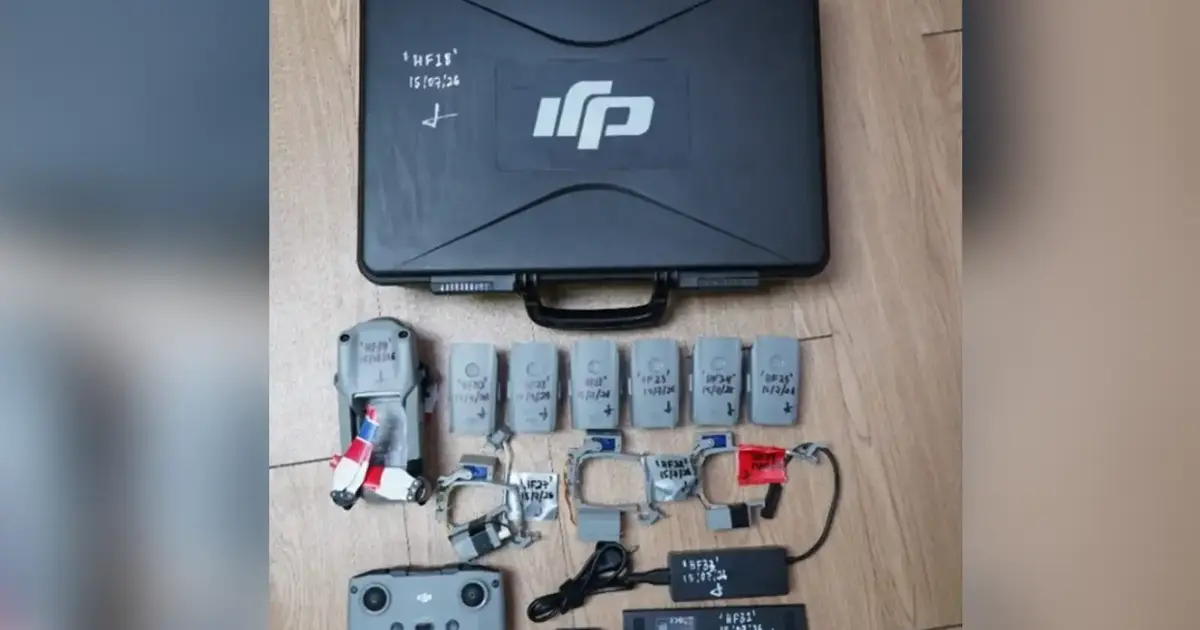
A couple faces investigation after attempting to smuggle tobacco into Melaka prison through an aerial delivery method, in what police authorities describe as a carefully coordinated scheme involving at least one detainee behind bars. The arrest marks the latest case of contraband entering Malaysian correctional facilities through increasingly sophisticated methods, drawing attention to persistent security vulnerabilities in the nation's prison system.
The Melaka police chief disclosed details of the operation during a briefing, emphasising that the smuggling attempt represented a deliberate conspiracy rather than an opportunistic act. According to law enforcement, the couple had coordinated timing and logistics with an inmate, suggesting advance planning and knowledge of the facility's routines and vulnerabilities. This level of organisation underscores how prison contraband networks often operate through networks of family members and associates on the outside who maintain regular communication with inmates.
The use of drone technology in this instance reflects a troubling evolution in smuggling tactics across Malaysian prisons. Where earlier contraband operations relied on visitors, corrupt staff, or items thrown over perimeter fences, operators now deploy unmanned aerial vehicles capable of bypassing traditional security measures. Drones can navigate airspace beyond the reach of guards, time deliveries to coincide with shift changes, and deposit packages in designated yard areas with minimal detection risk. The technology presents authorities with novel enforcement challenges, as conventional prison security protocols were largely developed for ground-level threats.
Tobacco remains one of the most frequently smuggled items into Malaysian correctional institutions, functioning as both a consumable commodity and a form of currency within prison economies. Inmates trade tobacco for favours, debts, and protection arrangements, making the substance valuable beyond its immediate use. The black market for tobacco inside prisons often generates significant profit for external smuggling networks, providing incentive for repeated attempts despite escalating penalties and detection efforts.
The incident in Melaka reflects broader prison security concerns affecting facilities nationwide. Malaysian correctional departments have struggled to implement comprehensive counter-smuggling protocols whilst maintaining operational efficiency and staff capacity. While some prisons have installed perimeter surveillance and metal detectors, resource constraints and aging infrastructure limit the deployment of advanced technologies across the entire system. The drone-based attempt suggests that security measures currently in place remain inadequate against determined smuggling operations.
Family involvement in such schemes complicates enforcement and raises questions about prison visiting policies and communication monitoring. Inmates maintaining regular contact with relatives create natural channels through which smuggling instructions can flow. The psychological pressure on family members to assist incarcerated relatives, combined with economic incentives offered by smuggling networks, creates vulnerability that operators exploit. Police investigations into this case will likely trace the conspiracy chain to determine whether outside criminal organisations directed the operation or whether arrangements originated entirely from within the inmate's personal relationships.
The arrest carries implications for Malaysia's broader criminal justice and corrections administration. Rising smuggling incidents signal either deteriorating security or increased sophistication among criminal networks—likely both factors are contributing. Policymakers face mounting pressure to modernise prison infrastructure and implement emerging security technologies, yet budget allocations for corrections remain comparatively modest within national security spending. States like Melaka, with limited resources relative to larger peninsular jurisdictions, face particular challenges in upgrading facilities to counter contemporary smuggling methods.
International experience demonstrates that comprehensive anti-smuggling strategies require multi-layered approaches combining physical security, technology, personnel screening, and inmate management protocols. Scanner systems that detect drone signals, restricted airspace enforcement, visitor screening procedures, and intelligence gathering on smuggling networks all play roles in reducing contraband flow. Several developed nations employ dedicated prison counter-surveillance units equipped with drone detection technology—capabilities that remain largely absent in Malaysian correctional settings.
The case also highlights the human dimensions of prison security. Corrupt staff members represent significant vulnerability points, as history demonstrates that a minority of correctional officers can be compromised through financial incentives or personal relationships. Internal investigations accompanying this smuggling arrest will likely examine whether prison personnel facilitated the operation through negligence or active participation. Strengthening vetting procedures and monitoring systems for staff ranks amongst the institutional reforms regularly recommended by prison watchdog organisations and human rights groups.
Looking forward, this incident may catalyse discussions within Malaysia's Prisons Department regarding updated security protocols and technology investments. The visibility of drone-based smuggling attempts in media coverage creates political momentum for modernisation efforts that might otherwise face budgetary resistance. However, sustained commitment to implementation matters considerably—security upgrades require not merely capital investment but ongoing training, maintenance, and organisational commitment to enforcement consistency.
The arrest of the couple represents a detection success for authorities, yet it simultaneously demonstrates the determined, evolving nature of prison contraband operations. As long as significant demand for prohibited items persists within Malaysian correctional facilities, external networks will continue refining methods to supply those demands. Effective counter-smuggling efforts require simultaneous attention to supply reduction, demand management through rehabilitation programming, and institutional security measures—a comprehensive approach that remains incompletely implemented across the Malaysian prison system.

