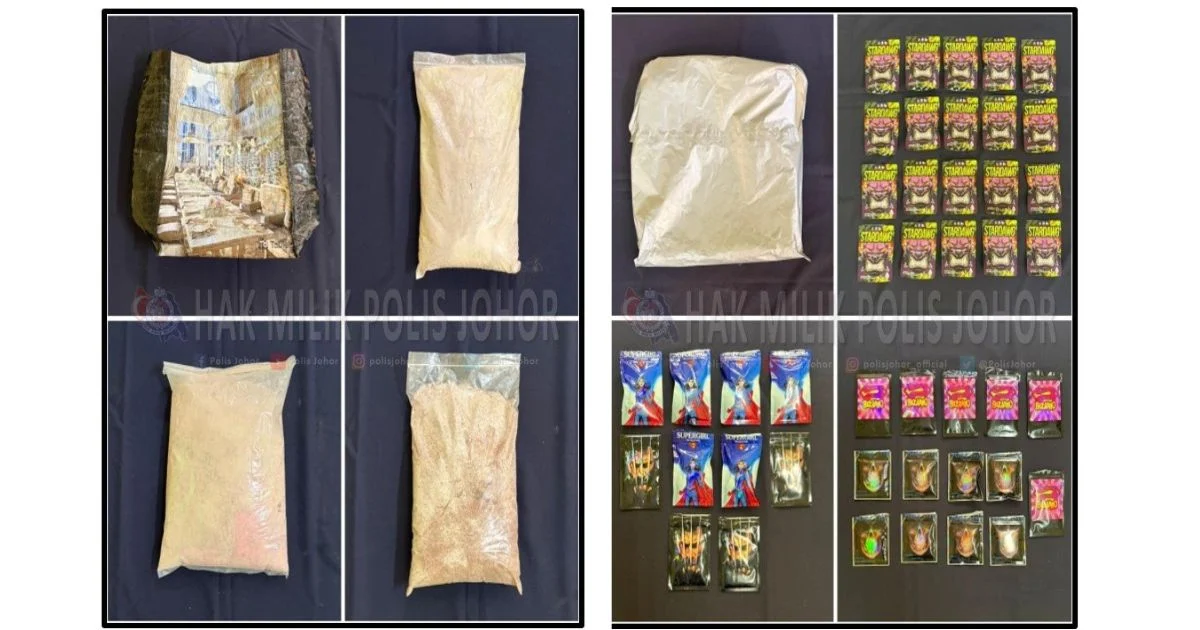
Police have dismantled a significant drug syndicate operating in the Kulai district of Johor after apprehending a married couple and confiscating a substantial cache of narcotics. The operation, which culminated in arrests that authorities are treating as a major breakthrough against organised trafficking, resulted in the seizure of controlled substances estimated to be worth RM3.59 million at street value.
The couple's detention marks another chapter in the ongoing battle between law enforcement agencies and drug trafficking networks that continue to exploit Johor's strategic location as a transit hub for narcotics destined for Malaysian consumption and regional distribution. Kulai, which sits along important transport corridors connecting to Kuala Lumpur and Singapore, has historically served as a focal point for such operations, making this latest interdiction particularly significant for authorities seeking to disrupt supply chains.
While details regarding the specific substances seized remain under investigation, operations of this scale typically involve synthetic drugs such as methamphetamine in its various forms, as well as heroin and other opioids that command substantial sums in illicit markets across Southeast Asia. The estimated valuation reflects both the volume and type of contraband recovered, suggesting the couple may have been operating at a wholesale or mid-level distribution tier rather than as street-level retailers.
The timing of this operation underscores the Johor police's intensified focus on dismantling organised trafficking rings rather than pursuing only low-level offenders. Such targeted enforcement strategies have proven more effective in disrupting supply networks, as removing individuals positioned at critical junctures within distribution hierarchies can temporarily disrupt the flow of narcotics across state boundaries. The removal of coordinating figures like this couple often creates organisational confusion within syndicates, forcing restructuring that leaves networks vulnerable to further law enforcement intervention.
For Malaysian readers, the implications extend beyond the immediate arrest. Johor's role in regional drug flows directly affects drug availability and related crime rates throughout the country. When enforcement successes occur in this state, they generate ripple effects across other corridors, potentially creating temporary shortages or price spikes in illicit markets that can reduce consumption temporarily or displace activities geographically.
The involvement of a married couple in the operation reflects a pattern increasingly observed in major drug enforcement cases across Malaysia and the region. Such arrangements often allow syndicates to compartmentalise operations, making surveillance more difficult while enabling couples to exploit shared living arrangements and trust relationships to conceal trafficking activities. The partnership structure also complicates asset tracing and financial investigations, as illicit proceeds can be mixed with legitimate household finances.
The RM3.59 million valuation places this operation among significant recent seizures in Johor, suggesting the couple had developed sufficient infrastructure and distribution networks to handle substantial volumes. The seizure amounts reflect not only police success in identifying and interdicting the shipment but also the escalating street values of controlled substances in Malaysia, where limited supply and high demand sustain premium pricing throughout distribution chains.
This bust occurs within a broader context of evolving drug trafficking patterns across Southeast Asia. Criminal organisations have increasingly invested in sophisticated methods including maritime smuggling, parcel courier networks, and online marketplaces to circumvent traditional law enforcement checkpoints. The success against the Kulai operation demonstrates that ground-level intelligence and conventional investigative techniques remain effective, though police acknowledge that more resources directed toward digital investigations and financial tracking could yield additional breakthroughs.
The arrest also highlights the continuing vulnerability of family-based criminal enterprises to detection and prosecution. While such arrangements offer certain operational advantages, they also generate increased scrutiny from neighbours and community members, providing avenues for tip-offs to authorities. Malaysia's drug task forces have successfully leveraged community reporting mechanisms, particularly in residential areas where large-scale operations inevitably produce telltale signs of suspicious activity.
Moving forward, law enforcement agencies in Johor will likely scrutinise the couple's contacts, suppliers, and customer networks to identify additional nodes within the distribution system. Such follow-up investigations frequently lead to secondary arrests and seizures as investigators trace product flows upstream to smuggling operations and downstream to retail-level distributors. The intelligence gathered from examining the couple's communications, financial records, and physical assets will inform strategic responses against other trafficking organisations operating regionally.
For policymakers and enforcement officials, operations like this underscore the ongoing need for sustained resources, inter-agency coordination, and neighbourhood participation in combating drug trafficking. While individual seizures capture headlines, systematic dismantling of supply infrastructure requires persistent effort and intelligence-driven strategies that connect street-level crimes to organisational structures. The Kulai operation represents one tactical victory in what remains a prolonged strategic engagement against trafficking networks that continue adapting their methods in response to law enforcement pressure.

