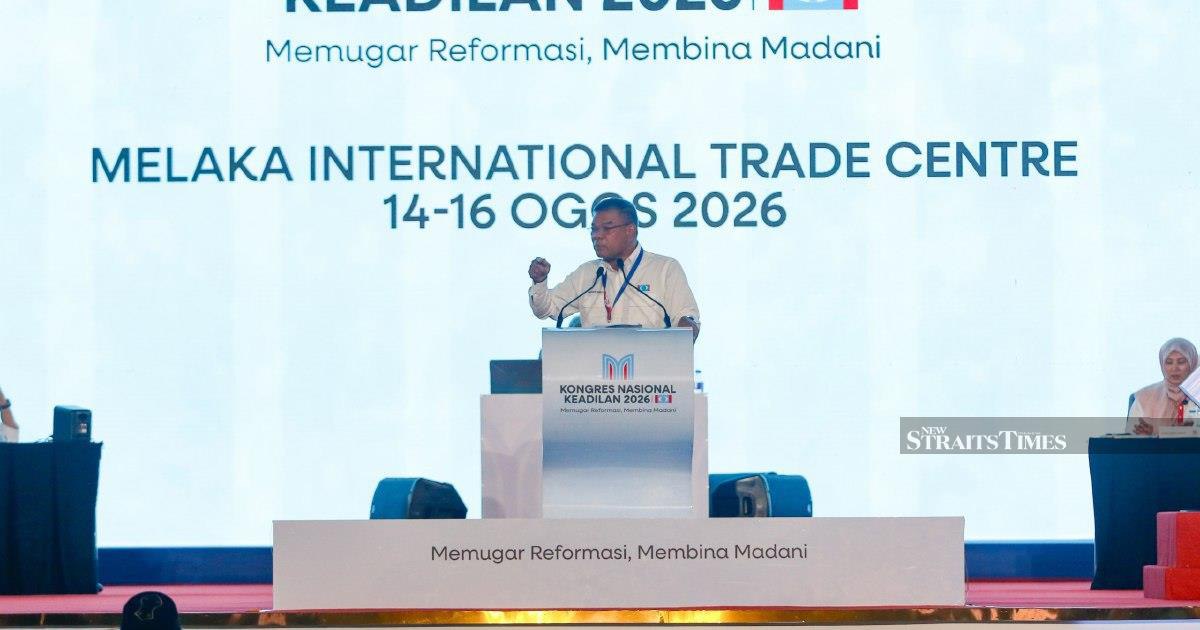
Datuk Seri Saifuddin Nasution Ismail, speaking in his capacity as PKR vice-president, has stressed that Malaysia's efforts to combat corruption should rest fundamentally on moral principles and institutional governance rather than becoming entangled in divisive identity politics. The call, made at Ayer Keroh, reflects growing concern among political leaders that anti-graft initiatives risk being weaponised along communal lines in ways that undermine their effectiveness and broaden social rifts.
The emphasis on decoupling the anti-corruption agenda from racial and religious considerations carries particular weight in Malaysia's political context, where such concerns have historically been invoked to mobilise constituencies. Saifuddin's intervention suggests that maintaining the integrity of governance reforms requires insulating them from appeals to ethnic or faith-based loyalties, which can distort policy implementation and erode public trust across diverse communities.
Anti-corruption efforts in Malaysia have periodically been scrutinised for their consistency and equitability in enforcement. By framing the fight against graft as a universal ethical matter touching all segments of society irrespective of background, Saifuddin appears to be advocating for institutional mechanisms that apply standards uniformly and transparently. This approach theoretically builds broader coalitions and prevents the narrative from being hijacked to serve narrow political interests.
The distinction between treating corruption as a governance challenge versus a tool for communal political advantage is strategically significant. When anti-corruption campaigns become tribal affairs, they risk becoming selectively applied, eroding credibility and permitting officials to deflect scrutiny by framing investigations as harassment along communal lines. Conversely, presenting graft as an impediment to national development that harms all citizens creates space for multiethnic participation in reform movements.
Malaysia's own history illustrates the consequences of allowing corruption narratives to be captured by partisan and communal framing. The 1MDB scandal, whilst prompting genuine institutional reforms and heightened public awareness, also became entangled in political blame allocation along expected factional lines. Saifuddin's remarks suggest a desire to learn from such experiences and establish clearer boundaries between legitimate accountability and political opportunism.
From a Southeast Asian perspective, Malaysia's approach to anti-corruption governance remains instructive for regional peers navigating similar challenges. Indonesia, Thailand, and other countries contending with entrenched corruption have likewise grappled with ensuring that enforcement mechanisms maintain impartiality despite being staffed by individuals embedded in particular political networks. The elevation of anti-graft work to a non-partisan, moral framework offers a template for resisting institutional capture.
The practical implementation of such principles remains demanding. Establishing agencies and processes genuinely shielded from political pressure requires structural protections, transparent procedures, and political maturity across competing coalitions. Saifuddin's framing acknowledges that rhetorical commitment to depoliticising anti-corruption, whilst necessary, is insufficient without institutional architecture and procedural safeguards that embody that commitment in practice.
Public perception constitutes another dimension. Citizens observing selective enforcement patterns or observing that investigations disproportionately target certain communities will discount official claims of institutional neutrality. Building credibility requires demonstrable consistency, public reporting of investigations and outcomes, and willingness to pursue cases impartially regardless of political affiliation or background of suspects. This transparency obligation applies equally to oversight bodies and investigating agencies.
The role of civil society and independent media in maintaining this framework cannot be understated. By scrutinising enforcement consistency and scrutinising how narratives are being constructed around anti-corruption matters, these actors help prevent the instrumentalisation Saifuddin cautions against. Malaysia's relatively robust civil society infrastructure, whilst sometimes strained, provides foundation for such watchdog functions.
Saifuddin's articulation also implicitly recognises that Malaysia's multicommunal character requires political leaders to exercise restraint and responsibility in how they deploy certain narratives. Choosing to frame corruption as a collective national problem rather than a particular community's failing or as evidence of particular group's unfitness for power requires conscious effort and political discipline, particularly when short-term electoral incentives might reward more divisive messaging.
The long-term health of Malaysian governance depends significantly on whether anti-corruption campaigns can be sustained as principled, institution-driven efforts rather than cyclical surges driven by political convenience. Saifuddin's intervention contributes to establishing intellectual and moral foundations for such sustainability by explicitly rejecting the framing of graft-fighting as a vehicle for communal political advantage.
Moving forward, whether Malaysian political leadership collectively embraces this principle will substantially determine whether anti-corruption efforts translate into durable institutional improvements or become another arena where communal competition plays out, ultimately leaving underlying governance vulnerabilities unresolved.

