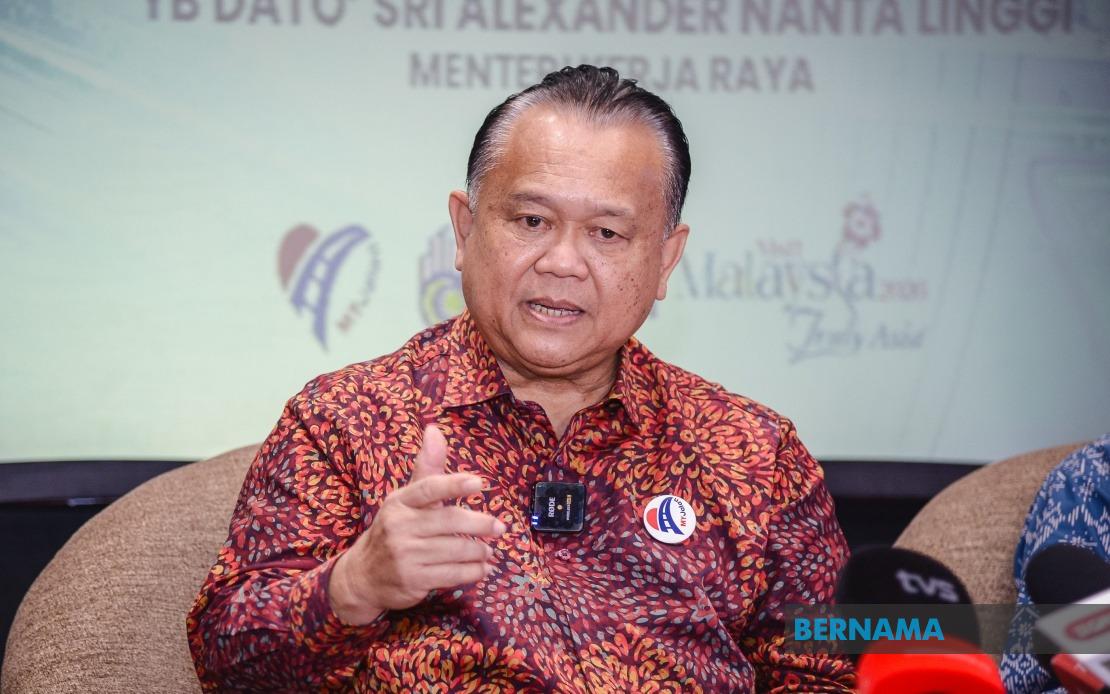
The Ministry of Works (KKR) is evaluating an ambitious slate of 30 strategic proposals from Malaysia's construction sector as it prepares Budget 2027, signalling the government's commitment to reshaping how the nation plans, finances and executes infrastructure development. Minister Datuk Seri Alexander Nanta Linggi unveiled the proposals at an industry dialogue in Putrajaya on Tuesday, emphasizing that these wishlists would be vetted against the MADANI Economy framework, which prioritizes high-impact returns while maintaining a healthy industry ecosystem. The breadth of engagement—drawing from 87 industry submissions among 117 total proposals received by early August—reflects both the sector's expectations for support and the ministry's determination to incorporate private-sector perspectives into budgetary planning.
The ministry has crystallized its construction-sector strategy around five transformation pillars that collectively represent a departure from conventional infrastructure delivery. Beyond the foundational objective of expanding and strengthening Malaysia's road network whilst executing high-visibility projects, KKR is simultaneously pursuing sustainable infrastructure aligned with the country's energy transition roadmap. The inclusion of Industry 4.0 technologies—specifically Building Information Modelling, Internet of Things systems and artificial intelligence applications—signals recognition that Malaysian construction firms must compete on innovation and efficiency rather than labour costs alone. Meanwhile, the ministry aims to nurture local contractors from G1 through G4 classifications, addressing a persistent weakness in the sector's ability to scale up home-grown enterprises. The MYJalan road-safety initiative completes the framework, indicating that infrastructure quality and user safety will factor into budget allocation decisions.
What distinguishes Nanta's articulation of these priorities is his explicit rejection of siloed thinking. He characterized the five pillars not as separate budget lines but as interconnected components of wholesale transformation in infrastructure governance and delivery. This conceptual framing reflects growing international best practice in which infrastructure ministries view their role as optimizers of returns on public capital rather than mere custodians of spending authority. For Malaysian policymakers and industry stakeholders, the implication is profound: future funding will flow toward projects and contractors demonstrating competence in digital tools, environmental stewardship and productivity innovation, creating competitive pressure throughout the supply chain.
The minister articulated a fundamental philosophical shift in how KKR assesses infrastructure spending. Rather than measuring success through budget consumption or project completion rates, the ministry intends to evaluate every ringgit according to measurable impact—a move that should reward efficiency and penalize waste. This outcome-focused approach demands that Malaysian construction firms substantially elevate their capabilities. Nanta specifically cited Building Information Modelling, artificial intelligence, green technology and the Industrialised Building System as essential competencies. The underlying argument is that local companies cannot sustainably compete internationally on price alone; instead, Malaysian contractors must migrate toward higher-value niches where superior project management, technological sophistication and sustainable practices command premium positioning.
The industry's own feedback, aggregated from the 87 proposals, reveals concerns that extend beyond budget quantum. Construction players have called for improved governance and contractual frameworks, indicating frustration with inconsistent administration of existing agreements. The sector has also prioritized workforce development, acknowledging that skilled labour shortages constrain productivity and quality. Material and logistics costs emerged as persistent pain points, suggesting that supply-chain inefficiencies are eroding competitiveness. Additionally, industry submissions highlight the necessity for accelerated ESG and sustainability adoption—a sign that Malaysian construction firms recognize regulatory and commercial pressures favour environmentally responsible operations. The emphasis on greater utilization of domestically sourced materials reflects both economic-nationalism sentiments and recognition that local supply chains reduce cost volatility and support domestic employment.
An important dimension of the industry engagement involves supporting the lower-tier contractor ecosystem. Nanta acknowledged that small and mid-sized contractors, consulting practices, skilled workers and allied service providers operate from vastly different starting positions and face distinct constraints. Cash-flow challenges disproportionately affect smaller firms, which lack the balance-sheet strength of major corporations to absorb payment delays. Technology access remains unequally distributed, with digitalization tools and expertise concentrated among larger players. Bureaucratic approval processes can be prohibitively time-consuming for lean organizations lacking dedicated compliance personnel. By explicitly addressing these disparities, KKR signals that inclusive growth—enabling more firms to ascend the contractor hierarchy—forms part of its Budget 2027 strategy. This approach aligns with broader government emphasis on wealth creation beyond major corporations.
The minister also reframed budget constraints as an impetus for creativity rather than a reason for ambition reduction. This rhetorical move carries practical significance: it suggests that KKR will not simply reduce project scope or deferit infrastructure work due to fiscal pressures. Instead, the ministry appears committed to identifying innovative financing mechanisms, public-private partnerships, technology-enabled delivery efficiencies and strategic prioritization to maximize infrastructure impact within available resources. This stance should encourage industry players to propose unconventional delivery models rather than passively accepting reduced appropriations. For Malaysian infrastructure investors and development agencies, the implication is that competitive advantage will accrue to organizations demonstrating creative problem-solving capacity.
The budgetary context provides essential backdrop. Under Budget 2026, KKR received RM10.692 billion—a 3.3 per cent year-on-year increase—with RM9.607 billion allocated to development expenditure for both new initiatives and continuations of existing projects. While this represents growth, it remains constrained relative to infrastructure demand across a rapidly urbanizing middle-income economy. The allocation discipline reinforces the ministry's emphasis on impact maximization and judicious prioritization. Budget 2027, to be tabled in the Dewan Rakyat on October 9, will reveal whether the ministry's stated transformation ambitions translate into concrete funding realignment favouring the five identified priorities.
For Malaysian readers and regional observers, these developments merit attention for several reasons. First, infrastructure quality and execution efficiency directly affect economic productivity, cost of living and quality of life. Improvements in road networks, construction safety and project delivery speed generate tangible benefits across society. Second, the sector's health influences employment and skills development for hundreds of thousands of Malaysians. Third, construction-industry competitiveness carries implications for the country's ability to attract regional development projects and establish itself as a centre for infrastructure expertise. Fourth, the emphasis on sustainability and ESG practices positions Malaysian construction aligned with international environmental commitments and investor expectations. Finally, the inclusive focus on supporting smaller contractors and workers reflects recognition that broad-based prosperity depends on enabling opportunity beyond elite corporate circles.
The consultation process itself demonstrates institutional evolution. Rather than imposing top-down directives, KKR solicited industry perspectives and is integrating them into budgetary planning. This collaborative approach should improve policy quality by incorporating ground-level insights and building stakeholder buy-in. For other Malaysian government agencies and ministries, the Works Ministry's methodology may serve as a model for evidence-based, consultative budget formulation. The challenge ahead involves translating these articulated principles and accumulated proposals into concrete allocation decisions and policy implementation. The October 9 budget presentation will provide the first indication of how seriously the government has absorbed the construction sector's input and whether stated priorities for transformation, productivity and inclusion receive corresponding financial commitment.

