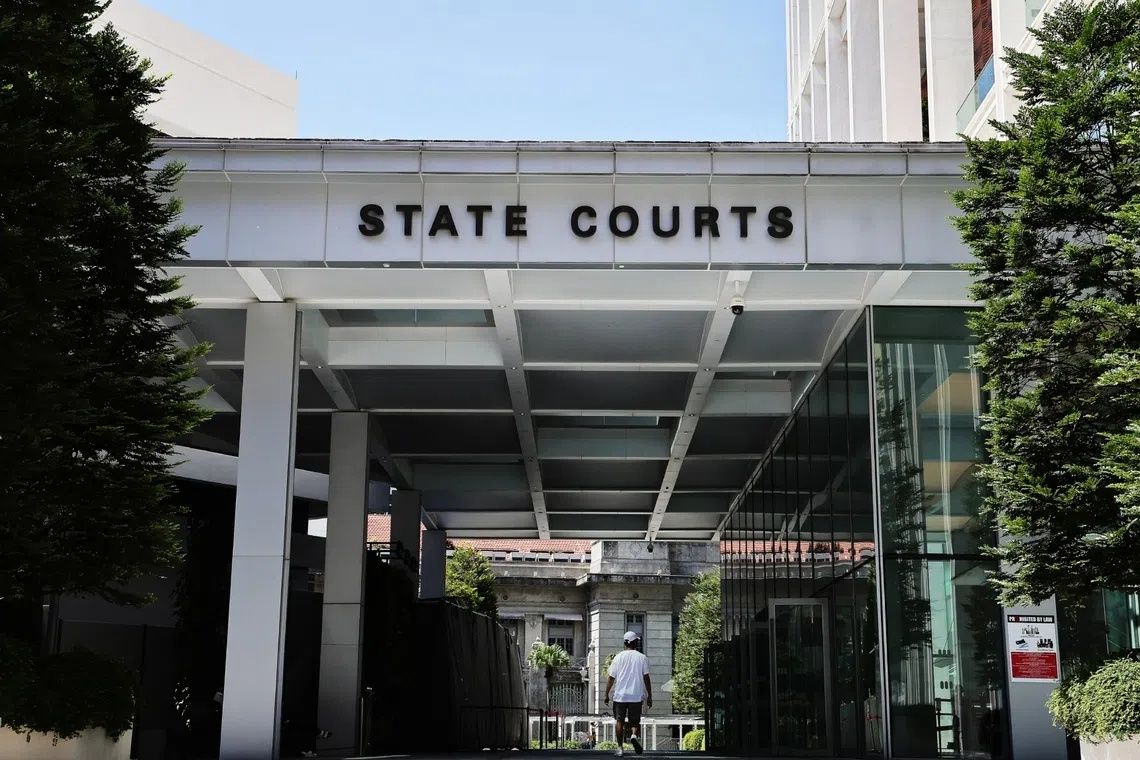
A Singapore construction entrepreneur has received a one-year prison sentence after admitting to orchestrating a bribery scheme that netted his company contracts valued at nearly S$2.4 million from the Singapore Zoological Gardens. Lim Thiam Poh, sole proprietor of Thiam Lee Tradings Construction, pleaded guilty on Wednesday (Aug 5) to five corruption charges involving at least S$59,000 in illicit payments, with the court taking into account ten additional similar offences related to the remainder of the S$127,000 total.
The conspiracy centred on Lim's arrangement with Barry Chong Peng Wee, the facilities management director at the zoo, who received commissions of up to 20 percent of Lim's profits in exchange for steering contracts his way. Between February 2014 and June 2015, Lim systematically delivered envelopes containing bribes to an intermediary, understanding that these payments were the price of doing direct business with the institution. The scheme fundamentally corrupted the procurement process, ensuring that contract awards were determined not by competitive merit or value for money, but by the willingness to pay corrupt officials.
Chong, who is no longer employed by the zoo, received a considerably harsher sentence of six years' imprisonment in April 2025, reflecting his position as the public official who exploited his authority. A third conspirator, Too Say Kiong, a 60-year-old foreman at subcontracting firm Shin Yong Construction, was sentenced to two years and two months in October 2023. Too played a crucial intermediary role, initially approaching Lim with the proposition that direct work from the zoo would require him to pay substantial commissions to Chong while also providing referral fees to Too himself for each successful contract.
The timeline of the conspiracy reveals how entrenched the corrupt practice had become within the procurement chain. Thiam Lee Tradings operated as a subcontractor under Shin Yong Construction from 2008 to 2014, but when Too informed Lim in January 2024 that direct contracts from Wildlife Reserves Singapore, the then-parent entity of the zoo, would require these corrupt payments, Lim immediately acceded to the arrangement. This suggests a troubling normalization of graft within certain segments of Singapore's construction supply chain, where businesses understood that accessing institutional contracts often demanded extra-contractual payments beyond legitimate operational costs.
The institutional context is significant. The Singapore Zoological Gardens operated as a subsidiary of Wildlife Reserves Singapore, now rebranded as the Mandai Wildlife Group, a situation that placed the zoo within a larger organizational structure but did not prevent internal corruption. The Deputy Public Prosecutor, Hairul Hakkim, emphasized to the court that Wildlife Reserves Singapore suffered material harm through the arrangement, as the corruption prevented the organization from ensuring it engaged with the most capable contractors at fair market prices. Instead of procurement decisions reflecting value, quality, and cost-efficiency, the awarding of contracts became hostage to a corrupt quid pro quo that benefited individuals at the expense of organizational interests.
Lim's motivation was unambiguously financial. The court heard that he would only remit commissions to Chong and referral fees to Too once Thiam Lee's net profit from a given project exceeded S$20,000, establishing a clear threshold beyond which the bribery kicked in. This suggests Lim calculated the bribery as a manageable cost of doing business, a transaction fee rather than an extraordinary demand. The prosecutor characterized this as conduct driven primarily by greed, and the sentencing recommendation of up to a year, three months and six weeks reflected both the seriousness of the offences and Lim's apparent opportunism rather than reluctant coercion.
The manner in which the conspirators operated through an intermediary structure reveals the sophistication of their scheme. Rather than direct contact between Lim and Chong for bribe discussions, Too acted as the facilitator and deliverer of payments, creating a degree of separation that likely aimed to obscure the corrupt chain. Lim would prepare envelopes containing both Chong's commissions and Too's referral fees, which Too would then distribute. This layering suggests awareness among all parties that their conduct was illegal and warranted concealment, yet it proved insufficient to protect them from eventual detection and prosecution.
The discovery and prosecution of this conspiracy represents a significant moment for institutional integrity at Singapore's cultural and recreational facilities. Although the court documents provided no explanation of how authorities initially uncovered the arrangement, the fact that investigations proceeded and resulted in charges against all three participants in 2021 demonstrates that oversight mechanisms and enforcement capabilities exist. This contrasts with some instances of institutional corruption in other jurisdictions, where such schemes might persist indefinitely undetected or where political connections might shield perpetrators from prosecution.
For Malaysian readers and observers across Southeast Asia, this case underscores the persistent vulnerability of procurement systems in the region to corrupt practices, even within relatively developed and institutionally robust environments like Singapore. Construction firms seeking institutional contracts often face pressure or opportunity to engage in illicit payments, and the willingness of business owners like Lim to participate in bribery schemes highlights how quickly corrupt ecosystems can embed themselves within legitimate business sectors. The severity of sentences handed down, particularly Chong's six years, signals a genuine commitment to deterrence, yet the existence of the conspiracy itself indicates that such commitments have not eliminated the problem entirely.
Lim has been granted bail of S$75,000 pending commencement of his sentence on Aug 19, giving him time to arrange his personal and business affairs before incarceration. His one-year sentence, while substantially shorter than those imposed on his co-conspirators, nevertheless represents a significant disruption to his entrepreneurial activities and a public demonstration that construction firm proprietors who participate in institutional bribery will face criminal consequences. The case serves as a cautionary example of how seemingly profitable corrupt arrangements ultimately attract legal liability, reputational damage, and imprisonment for those foolish enough to calculate that the risk is worth the gain.

