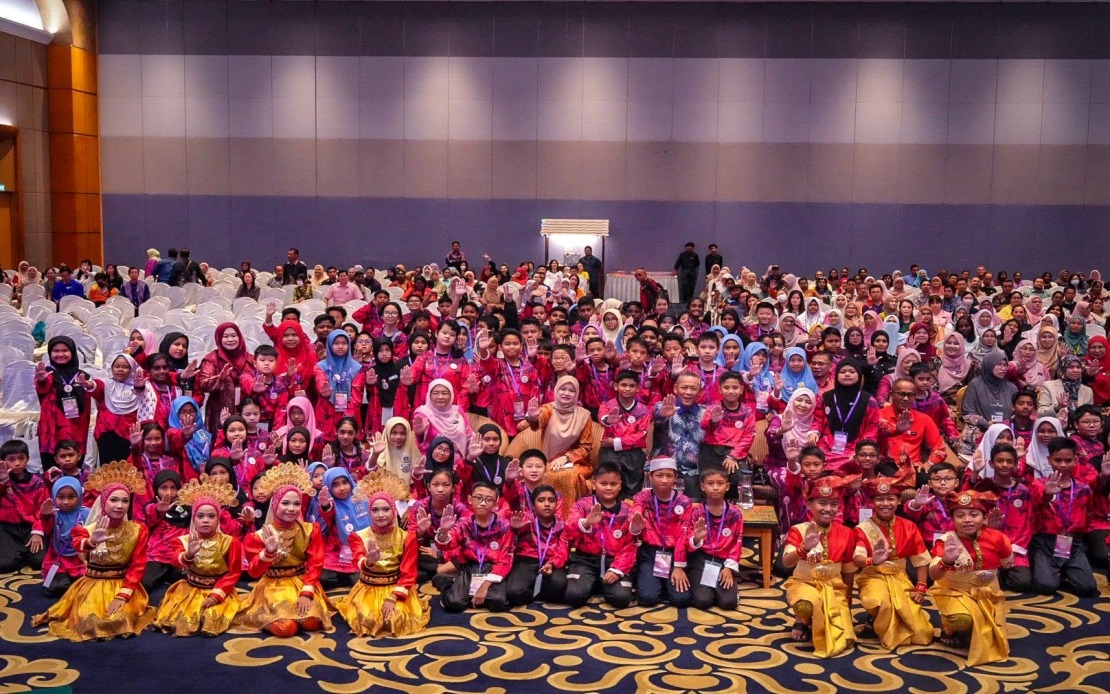
Education Minister Fadhlina Sidek has underscored the urgent necessity for a methodical, multi-stakeholder strategy to address the mounting complexities surrounding student safety in Malaysian schools. Speaking at the Mutiara Diri Programme in Kuala Lumpur, Sidek articulated that achieving meaningful progress on this critical issue demands sustained collaboration and unwavering dedication from every sector involved in the education landscape, from administrators to families and civil society organizations.
The minister's statement reflects growing recognition within Malaysia's education establishment that school safety transcends traditional security measures and encompasses both the physical protection of students and their psychological wellbeing. Sidek emphasized that restoring and maintaining public confidence constitutes a foundational objective, with assurances that students remain continuously protected within properly structured school environments. This positioning signals a shift toward holistic safeguarding frameworks that address the interconnected nature of student vulnerability.
Central to Sidek's vision is the implementation and enforcement of comprehensive safety guidelines and child protection protocols across all institutions operating under the Ministry of Education's jurisdiction. She stressed that these frameworks must function not merely as advisory documents but as binding operational standards that every school administrator, teacher, and support staff member must rigorously follow. This mandate suggests the ministry intends to move beyond voluntary compliance toward more stringent accountability mechanisms for educational institutions nationwide.
Acknowledging the psychological dimensions of safety, Sidek highlighted that attention to mental health issues must run parallel with physical security initiatives. This acknowledgment reflects international best practices and growing evidence that students' emotional welfare directly impacts their ability to learn and develop healthily. The inclusion of mental health considerations within school safety discourse represents a modernization of how Malaysia's education sector conceptualizes student protection, moving beyond visible threats to encompass less obvious but equally damaging psychological harms.
The minister's remarks at the programme, which attracted Negeri Sembilan Menteri Besar Datuk Seri Aminuddin Harun, positioned the initiative as substantially more than a routine awareness campaign. Instead, she characterized it as a deliberate advocacy mechanism designed to fundamentally reshape how schools, families, and communities approach the persistent challenge of student safety. This framing suggests the government views school safety not as a peripheral issue but as central to education policy.
Fadhlina's call to parents and educators present at the event emphasized the necessity of building synergistic relationships across traditional institutional boundaries. By invoking shared responsibility, she sought to dismantle siloed approaches where schools, families, and authorities operate independently. The creation of a genuinely safe ecosystem, her remarks suggest, requires parents and educators to actively coordinate efforts, share information about emerging threats, and collectively devise responses proportionate to specific school contexts.
The minister articulated that no compromise should exist regarding any matter that jeopardizes either the physical safety or emotional security of children. This uncompromising stance signals to school administrators that budget constraints, administrative inconvenience, or cultural resistance cannot serve as justifications for inadequate safety measures. For Malaysian schools, this declaration potentially triggers a reassessment of resource allocation, with safety initiatives receiving elevated priority within operational budgets.
The programme's focus on establishing dignity and prosperity alongside safety within school environments reflects a rights-based approach to student protection. By emphasizing that children possess fundamental entitlements to safe, dignified spaces conducive to flourishing, Sidek anchored school safety within a broader human rights framework rather than framing it narrowly as a law-and-order or administrative matter. This approach resonates with international conventions on child rights that Malaysia has endorsed.
For Malaysian schools and parents, Sidek's statements carry practical implications. Institutions should expect increased scrutiny regarding their safety protocols, mental health support systems, and communication mechanisms with families. Parents, in turn, are being invited to assume more active roles in monitoring school conditions and engaging in collaborative problem-solving with educators. The government appears to be signaling that addressing school safety constitutes a shared societal responsibility rather than the exclusive purview of education officials.
The involvement of state-level political leadership in these discussions, evidenced by Aminuddin Harun's participation, suggests that school safety considerations are ascending the political agenda across Malaysia's federal and state governments. This alignment potentially facilitates more coordinated resource allocation and policy implementation, though it also underscores the complexity of the challenge at hand. When education ministers and state leaders jointly address an issue, it typically signals recognition that existing approaches have proven insufficient.
As Malaysia's education sector grapples with evolving threats to student safety, from bullying and mental health crises to physical security concerns, Sidek's emphasis on strategic, comprehensive approaches provides a framework for thinking about these interconnected challenges holistically. The success of this vision will ultimately depend on whether schools receive adequate resources, whether accountability mechanisms function effectively, and whether genuine cultural shifts occur in how communities prioritize and implement student protection measures.

