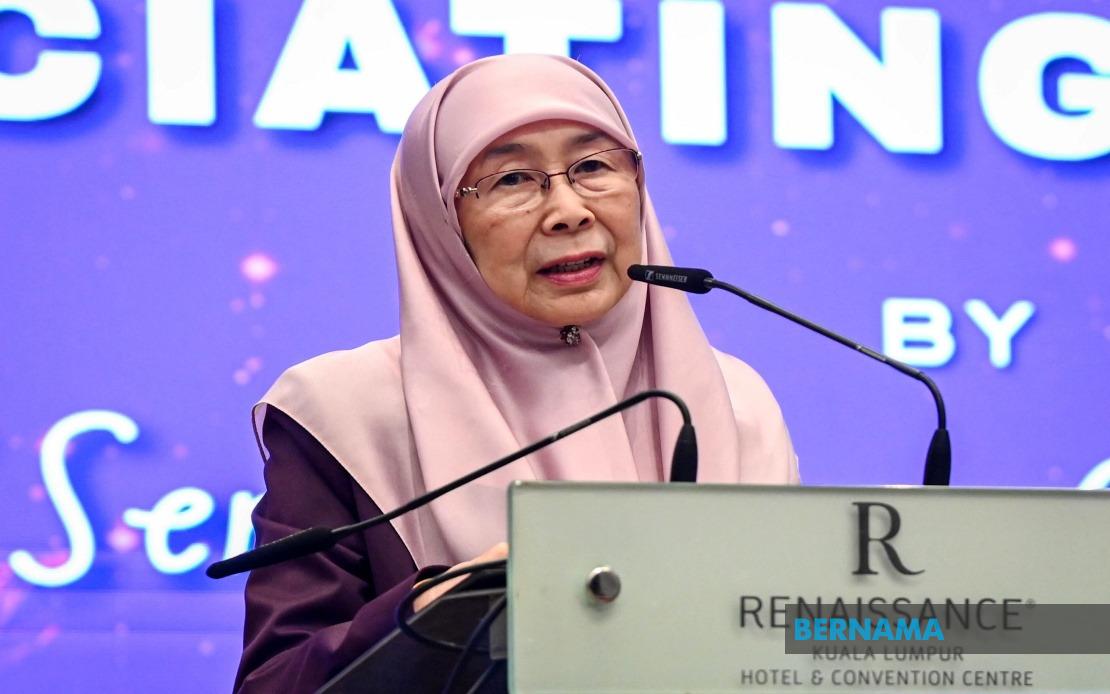
Datuk Seri Dr Wan Azizah Wan Ismail has stressed that the future of maternal healthcare in Malaysia must be anchored firmly in compassion and respect for patients, even as medical innovation reshapes the landscape of obstetric care. Speaking at the opening of the 16th Malaysian Obstetric Anaesthesiology Symposium (MyOASym) 2026 in Kuala Lumpur, the Prime Minister's wife articulated a vision where technological advancement and human-centered care advance together rather than compete for primacy in the delivery of maternity services.
The core of Wan Azizah's message challenges healthcare systems to broaden their understanding of excellence beyond the clinical metrics that typically dominate medical practice. While successful surgical outcomes and robust fetal monitoring systems represent crucial components of maternal care, she argues that true healthcare excellence encompasses the emotional journey of expectant mothers and their families. This perspective acknowledges that pregnancy and childbirth constitute deeply significant life transitions, and the quality of a mother's experience during these moments shapes not only her individual well-being but also her relationship with healthcare institutions and her capacity to trust medical professionals.
Recognising that innovation cannot be divorced from its human application, Wan Azizah emphasised that technological advances must remain subordinate to patient welfare. The rapid development of medical devices, diagnostic tools, and pharmaceutical interventions has undoubtedly enhanced the safety and efficacy of maternal care, yet these tools serve no purpose if deployed without attentiveness to patient dignity and emotional needs. Her comments reflect growing international recognition that healthcare outcomes improve when patients feel respected and supported throughout their treatment journey, a principle particularly vital in obstetrics where mothers often navigate profound vulnerability alongside joy and anticipation.
The complexity of contemporary maternal healthcare increasingly demands integrated teamwork among specialists from different disciplines. Wan Azizah highlighted the particular challenges posed by pregnancies involving advanced maternal age, obesity, complex cardiac conditions, and obstetric haemorrhage, noting that these conditions require expertise spanning anaesthesiology, obstetrics, neonatology, and other specialties. In Malaysia, as in many developing healthcare systems, the reality of clinical silos often undermines optimal outcomes, with specialists working in isolation rather than coordinating their efforts around the pregnant woman's overall needs and safety.
To address these systemic fragmentation issues, Wan Azizah advocated for the institutionalisation of regular multidisciplinary simulation training programs across Malaysian hospitals and medical centres. Such training enables anaesthesiologists, obstetricians, and neonatologists to rehearse high-risk scenarios in controlled environments, building the muscle memory and communication patterns necessary for seamless crisis response. Simulation-based learning has demonstrated substantial benefits in healthcare settings worldwide, transforming abstract knowledge into practical competence and fostering the interpersonal trust essential when rapid decisions affect maternal and neonatal outcomes. By normalising these collaborative practice sessions, healthcare facilities can transform how teams interact during actual emergencies.
Clear communication and early warning systems form another pillar of Wan Azizah's prescription for safer maternal care. Many adverse maternal outcomes result not from the absence of medical knowledge but from communication breakdowns and delayed recognition of deteriorating conditions. She called for workplace cultures that explicitly encourage junior staff to voice concerns, enable open dialogue across hierarchical boundaries, and establish transparent protocols for escalating clinical worries. Such systemic changes require sustained effort and commitment from leadership, yet the potential return in lives saved and families spared tragedy justifies the investment.
Wan Azizah also turned her attention to the professional development pathway for younger healthcare practitioners entering obstetrics and anaesthesiology. She encouraged them to cultivate curiosity about both scientific advancement and human psychology, to seek mentorship from experienced colleagues, and to recognise that asking questions represents professional strength rather than weakness. The cultivation of empathy alongside technical competence creates practitioners who can navigate the inherent tension in obstetrics between technological intervention and the human experience of childbirth, producing professionals capable of delivering excellent care that honours both clinical standards and maternal dignity.
The international dimension of MyOASym 2026 adds regional significance to these discussions about maternal healthcare standards. The participation of healthcare professionals from Singapore, Hong Kong, and Pakistan alongside Malaysian practitioners creates valuable opportunities for knowledge exchange and exposure to different healthcare models. These cross-border connections prove particularly important for Southeast Asia, a region where maternal mortality and morbidity remain significant challenges despite economic development. Malaysian professionals can learn from neighbouring systems while potentially sharing innovations and best practices that have proven effective in the local context.
The symposium's focus on obstetric anaesthesiology reflects the crucial role these specialists play in maternal safety. Anaesthesiologists managing labour pain, administering regional anaesthesia for caesarean delivery, or providing critical support during obstetric emergencies work at the intersection of maternal comfort, fetal well-being, and clinical necessity. Their expertise directly influences both the physical safety and psychological experience of mothers during childbirth, making their integration into multidisciplinary maternal care teams essential. By bringing together specialists in this field, MyOASym 2026 contributes to elevating standards across Malaysia's obstetric anaesthesia practice.
Wan Azizah's emphasis on balancing innovation with compassion arrives at a moment when Malaysian healthcare faces mounting pressures from demographic shifts, rising disease complexity, and resource constraints. Her framing suggests that sustainability in maternal healthcare requires more than simply acquiring new technologies or expanding facilities; it demands cultural transformation within healthcare organisations toward patient-centered values. This approach offers a template applicable far beyond obstetrics, potentially influencing how Malaysian medicine approaches excellence across all specialties and settings.

