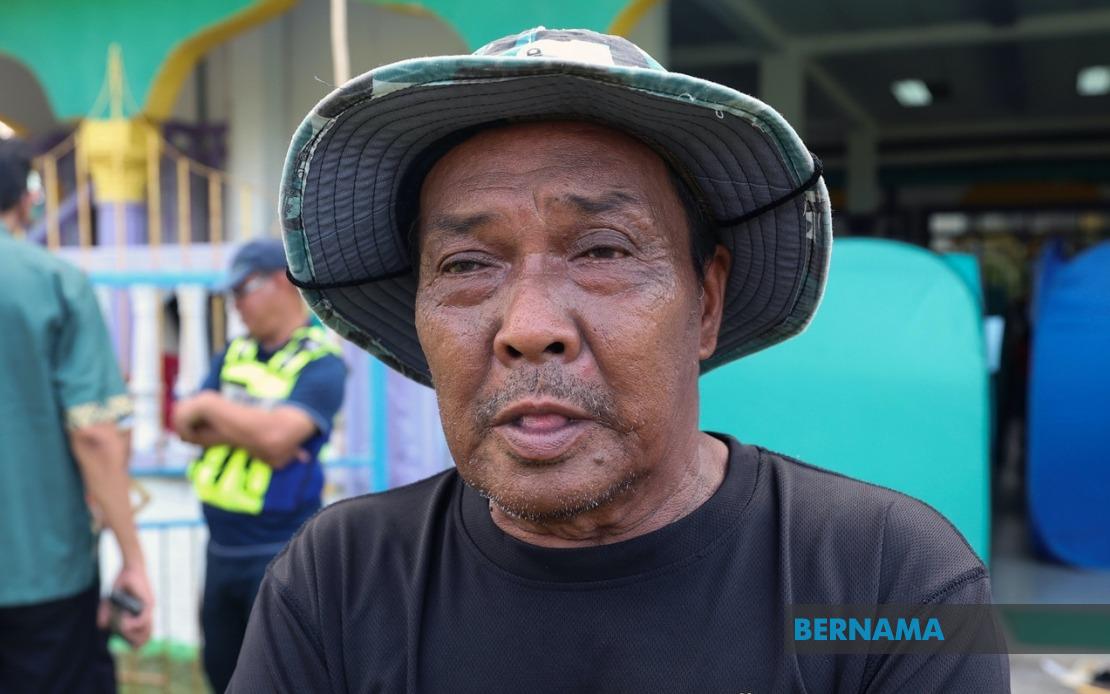
A devastating fire that swept through Kampung Nunuyan Laut in Sandakan in the early hours of August 19 could have claimed far more homes had it not been for the rapid collective response of villagers who deployed water pumps to wet surrounding structures and establish protective barriers against the advancing flames. The coordinated effort by residents working in challenging conditions—battling strong winds that accelerated the fire's spread—managed to contain damage to 28 non-permanent dwellings despite the initial intensity of the blaze that erupted around 3 am.
Village headman Mohd Sutri Mohd Nurdin played a crucial role in mobilising the community's firefighting resources by immediately providing water pumps to residents without hesitation. His swift decision to lend equipment proved instrumental in allowing residents to create a strategic firebreak by soaking houses that had not yet caught fire, effectively slowing the flames' advancement across the densely packed settlement. The intervention prevented what could have been a catastrophic loss of property in a village where wooden stilt houses sit in close proximity to one another, making them particularly vulnerable to rapid fire propagation.
The threat was genuinely severe as residents recalled the terror of the moment. Kaslan Etin, 38, was jolted awake by neighbours' shouts of alarm only to discover approximately 30 percent of his dwelling already engulfed. In a matter of minutes, his family managed to evacuate their two young children and retrieve only essential documents before flames consumed the structure entirely. The incident proved doubly devastating for Etin, as the fire destroyed all preparations for his sister-in-law's wedding scheduled for December during the school holidays—a significant family milestone reduced to ashes.
The human cost extended beyond property loss, with residents forced from their homes facing immediate uncertainty. By 8 pm on the day of the incident, 109 residents representing 29 families had been displaced and were sheltering at a temporary relief centre established at Al Fattah Mosque. Among the evacuees was Kasmah Rashid, a 69-year-old widow who lived alone and was rescued by an alert neighbour who knocked on her door as flames consumed nearby structures. Her gratitude toward both villagers and security personnel highlighted the interconnected safety network that emerged during the crisis.
The incident showcases both the vulnerability of informal settlements built on water and the resilience of tight-knit communities when disaster strikes. Kampung Nunuyan Laut, like many traditional coastal villages throughout Malaysian Sabah, comprises non-permanent structures where families have maintained their livelihoods and heritage for generations. The stilt-house design, while suited to waterside locations, creates inherent fire risks when flames breach one structure, as burning materials can fall onto neighbouring homes and wind carries embers across the settlement.
Authorities moved swiftly to support displaced families through established social safety networks. The Social Welfare Department (JKM) commenced immediate assistance to address pressing needs while simultaneously conducting assessments to identify residents requiring extended support. The Sandakan Municipal Council complemented these efforts by opening and maintaining the temporary relief centre, ensuring families had secure shelter and basic provisions during the critical period following the fire. This coordinated response between multiple government agencies demonstrated the effectiveness of pre-established disaster protocols.
Investigations into the fire's origin remain ongoing, with authorities yet to determine whether the incident resulted from human error, electrical faults, or accident. Understanding the cause will prove essential for implementing preventative measures in similar villages throughout the region where fire risk management presents ongoing challenges. For communities in Southeast Asia with comparable settlement patterns and building materials, the lessons from this incident carry broader significance regarding disaster preparedness and community-based firefighting strategies.
The incident underscores critical gaps in rural fire safety infrastructure across Malaysian Sabah and the wider region. While residents demonstrated remarkable initiative in accessing water pumps and coordinating response efforts, many villages lack formal firefighting equipment, trained personnel, or pre-established evacuation procedures. The absence of casualties in this incident—despite destroying 28 homes and displacing over 100 residents—reflected considerable fortune rather than systematic preparedness. Authorities have an opportunity to examine whether adequate resources and training exist in comparable settlements throughout Sabah.
Community-level resilience proved decisive in limiting damage, yet government support mechanisms remain critical for longer-term recovery. Residents who lost homes face substantial challenges rebuilding without adequate insurance, while families who lost possessions and seasonal business inventory require financial support to resume normal economic activity. The psychological impact on children exposed to fire trauma may persist long after physical reconstruction completes, suggesting the need for counselling services alongside material assistance.
Looking forward, the Kampung Nunuyan Laut fire offers valuable lessons for disaster management across Malaysian coastal communities. The success of resident-organised firebreak creation demonstrates that providing villages with adequate water pump access and basic firefighting training could significantly enhance protection for settlements lacking formal emergency services. Regular community drills and pre-positioned equipment, combined with improved building standards for wooden structures, could substantially reduce vulnerability to similar incidents.
The experience also highlights the interdependence within village communities where social cohesion directly influences survival outcomes. Neighbours alerting each other to danger, sharing resources for firefighting, and offering shelter to displaced residents exemplified social capital that authorities cannot mandate through policy alone. Supporting this grassroots resilience while simultaneously improving formal safety systems represents the balanced approach needed to protect vulnerable settlements throughout the region from fire hazards.

