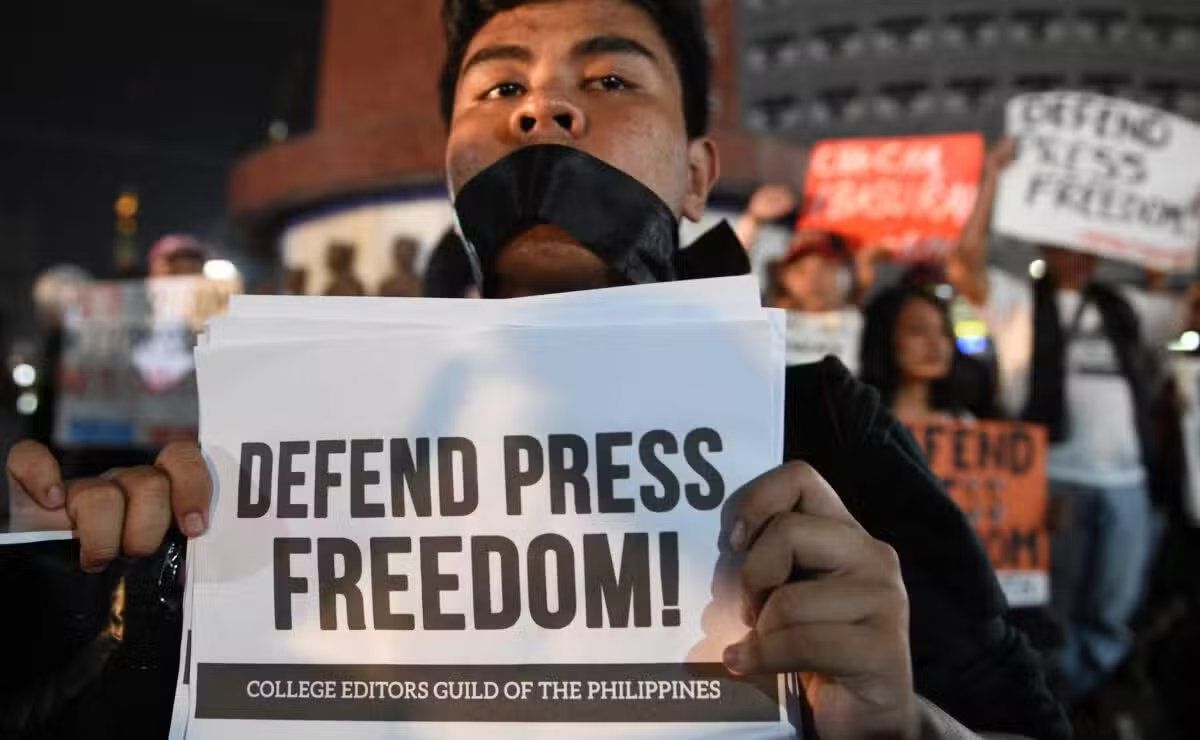
The Philippines has documented at least 260 documented attacks against journalists during President Ferdinand Marcos Jr.'s administration, according to records compiled by the National Union of Journalists of the Philippines (NUJP). While the aggregate figure itself warrants concern, an examination of the data reveals a more sinister pattern: community-based and independent media organisations are bearing a disproportionate share of the violence and intimidation.
Among the 260 incidents, more than 180 involved journalists employed by local newspapers, community radio stations, campus publications, and alternative news platforms. This concentration on smaller and independent outlets underscores a troubling reality facing Southeast Asian journalism: those operating furthest from capital cities and largest newsrooms experience amplified vulnerability. These organisations typically operate with skeletal budgets, minimal staff protection protocols, and compensation packages that pale against the physical and legal dangers their workers confront. For many provincial journalists, the actual hazards of their employment significantly outweigh their salaries.
The structural vulnerabilities of community-based journalism extend beyond funding constraints. Reporters working outside Manila often lack the institutional protections and legal resources that major news organisations can mobilise. Additionally, provincial newsrooms operate within ecosystems where local political and business elites wield considerable influence, sometimes leveraging that power to silence inconvenient reporting. Despite these asymmetries, community journalists persist in covering stories that might otherwise remain invisible to the broader public discourse. Their work often exposes local corruption, governance failures, and human rights abuses that national media outlets may overlook.
The case of Jay Lavapiez, a 48-year-old radio broadcaster in Roxas City, Capiz, exemplifies the precarious position of provincial journalists. Operating Baskog Radyo with limited resources, Lavapiez has become a focal point of harassment. In June, his vehicle was intercepted by two men on a motorcycle who fired four bullets from a 9 mm pistol in an assassination attempt. The attack came after months of legal persecution following investigative reports about a cemetery owned by a local official and allegations of abuse and corruption. The harassment evolved into multiple cyberlibel and libel cases filed against Lavapiez, his wife India, and staff members across several jurisdictions including Manila, Muntinlupa, and Capiz.
Lavapiez's experience illuminates the calculated pressure tactics deployed against community journalists. Perpetrators file cases across multiple jurisdictions, forcing defendants to navigate different court systems simultaneously. Online harassment, smear campaigns, intimidation, and physical threats accumulate into a systematic effort to silence critical reporting. For provincial journalists, the tactic carries particular psychological weight: they cannot simply relocate or distance themselves from their work environment. Their communities are their neighbourhoods; their subjects are their neighbours; the officials they scrutinise are people they encounter regularly. As Lavapiez notes, there is no escape hatch, no option to walk away and restart elsewhere.
Compensation structures in provincial journalism exacerbate these vulnerabilities. Salaries for community media workers remain modest, a fact that Lavapiez characterises as grossly disproportionate to the risks undertaken. Yet provincial journalists remain committed to their profession not for financial reward but from a sense of civic obligation. Lavapiez articulates this motivation with clarity: community journalism requires somebody to pose uncomfortable questions when public funds are at stake and ordinary citizens lack alternative avenues for voice and accountability. The work represents a form of public service that transcends economic calculation.
The dangers become tragically real beyond harassment and legal persecution. In April, community journalist RJ Ledesma was killed in Toboso, Negros Occidental, while conducting reporting on renewable energy initiatives and their effects on agricultural communities. Ledesma died during a military operation condemned by a fact-finding mission for indiscriminate firing despite soldiers having clear visual access to their surroundings. His death occurred among 19 fatalities in an operation that violated basic principles of proportionality and discrimination in the use of force. Ledesma's case demonstrates that the risks facing community journalists extend to mortal danger.
The concentration of attacks on independent and community media suggests a deliberate strategy to weaken press scrutiny beyond the reach of major newsrooms. By targeting smaller outlets, those orchestrating harassment can often operate with relative impunity, generating less international attention than attacks on prominent journalists. Community outlets lack the institutional infrastructure and security resources of larger organisations, making them easier targets. This pattern raises concerns about the deliberate hollowing of distributed journalism networks that historically provided accountability checks on local power structures.
Southeast Asian parallels are instructive. Philippines journalists face conditions increasingly similar to press environments in neighbouring countries where decentralised media communities are systematically pressurised. The targeting of provincial and independent outlets reflects a broader regional challenge to media pluralism. When smaller newsrooms cannot operate safely or sustainably, information flows become concentrated among fewer, larger organisations, potentially subject to different pressures and incentives than dispersed community journalism networks.
Lavapiez articulates the fundamental demand of Philippine journalists: not special privilege but basic professional protection. Journalists request freedom to conduct their work without threats, harassment, legal persecution, or physical harm. This remains an elementary standard in democratic systems, one that serves broader public interests beyond press professionals themselves. When community journalists cannot safely report, communities lose access to locally grounded accountability mechanisms. Public discourse becomes distorted as certain stories remain untold and certain questions unasked.
The NUJP's characterisation proves instructive: behind each numerical entry in attack statistics stands an individual journalist, a newsroom, and a community whose access to factual information faces compromise. The concentration of attacks on community and independent media therefore represents not merely professional concerns but a threat to distributed information networks essential for local democracy. As attacks mount and legal harassment multiplies, provincial newsrooms face existential questions about operational viability. The resilience of these organisations and their journalists will substantially determine whether communities beyond capital cities retain meaningful access to accountability-focused journalism.

