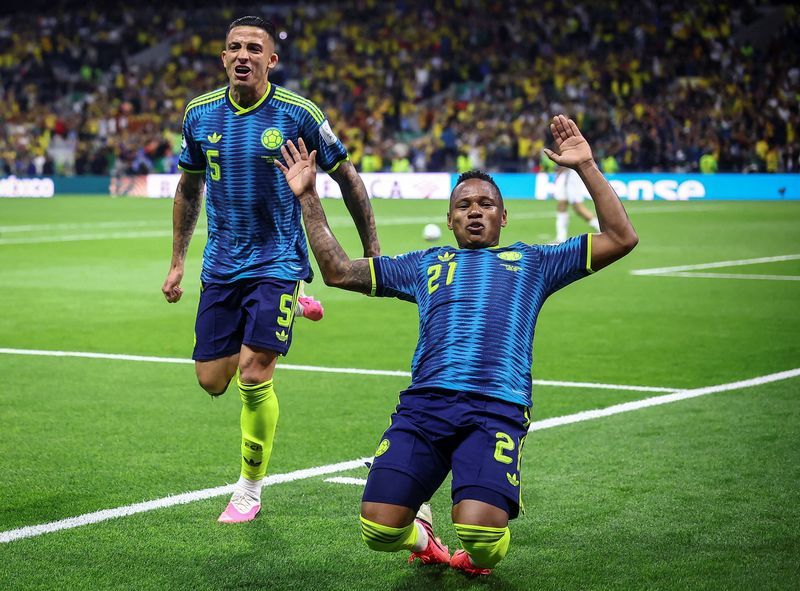
Colombia will attempt to strengthen their position at the top of Group K when they take on DR Congo on Tuesday, mindful that their opponents have already demonstrated a capacity to trouble established tournament favourites. Nestor Lorenzo's side began their campaign with a 3-1 triumph over Uzbekistan, though the comfortable scoreline masked considerable second-half struggles that exposed defensive vulnerabilities the coaching staff will need to rectify before facing their Central African rivals.
A victory would guarantee Colombia's passage to the knockout stage and could prove decisive in the broader group dynamics. Should Portugal stumble against Uzbekistan simultaneously, Colombia might even clinch first place in the group, though such calculations remain conditional on results elsewhere. The mathematical pathways remain favourable, but only if they capitalise on facing an opponent many predicted would struggle in their first World Cup appearance since 1974.
Luis Diaz, Bayern Munich's Colombian winger, has emerged as the side's principal attacking catalyst after delivering both a goal and an assist against Uzbekistan whilst claiming the player-of-the-match accolade. His explosive pace and willingness to drive directly at defenders have become Colombia's primary offensive weapon, yet this concentration of responsibility creates tactical inflexibility that more sophisticated opponents may exploit. Lorenzo will be hoping his captain James Rodriguez elevates his influence beyond the subdued performance he delivered in the opening match, when the playmaker often found himself operating in Diaz's considerable shadow as Colombia bypassed midfield construction in favour of direct attacking ventures.
DR Congo's status has been transformed by their 1-1 draw with Portugal, a result that defied pre-tournament expectations and established Sebastien Desabre's squad as genuine competitors rather than ceremonial participants. Their maiden World Cup goal in more than half a century, scored by Yoane Wissa, carries symbolic weight beyond its tactical significance, representing the culmination of decades of exclusion from international football's premier competition. Returning to the tournament after a 50-year absence, having previously competed as Zaire in 1974, DR Congo have already exceeded modest pre-tournament expectations by demonstrating they can compete against recognised powerhouses through disciplined defending and opportunistic counter-attacking.
Lorenzo has explicitly warned his squad about the distinct tactical challenges DR Congo will present. Unlike Uzbekistan's more structured approach, Desabre's team operates through rapid transitions and direct long-ball movement, fundamentally different attacking principles that demand different defensive compensations. The Colombian coach acknowledged after his opening victory that sustained possession sometimes worked counterintuitively against his side, with excessive sideways movement in midfield preventing the clinical finishing that ultimately determines tournament success. This self-awareness suggests tactical adjustment will accompany team selection for the Congolese encounter.
The Congolese will almost certainly replicate the compact defensive shape that frustrated Portugal, prioritising organisation and compactness over territorial ambition. Their counterattacking philosophy thrives on opposition mistakes and overcommitment, vulnerabilities Colombia demonstrated repeatedly during the Uzbekistan match. DR Congo's confidence has been visibly elevated by their opening result, transforming them from presumed fodder into genuine opponents capable of manufacturing significant problems for teams expecting straightforward victories.
Colombia's extensive travelling support base provides tangible advantage in Mexico, where thousands of fans transformed Estadio Azteca into a secondary home ground during the Uzbekistan encounter. Operating from a tournament base in Guadalajara, Lorenzo's squad can anticipate another substantial Colombian contingent providing vocal reinforcement, potentially unsettling opponents unfamiliar with such atmospheric intensity. This organisational advantage, combined with superior individual talent and established tournament pedigree, should favour the South Americans, yet DR Congo's demonstrated resilience and tactical discipline suggest this represents considerably more than a formality.
The psychological dimension favours neither side exclusively. Colombia carry the burden of expectation and pressure to demonstrate clear improvement after laboured opening performance, whilst DR Congo possess the liberation that comes from exceeding initial predictions. Teams with nothing to lose historically perform with greater freedom, though Colombia's superior depth and experience should ultimately prevail if they correct the defensive deficiencies that permitted Uzbekistan extended periods of threatening possession.
%22%2F%3E%3C%2Fpattern%3E%3C%2Fdefs%3E%3Crect%20width%3D%22100%25%22%20height%3D%22100%25%22%20fill%3D%22url(%23ph14kuwg)%22%2F%3E%3Crect%20width%3D%22100%25%22%20height%3D%22100%25%22%20fill%3D%22url(%23ph14kuwp)%22%2F%3E%3Ctext%20x%3D%2250%25%22%20y%3D%2250%25%22%20text-anchor%3D%22middle%22%20dominant-baseline%3D%22central%22%20fill%3D%22rgba(255%2C255%2C255%2C0.95)%22%20font-family%3D%22Georgia%2C%20'Times%20New%20Roman'%2C%20serif%22%20font-weight%3D%22700%22%20font-size%3D%22170%22%20letter-spacing%3D%22-0.02em%22%3ETambirat%3C%2Ftext%3E%3C%2Fsvg%3E)
%22%2F%3E%3C%2Fpattern%3E%3C%2Fdefs%3E%3Crect%20width%3D%22100%25%22%20height%3D%22100%25%22%20fill%3D%22url(%23ph1635wg)%22%2F%3E%3Crect%20width%3D%22100%25%22%20height%3D%22100%25%22%20fill%3D%22url(%23ph1635wp)%22%2F%3E%3Ctext%20x%3D%2250%25%22%20y%3D%2250%25%22%20text-anchor%3D%22middle%22%20dominant-baseline%3D%22central%22%20fill%3D%22rgba(255%2C255%2C255%2C0.95)%22%20font-family%3D%22Georgia%2C%20'Times%20New%20Roman'%2C%20serif%22%20font-weight%3D%22700%22%20font-size%3D%22194%22%20letter-spacing%3D%22-0.02em%22%3EBintulu%3C%2Ftext%3E%3C%2Fsvg%3E)