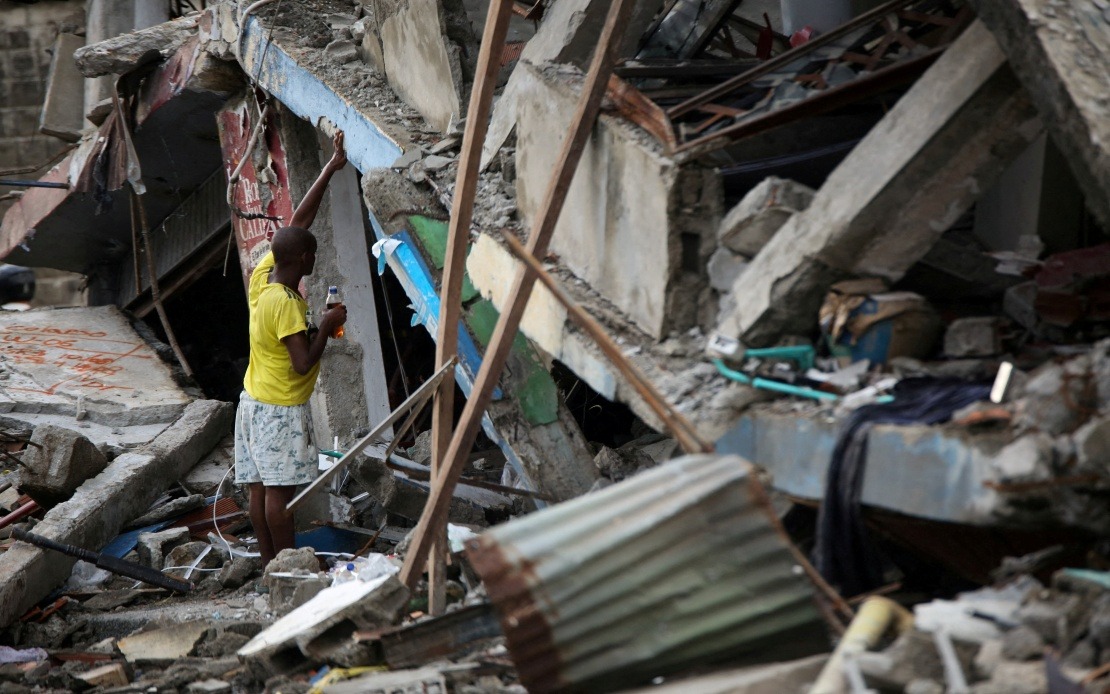
Colombia finds itself ensnared in a cascading natural disaster scenario of alarming proportions, with emergency responders stretched to their operational limits as rampant wildfires proliferate across the nation whilst the country simultaneously attempts to recover from a powerful earthquake. The collision of these two crises has created a scenario that challenges the nation's disaster management infrastructure in ways seldom seen before, with authorities now managing not one but multiple catastrophic events occurring in parallel.
The scale of the wildfire emergency has become particularly acute, with 344 municipalities now placed under red alert status—a designation reserved for the highest threat levels. What makes this situation especially extraordinary is the speed at which the threat escalated: the 93 per cent surge in municipal alerts within a single day demonstrates how rapidly environmental conditions can deteriorate. The Institute of Hydrology, Meteorology and Environmental Studies (IDEAM) attributes this explosive spread primarily to extreme heat coupled with drought conditions that have left vegetation and terrain susceptible to rapid ignition and propagation. The concentration of active fires in key departments including Tolima, Cesar, Norte de Santander, Antioquia, Narino and Santander reflects how the disaster is geographically dispersed rather than localized to a single region, multiplying the coordination challenges facing authorities.
The cumulative destruction wrought by these blazes already exceeds 11,000 hectares across multiple municipalities, representing not merely environmental damage but the obliteration of livelihoods and agricultural productivity. Destroyed crops, grazing lands, and residential structures have essentially vanished from the landscape, with immediate restoration impossible until the fires themselves are contained. This agricultural devastation carries implications extending far beyond the immediate affected zones, potentially disrupting food supply chains regionally and raising prices for consumers throughout Colombia and neighboring countries.
What compounds this environmental calamity is its timing relative to the August 10 earthquake that measured 7.4 on the magnitude scale. That seismic event already claimed 288 lives, left 4,018 injured, destroyed approximately 12,504 homes entirely, and caused structural damage to more than 80,000 additional buildings. Emergency personnel had been mobilized comprehensively to address this devastation, operating at maximum deployment levels to conduct search and rescue operations, establish emergency shelters, provide medical care, and begin reconstruction assessment. The arrival of the wildfire crisis essentially split already-exhausted emergency resources between two simultaneous disaster zones, forcing impossible triage decisions about resource allocation.
The response to the wildfires has involved mobilizing firefighting units, military personnel, emergency responders, and aerial support assets in what authorities describe as a desperate containment effort. Even departments that themselves experienced significant earthquake damage, such as Risaralda, have been forced to dispatch firefighting contingents to battle the blazes elsewhere. Authorities have explicitly acknowledged critical shortages in personnel, indicating that available staffing levels are insufficient to adequately combat the scope of active fires across the country. This staffing deficit directly translates to faster fire progression, larger burned areas, and greater destruction before flames can be contained.
The underlying meteorological factors driving this crisis point to longer-term climate stress that will persist for months. IDEAM's projections indicate a 90 per cent probability that El Niño conditions will persist through the opening months of 2027, extending well beyond the immediate crisis period. These projections further suggest that temperature anomalies—deviations from normal heat levels—will intensify toward year-end, potentially creating even more severe wildfire conditions through the remainder of 2024 and into early 2025. This extended forecast essentially signals that the current wildfire emergency may represent only the beginning of a prolonged period of elevated fire risk and related disasters.
Complicating the picture further, Colombian authorities must simultaneously monitor and manage heightened volcanic activity at Purace in the southern department of Cauca. Elevated seismic activity surrounding a volcano adds another dimension to the existing crisis, requiring scientific monitoring and emergency protocols despite resources already committed to earthquake recovery and wildfire suppression. The prospect of volcanic activity introducing ash, gases, or lava flows into an already-destabilized environment represents a third potential catastrophe layered atop existing emergencies.
The broader implications of this multi-hazard scenario extend beyond Colombia's borders. Regional stability in the Andean zone and northern South America can be affected by major natural disasters in key countries, with potential consequences for migration patterns, economic disruption, and regional cooperation frameworks. Neighboring nations including Ecuador, Peru, Venezuela, and Panama may experience secondary effects through refugee movements, trade disruption, or demand for humanitarian assistance. The Southeast Asian region, while geographically distant, should observe how Colombian authorities navigate this compound crisis, as similar climate-driven scenarios could emerge in tropical regions experiencing El Niño intensification.
For Malaysia and the broader Southeast Asian community, the Colombian example illustrates how climate dynamics and extreme weather patterns can create unprecedented compound disasters that overwhelm even moderately developed nations' emergency response capacities. The simultaneous occurrence of seismic activity, extreme wildfire conditions, and volcanic monitoring requirements demonstrates how natural hazards can cluster in time and geography, creating management scenarios that standard disaster protocols may not adequately address. As the region grapples with its own climate challenges and earthquake risks, particularly in Indonesia, the Philippines, and Malaysia itself, the Colombian experience offers cautionary insights into the importance of building resilience for multiple simultaneous hazards.

