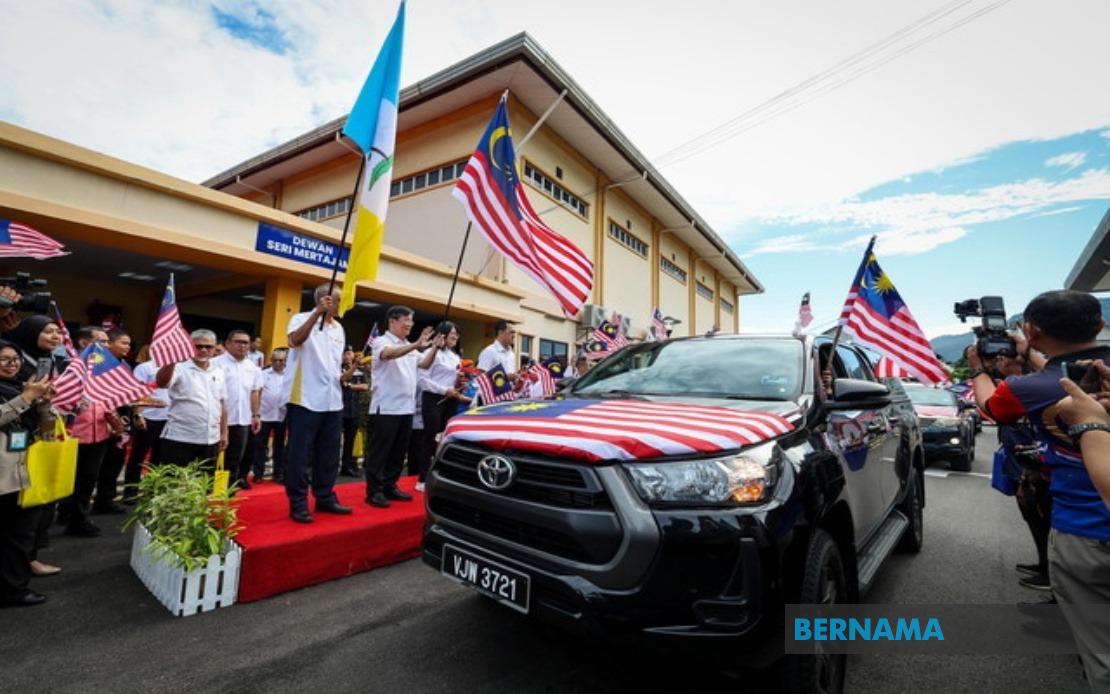
Penang Chief Minister Chow Kon Yeow has seized the occasion of National Month celebrations to deliver a pointed message to residents and political leaders alike: that August is a moment for Malaysians to reaffirm their commitment to national unity rather than pursue divisive agendas. Speaking at the launch of Penang's state-level celebrations in Bukit Mertajam on July 31, Chow framed the annual observance as far more than a ceremonial exercise, positioning it instead as a crucial opportunity for citizens to demonstrate their loyalty to the nation and strengthen the bonds that hold Malaysian society together.
The Chief Minister's remarks came as he formally inaugurated both the National Month festivities and the accompanying Fly the Jalur Gemilang campaign at the Central Seberang Perai District and Land Office. His emphasis on unity appears deliberate and timely, reflecting broader concerns within government circles about maintaining social cohesion at a time when political rhetoric can easily veer into territory that questions citizens' patriotism or belonging. By framing National Month as a unifying occasion, Chow positioned the state government as a guardian of harmony while subtly cautioning against the kind of inflammatory political statements that have occasionally fractured public discourse in Malaysia.
Chow's call specifically extended to all political leaders and organisational representatives, urging them to place national interests above partisan considerations. He stressed that Malaysia cannot withstand actions that threaten social unity, emphasising instead the need to deepen loyalty to both the nation and the constitutional monarchy. This framing reflects the traditional Malaysian approach to patriotism, which historically emphasises respect for institutions and the social contract that binds diverse communities together. For Penang specifically, where the state government has pursued progressive policies on various fronts, such messaging about institutional loyalty and harmony serves to reinforce the administration's legitimacy and centrist positioning.
A practical dimension of Chow's appeal involved encouraging all Penangites to display the national flag prominently throughout August—at homes, businesses, offices, and vehicles. This visual campaign represents an accessible way for ordinary citizens to participate in national celebration without requiring significant effort or expense. The symbolism here extends beyond mere decoration; flag-flying during National Month has become a recognisable marker of patriotic sentiment in Malaysian public culture, and mass participation sends a powerful signal of collective national pride. The Chief Minister's explicit invitation to participate democratises patriotism, positioning it not as the exclusive domain of government institutions but as something requiring active citizen engagement.
Crucially, Chow articulated a vision of patriotism that transcends seasonal expression. He argued that genuine love for one's country must manifest through consistent daily actions—through honesty in fulfilling responsibilities, maintaining social harmony, and actively contributing to state and national development. This philosophical elaboration distinguishes between performative patriotism, which peaks during designated months, and substantive patriotism, which shapes behaviour and decision-making year-round. For Malaysian readers, this distinction carries particular weight given ongoing debates about the relationship between words and deeds in public life, and the gap between ceremonial expressions of unity and actual inclusive governance.
The ceremonial launch of the Jalur Gemilang convoy, involving eighteen participating agencies and traversing from Seberang Perai to the Sultan Abdul Halim Mu'adzam Shah Bridge, provided visual spectacle to accompany Chow's rhetoric. Such convoys serve multiple purposes: they generate media coverage, provide a focal point for public participation, and create moments of collective national expression. The participation of state, federal, and private sector organisations underscores the inclusive nature of the campaign, suggesting that national pride transcends bureaucratic boundaries and sectoral divisions. For Penang, a state with significant economic diversity and rapid development, such shows of institutional unity carry particular significance.
Beyond the immediate context of National Month celebrations, Chow's remarks touched on the Penang government's broader development agenda. He connected patriotic sentiment to the state's Penang2030 Vision, which prioritises innovation, digital transformation, artificial intelligence deployment, smart technology integration, and environmental sustainability. This linkage suggests that modern patriotism in Chow's conception involves not merely flag-waving but active participation in nation-building through economic and technological advancement. For a state seeking to position itself as a regional innovation hub, such framing aligns patriotic duty with economic progress, potentially motivating broader buy-in from business communities and younger demographics who might otherwise view National Month celebrations as somewhat ceremonial or disconnected from contemporary concerns.
The emphasis on ensuring that economic growth benefits are widely distributed carries additional resonance for Malaysian readers grappling with inequality concerns. By invoking shared prosperity as a patriotic objective, Chow articulates a vision of nationalism rooted not merely in abstract loyalty but in concrete improvements to citizens' material circumstances. This approach acknowledges that patriotism secured through economic inclusion and opportunity tends to prove more durable than patriotism based solely on institutional appeals or emotional exhortation. For Southeast Asian governments more broadly, Chow's emphasis on linking national pride to development outcomes reflects a sophisticated understanding of how modern societies maintain cohesion.
The timing of Chow's intervention merits consideration within Malaysia's broader political landscape. National Month celebrations, occurring during the parliamentary recess period, represent occasions when political leaders can address national themes without the immediate pressures of parliamentary debate. For Chow, the platform allowed him to position the Penang government as steward of national harmony while simultaneously advancing his administration's development agenda. The implicit message to political opponents suggested that attempts to exploit patriotic language for partisan advantage would be viewed as contrary to genuine national interests—a rhetorical positioning that potentially constrains political opponents' ability to mobilise nationalist rhetoric without appearing divisive.
For Malaysian readers and Southeast Asian observers, Chow's remarks encapsulate contemporary challenges facing established democracies: how to maintain social cohesion and national pride in increasingly polarised political environments. His appeal for unity operates within a specifically Malaysian context shaped by constitutional arrangements, historical communal agreements, and ongoing negotiations about inclusive citizenship. The emphasis on avoiding statements that cast doubt on citizens' loyalty reflects deep-rooted Malaysian sensitivities about belonging and acceptance, particularly for communities that have historically experienced questions about their patriotic credentials. By universalising the appeal for restraint, Chow attempted to reframe such concerns as matters of collective national interest rather than specific communal anxieties.
The practical launch of the state convoy and flag distribution initiative translated rhetorical appeals into tangible activities that citizens could observe and potentially join. This combination of high-level political messaging with ground-level mobilisation represents effective advocacy strategy, making patriotism feel both significant and accessible. For Penang residents, the visible participation of multiple government agencies and private sector organisations suggested that national unity enjoys broad institutional support, potentially strengthening social pressure toward harmonious behaviour and patriotic expression. As National Month progressed through August, such campaigns would shape the public environment in ways that reinforce the Chief Minister's messaging about unity and shared national purpose.

