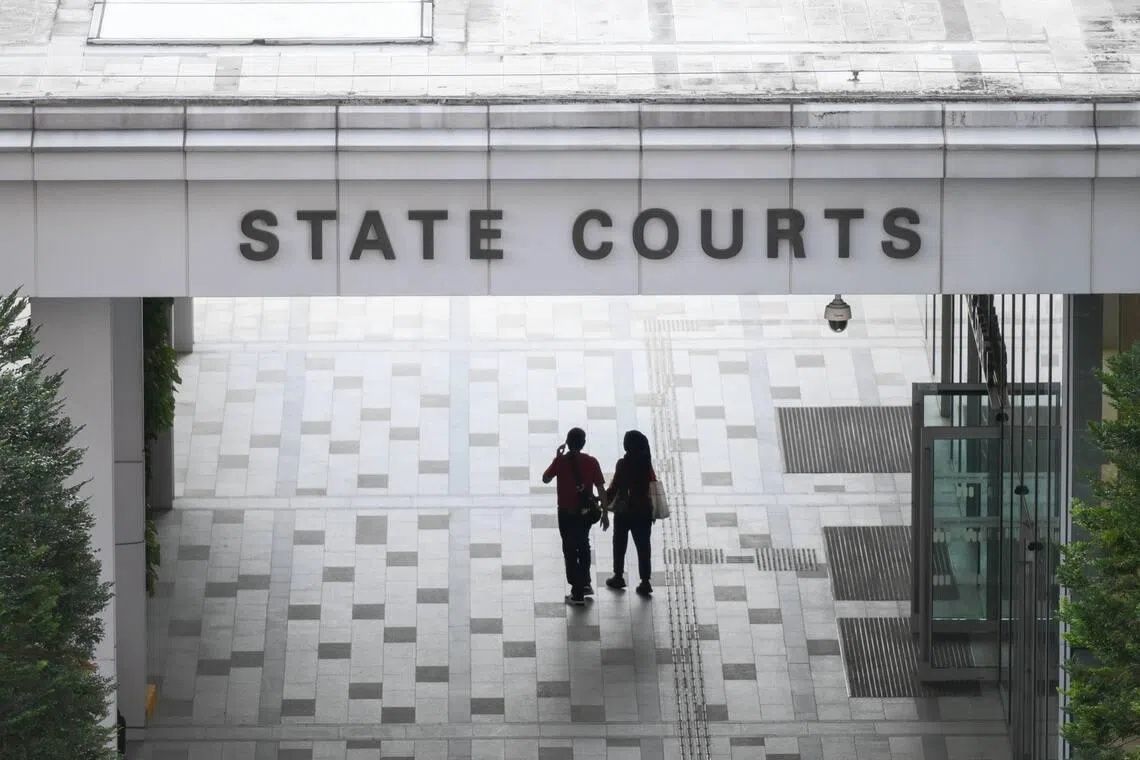
A 66-year-old Chinese national has been sentenced to three months and six weeks' imprisonment plus a $1,500 fine after admitting to entering Singapore under a false identity and deceiving authorities for nearly a decade. Liu Xueyuan's elaborate scheme unravelled only when immigration officials detected irregularities in her travel documents as she attempted to leave the country in January. The case highlights vulnerabilities in identity verification systems and the consequences when foreign nationals exploit marriage provisions to circumvent immigration rules.
Liu's deception began in 2012 when she returned to China after previously visiting Singapore legitimately using her genuine passport and identity documents in 2005 and 2012. Seeking employment opportunities in Singapore, she obtained a fraudulent passport bearing the assumed name "Yue Yinfang" in November 2012, fundamentally altering her identity for immigration purposes. The fabricated identity would become her gateway to Singapore, allowing her to bypass standard entry requirements that might have restricted her work prospects as a mature-aged migrant from China.
She re-entered Singapore on July 5, 2013, presenting the forged passport to immigration officials at the airport, who had no way of detecting the document's fraudulent nature at that checkpoint. Compounding the deception, Liu falsely declared on her disembarkation form that she had never previously used a passport under any other name when entering Singapore. This deliberate misstatement proved critical to her successful entry, as the unsuspecting immigration officer issued her a visit pass valid through August 2013 based on the fraudulent documentation.
Within weeks of her arrival, Liu applied for an extension to her visit pass under her assumed name, which was granted on the same day in July 2013. During this period, she met Low Han Song, a Singaporean citizen who eventually proposed marriage. Crucially, Low remained entirely unaware that his future wife had been living and working under an assumed identity throughout their courtship and engagement. When they solemnised their marriage on August 30, 2013, Low made the fateful decision to sponsor Liu's long-term visit passes, believing he was supporting his legitimate spouse's residence in Singapore.
For five years following their marriage, Low's sponsorship enabled Liu to maintain her presence in Singapore despite her fraudulent entry. Her long-term visit passes were renewed annually from 2013 through 2018 under the false identity, during which time she maintained employment and established a life in the city-state. The extended validity of these passes demonstrated how the spousal sponsorship system, intended to facilitate legitimate family reunification, could be weaponised by individuals willing to deceive both immigration authorities and their unsuspecting partners.
The couple's relationship deteriorated sometime between 2018 and 2019, leading Liu to move out of Low's residence. Their contact became sporadic, but necessity brought them together again in December 2020 when Liu required his sponsorship to renew her long-term visit pass. On December 2, 2020, they jointly submitted a renewal application through the Immigration and Checkpoints Authority's online platform, but both knowingly made false declarations—Liu continued using her assumed identity while they falsely stated they remained cohabiting despite their separation.
The deception's unravelling occurred through a procedural technicality rather than detective work. In December 2025, more than a decade after Liu's fraudulent entry, the ICA cancelled her long-term visit pass and issued only a short-term visitor pass valid until January 18. As Liu prepared to return to China, she visited the Chinese Embassy in Singapore to secure travel documentation, since her forged passport had expired. The embassy issued a one-time travel document bearing her genuine name—the critical document that exposed her years of systematic fraud when she presented it alongside the disputed passport to officials at Changi Airport on January 16.
The Immigration and Checkpoints Authority's discovery of the discrepancy triggered investigations that revealed the full scope of Liu's offences. She pleaded guilty on May 15 to four charges encompassing entering Singapore without valid documentation, making false statements on her disembarkation form, obtaining a long-term visit pass by deception, and submitting false information during pass renewal. Each charge carried potential penalties reflecting the seriousness with which Singapore's authorities regard immigration fraud, with maximum sentences of up to 12 months' imprisonment and fines reaching $4,000.
Low Han Song faced separate but related charges for his role in the conspiracy, though his culpability differed fundamentally from his wife's. He was sentenced to five weeks' imprisonment on June 29 after being convicted of making false statements in the long-term visit pass application. His conviction acknowledged that he knowingly participated in the false cohabitation declaration when renewing Liu's pass in 2020, despite their actual separation. This distinction underscores how even unwitting participants in fraudulent schemes can face criminal liability once they become knowing parties to deception.
The case reveals significant implications for Southeast Asian immigration systems, particularly regarding spousal sponsorship provisions that remain vulnerable to exploitation by organised applicants. Liu's sustained deception over nearly a decade suggests that annual renewal processes may lack sufficient verification mechanisms to cross-reference identity documents against central databases or previous immigration encounters. The reliance on individual officers' judgement at entry points, rather than systematic biometric or digital verification, created the opening Liu exploited when presenting her forged passport in 2013.
For Malaysian readers and policymakers, this case offers cautionary lessons about immigration control vulnerabilities. The spousal sponsorship system, utilised across ASEAN nations to facilitate family migration, depends fundamentally on accurate identity verification and consistent documentation review. Liu's ability to maintain fraudulent status through multiple annual renewals suggests that some Southeast Asian immigration authorities may process routine extensions with minimal scrutiny of original identity documents or cross-checking against initial entry records.
The consequences for Low Han Song, despite his initial ignorance, also highlight the risks faced by citizens who sponsor foreign spouses. His five-week sentence serves as a sobering reminder that spousal sponsors bear legal responsibility for the accuracy of information submitted, and that separation or deterioration of martial relationships can inadvertently entangle citizens in immigration fraud when ex-partners require continued sponsorship. Such cases may discourage legitimate family migration while simultaneously demonstrating the inadequacy of existing verification systems to prevent determined fraudsters from exploiting legal pathways.
Liu Xueyuan's sentencing on May 15 and Low Han Song's conviction on June 29 concluded a decade-long scheme, but the broader vulnerabilities exposed by their case remain unresolved across the region. As ASEAN nations grapple with increasing migration pressures and the need to balance legitimate family reunification with security concerns, the Liu case underscores the necessity for modernised, integrated identity verification systems that operate consistently across entry, renewal, and exit checkpoints.

