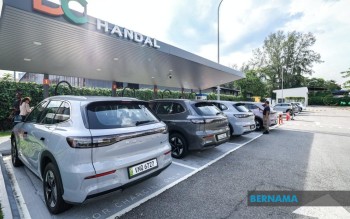
Malaysia's electric vehicle sector is poised for significant expansion within the next three to five years, and with it comes a critical opportunity to establish charging infrastructure that truly serves the nation's needs. The partnership between Xi'an LINCHR New Energy Technology Co Ltd, a company commanding over 70 per cent of China's EV charging technology testing market, and local manufacturer Swift Bridge Technologies Sdn Bhd signals growing recognition that charging ecosystems must be purpose-built rather than hastily imported from overseas markets.
Yuan Qingmin, chairman of LINCHR, articulated a nuanced perspective on cross-border technology transfer at the Global Automotive and Technology Expo (GATE 2026) held at the Malaysia International Trade and Exhibition Centre (MITEC) from August 26 to 28. His central message challenges a common misconception: that successful technologies developed elsewhere can be deployed unchanged in new markets. Instead, Yuan argued that meaningful collaboration requires substantial research and development investment specifically directed toward understanding and addressing local conditions. This approach reflects broader lessons from technology adoption across Southeast Asia, where context-specific solutions consistently outperform generic implementations.
The interdependency between vehicle adoption and charging infrastructure forms the foundation of LINCHR's strategic thinking. Neither component can advance far without the other—accelerating EV sales without corresponding infrastructure expansion creates consumer frustration and limits market penetration, while building charging networks ahead of vehicle demand represents inefficient capital allocation. Malaysia faces the additional complexity of being a developing automotive market attempting to leapfrog traditional combustion engine dominance while establishing modern charging ecosystems simultaneously. This simultaneity demands carefully calibrated investments in both vehicle incentives and infrastructure development.
China's early adoption of both EVs and charging infrastructure provides valuable reference points, yet Yuan cautioned against wholesale replication of the Chinese model. While the underlying principles of electrical engineering remain universal, practical implementation varies significantly. Malaysia's tropical climate presents distinct challenges that informed Chinese solutions may not address adequately. The hot, humid environment creates particular risks for electronic components, a reality that LINCHR recognised through adopting oil-immersed insulation designs for printed circuit boards in its charging stations. This modification specifically targets salt spray corrosion resistance, a concern that intensifies in Malaysia's coastal regions and areas with high ambient moisture. Such seemingly technical details reflect the difference between infrastructure that functions adequately and systems engineered for long-term reliability in specific environmental contexts.
The collaboration between LINCHR and Swift Bridge Technologies extends beyond hardware development to encompass charging infrastructure standards, product specifications, and engineering design protocols. This comprehensive approach acknowledges that infrastructure development requires coordination across multiple domains simultaneously. Standards and testing procedures ensure safety and interoperability across different charging networks, preventing the fragmentation that could otherwise undermine consumer confidence. Malaysia's Standards and Industrial Research Institute (SIRIM) entered this equation through a tripartite cooperation agreement signed in March of last year, creating a framework for developing certification standards tailored to Malaysian conditions while maintaining international compatibility.
Yuan emphasised that superficial technology adoption risks delivering solutions that satisfy minimum functional requirements without optimising for Malaysian realities. A charging station that operates in Beijing's dry winters or Shanghai's temperate conditions may underperform in Kuala Lumpur's year-round humidity or Penang's salt-laden air. Conversely, solutions specifically engineered for Malaysian environmental factors create competitive advantages through superior reliability and lower maintenance costs, factors that directly influence long-term adoption rates and economic viability. This principle extends beyond climate to encompass infrastructure patterns, electricity grid characteristics, consumer preferences, and regulatory frameworks that vary substantially from China's context.
The strategic emphasis on technology transfer coupled with localised R&D investment reflects recognition that Malaysia possesses neither the capacity nor the rationale to become entirely dependent on imported solutions. By cultivating local expertise through collaboration with SIRIM and Swift Bridge Technologies, Malaysia builds institutional knowledge within the nation's technical community. This capability development serves longer-term independence and supports the emergence of domestic companies capable of exporting solutions throughout Southeast Asia, where similar environmental and developmental challenges persist across multiple markets.
Looking forward, LINCHR anticipates fundamental evolution in how charging technology functions and integrates with broader energy systems. As electric vehicles become increasingly intelligent and networked, they transition from passive consumers of electrical power to interactive components within smart grids. The vision of vehicle-to-grid (V2G) technology allows cars parked at homes, workplaces, or other locations to feed surplus electricity back into distribution networks during peak demand periods. This transformation fundamentally alters charging infrastructure requirements, demanding bidirectional communication systems, sophisticated power electronics, and integration protocols that China's current systems may require substantial adaptation to accommodate in Malaysian contexts.
The emergence of V2G functionality introduces additional complexity that reinforces Yuan's core argument about necessity for localised development. Malaysia's electricity generation mix, grid architecture, regulatory framework for distributed energy resources, and consumer adoption patterns all differ from China's circumstances. Charging infrastructure designed primarily for unidirectional power delivery requires substantial reconfiguration to support vehicle-to-grid services. This prospective evolution demands that current development decisions incorporate flexibility and upgradeability into hardware and software architectures, ensuring investments remain relevant as technology capabilities expand.
For Malaysian policymakers and industry stakeholders, the LINCHR perspective offers practical guidance: international partnerships and technology access provide essential foundations, but success requires deliberate investment in understanding and addressing local needs. This balanced approach avoids both the trap of attempting technological self-sufficiency in domains where world-leading expertise exists elsewhere and the equally damaging assumption that global solutions function equally across all contexts. Swift Bridge Technologies' role as a local partner with understanding of Malaysian market conditions, combined with LINCHR's technical expertise and SIRIM's standards-setting authority, creates a collaborative structure suited to developing genuinely appropriate solutions. As Malaysia's EV market accelerates, the quality of decisions made during this foundational infrastructure phase will determine whether the nation develops a world-class charging ecosystem or inherits systems that perpetually require expensive retrofitting to address overlooked local conditions.

