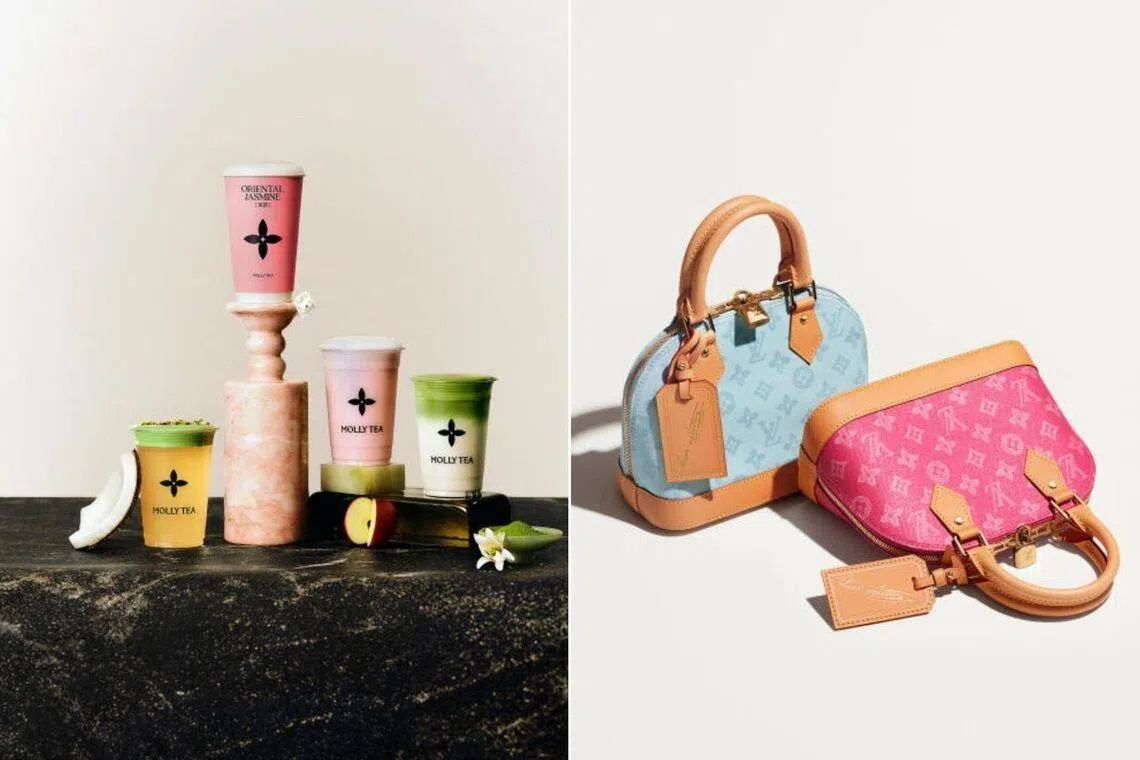
A Chinese court has dealt a significant blow to Molly Tea, a Shenzhen-based milk tea chain, ordering it to compensate Louis Vuitton with 10.3 million yuan (approximately US$1.5 million) for trademark infringement. The Suzhou Intermediate People's Court in Jiangsu province determined that Molly Tea and one of its franchised outlets in Wuzhong district had unlawfully used a four-petal flower graphic design that mirrors seven of the French luxury conglomerate's registered trademark motifs. Beyond the financial penalty, the court mandated that the tea company issue a formal public apology and immediately cease using the contested emblem.
The dispute centres on visual similarities between Molly Tea's brand emblem and Louis Vuitton's famous monogram patterns. The French brand filed its lawsuit in May 2025, and the ruling came down on June 29 after the court examined evidence from both parties. The timing of this decision has exposed a longstanding tension in China's intellectual property landscape, where traditional artistic elements and modern commercial branding intersect in increasingly complex ways. Molly Tea has already signalled its intention to escalate the matter by filing an appeal with a higher court, suggesting the legal battle is far from concluded.
What makes this case particularly noteworthy for the region is how it reflects broader challenges facing Southeast Asian businesses that operate across multiple jurisdictions. Many companies in Malaysia and neighbouring countries use floral or geometric designs inspired by shared cultural heritage, raising questions about what constitutes legitimate use versus infringement. The Molly Tea decision demonstrates that even domestic disputes within China can reshape how intellectual property protection is enforced across Asia, potentially affecting regional businesses that employ similar design strategies.
The case has unleashed a torrent of online discussion in China. A hashtag tracking the Louis Vuitton lawsuit against Molly Tea accumulated over 360 million views on social media platforms, while a related topic about the invalidation of Molly Tea's trademark reached 18.7 million reads. Public opinion remains fractured. Some observers contend that Molly Tea's floral design bears unmistakable resemblance to the European brand's iconic patterns, making the infringement clear-cut. Others argue that substantial visual differences exist and that the two companies operate in entirely different market segments—luxury fashion versus affordable beverage retail—reducing any genuine risk of consumer confusion.
A particularly contentious strand of the debate involves accusations that Louis Vuitton's signature design itself lacks originality. Some Chinese internet users have suggested that the luxury brand's four-petal motif draws inspiration from traditional Chinese cultural patterns and artistic traditions. This argument highlights a fundamental tension in intellectual property discourse: determining the boundary between legitimate trademark protection and monopolising elements that belong to humanity's shared cultural heritage. The question resonates strongly in Southeast Asia, where many nations share overlapping artistic and design traditions rooted in Buddhist, Hindu, and indigenous influences.
Kang Lixia, a partner at the Beijing Standzer IP Firm, provided professional perspective on the legal framework governing such disputes. She explained that either party dissatisfied with the judgment retains the right to file an appeal, with success hinging on whether the appellant can furnish compelling evidence demonstrating that its design possesses genuine originality and distinctiveness. Crucially, she stressed that floral patterns and motifs embedded within traditional Chinese culture exist within the public domain and theoretically remain available for any company to employ. However, this principle encounters significant limitations when applied to registered trademarks.
China's trademark legislation operates under a "first to file" system, meaning that whichever applicant registers a mark earliest gains exclusive rights, while subsequent applications for identical or similar marks covering the same goods face rejection. Kang noted that although Molly Tea and Louis Vuitton registered their marks in different product categories, the French brand's status as an earlier registrant combined with its substantial consumer recognition allows it to claim protection that extends beyond its original classification. This cross-class protection mechanism creates substantial obstacles for later applicants seeking to employ similar visual elements, effectively granting established luxury brands considerable defensive territory.
Liu Bin, an intellectual property lawyer from Beijing Zhongwen Law Firm, advocated for balanced reasoning in evaluating the dispute. He highlighted that trademark law does not demand that contested designs be identical to registered marks—rather, the decisive question involves whether ordinary consumers might reasonably experience confusion when encountering the two marks. Liu pinpointed the core ambiguity troubling the general public: determining how traditional Chinese cultural patterns ought to receive protection while simultaneously remaining accessible for legitimate use. Since these artistic motifs constitute collective cultural inheritance rather than proprietary creations, many citizens believe that no individual entity should possess exclusive ownership.
Yet Liu underscored an important distinction that often gets lost in public discourse. Intellectual property protections do not prevent anyone from utilising traditional cultural elements themselves; instead, they safeguard the brand recognition and commercial goodwill that companies accumulate when they employ those elements in commercial activities. A milk tea company can certainly incorporate floral designs inspired by Chinese heritage, but trademark law prevents that company from adopting designs so similar to established registered marks that they risk creating consumer confusion or appropriating another brand's accumulated market value.
Liu's formulation of the principle illuminates the genuine policy challenge underlying the Molly Tea case: how to permit traditional elements to remain accessible while simultaneously preventing commercial actors from unfairly exploiting the reputation built by earlier trademark registrants. He advocated for preserving open access to cultural motifs so that future generations can continue developing and interpreting traditional designs, but stressed that commercial marks themselves cannot cross the threshold into replicating or confusing earlier registered brands. This balanced approach acknowledges that protecting brand identity need not require surrendering cultural elements to corporate ownership.
For Malaysian and regional readers, the Molly Tea decision carries practical implications. Companies operating across China and Southeast Asia should carefully audit their brand identities and trademark registrations, particularly if they employ geometric or floral designs. The ruling suggests that Chinese courts will enforce cross-class protection for established marks more aggressively than many businesses anticipated. Companies seeking to register trademarks in China should conduct thorough searches against all existing registrations, not merely those within their own product categories. The case demonstrates that cultural inspiration and commercial trademark strategy require separate analytical frameworks, and that invoking traditional heritage does not automatically shield a company from infringement claims.
Moreover, as Asian economies increasingly develop sophisticated intellectual property regimes, businesses must anticipate that disputes once considered minor or culturally contextual will receive formal legal treatment. The unprecedented social media attention accorded to the Molly Tea case suggests that Chinese consumers and policy-makers are developing more nuanced perspectives on how IP law should balance commercial protection against cultural preservation. Regional businesses operating in this environment should prepare for greater enforcement intensity while engaging constructively with stakeholders to establish industry standards that respect both legitimate brand protection and cultural accessibility.

