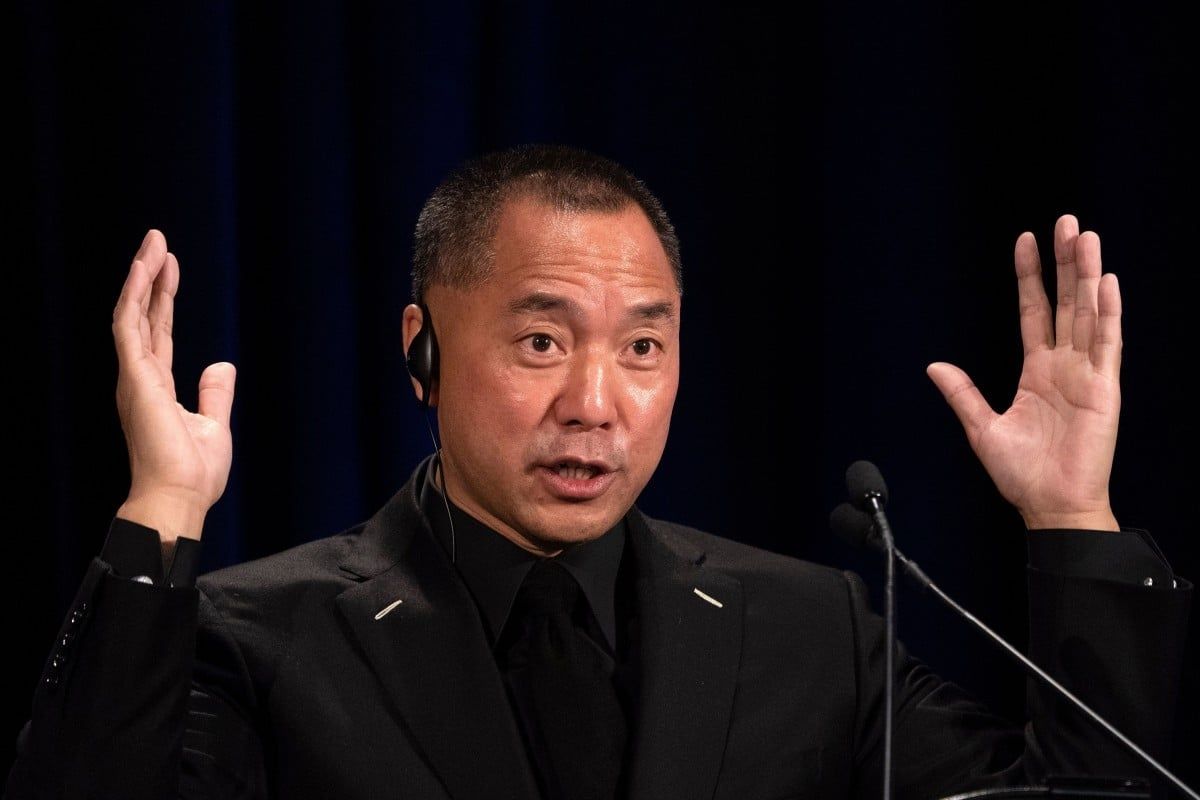
A self-exiled Chinese billionaire who reinvented himself as a prominent critic of Beijing's Communist Party has been sentenced to 30 years in a US federal prison for orchestrating one of the country's most elaborate investment fraud schemes. Guo Wengui, also known as Miles Guo and Ho Wan Kwok, received the lengthy sentence from Manhattan federal judge Analisa Torres on Monday, June 30, following a conviction on nine of 12 criminal charges. Prosecutors had argued that his fraud scheme, which operated between 2018 and 2023, defrauded more than 1,000 victims worldwide and resulted in losses exceeding hundreds of millions of dollars.
The case represents a striking fall from prominence for a figure who had cultivated close ties to influential American political circles during his time in the United States. After fleeing China approximately a decade ago, Guo established himself in New York, eventually residing in a luxury apartment with views of Central Park and joining President Donald Trump's Mar-a-Lago golf club in Florida. He also forged a significant political alliance with conservative strategist Steve Bannon, with the two publicly announcing an ambitious initiative aimed at overthrowing the Chinese government in 2020. These high-profile connections amplified his visibility and, prosecutors contend, helped him gain credibility with potential investors who were ultimately deceived by his schemes.
The court heard testimony from victims who described devastating personal and financial consequences. Wei Chen, one of the fraud victims who testified during the trial, told the judge that Guo's scheme had "destroyed my life" and that of her family. Judge Torres read excerpts from letters submitted by other victims, revealing a pattern of individuals who had lost their life savings, experienced severe anxiety and shame, and faced ruptures in family relationships following their investment losses. The judge emphasized that Guo had specifically targeted people motivated by aspirations to bring democratic change to China, exploiting their political idealism and trust to extract funds that he subsequently channelled into an extravagant lifestyle.
Guo's defense team presented a contrasting narrative, arguing that he was himself a victim of persecution by the Chinese Communist Party and that his prosecution was part of a broader conspiracy to silence dissidents. His lawyers contended that the Chinese government had orchestrated an extensive campaign to eliminate him, allegedly recruiting high-profile figures across American business, entertainment, and political circles to conspire against him. They pointed to documented evidence of physical torture that Guo had allegedly endured while in China, noting that he bore scars and disfigurements requiring surgical intervention over nearly three decades. The defense argued that a 30-year sentence would validate Beijing's accusations and discourage other Chinese dissidents from seeking refuge in the United States, a concern that resonated with broader debates about asylum protection.
During his trial, prosecutors presented evidence demonstrating that Guo had orchestrated the fraudulent investment schemes through multiple entities under his control, including GTV Media Group Inc., the Himalaya Farm Alliance, and the Himalaya Exchange. Court documents revealed that he had convinced hundreds of thousands of investors to commit more than $1 billion across these various platforms, each presented as legitimate business opportunities. The government's case established a systematic pattern of deception, with Guo allegedly making false representations about the nature of investments, expected returns, and the actual use of investor funds. Instead of generating legitimate business returns, the capital flowed directly into supporting Guo's extravagant consumption.
The lifestyle funded by these ill-gotten proceeds was extraordinary in its excess. Prosecutors documented that Guo had acquired multiple mansions, luxury yachts, high-performance racing vehicles, and an extensive wardrobe of designer clothing. This conspicuous consumption extended across multiple jurisdictions and operated on a scale that suggested complete indifference to the financial devastation experienced by his victims. Judge Torres emphasized during sentencing that Guo demonstrated no remorse for his actions, instead insisting implausibly that his conduct had caused no financial loss and harmed no individual. The judge further noted that Guo had actively encouraged his supporters to harass and intimidate those willing to testify against him or publicly criticize his conduct.
Guo's behavior during the sentencing hearing itself demonstrated the pattern of evasion that had characterized his defense. He protested his treatment while in custody, claiming he had suffered illness and required hospitalization earlier on the day of sentencing. When prosecutors suggested he was exaggerating or fabricating medical complaints, Guo disputed this characterization through an interpreter, describing nausea and other symptoms. In his only substantive comment regarding the criminal charges, he asserted that his primary motivation in coming to the United States was to oppose the Communist Party, effectively sidestepping acknowledgment of the fraud. As he was led from the courtroom, supporters applauded enthusiastically, reinforcing the polarized perception surrounding the case.
The court ordered Guo to forfeit $889 million in restitution, though observers question the practicality of recovering such a substantial sum. His prior assets, while impressive, may prove insufficient to satisfy victim claims in their entirety. The restitution order nonetheless signals the court's determination to hold him financially accountable and represents the court's assessment of the documented harm inflicted. The mandate reflects both the scale of the fraud and the government's assertion that Guo's wealth accumulated entirely through criminal means rather than legitimate enterprise.
The Chinese government has maintained its own interest in Guo's case, viewing him as a fugitive wanted for charges including rape, kidnapping, and bribery. Although Guo has denied these accusations, characterizing them as fabricated retaliation for his corruption exposés, Chinese authorities issued an Interpol Red Notice requesting his arrest pending potential extradition. The Ministry of Foreign Affairs in Beijing issued a statement noting the sentencing outcome, effectively claiming vindication of its long-standing position that Guo constituted a threat to Chinese national interests. This international dimension adds complexity to questions about whether Guo's prosecution represents legitimate accountability or potential political instrumentalization.
For Southeast Asian observers, the case illuminates several concerning trends in the intersection of diaspora politics, transnational fraud, and sanctuary protection. The ability of a politically connected exile to operate an enormous fraud scheme while leveraging asylum protections and establishing relationships with prominent American political figures raises questions about due diligence in vetting high-profile refugees and investors. The incident also demonstrates vulnerabilities in the international financial system where individuals can operate multiple investment platforms with limited regulatory oversight. Furthermore, the case highlights tensions between protecting genuine political dissidents and preventing bad-faith actors from exploiting asylum laws and anti-Communist sentiment to facilitate criminal enterprise.
The prosecution and conviction of Guo represents a vindication of American federal law enforcement capabilities in dismantling elaborate transnational fraud networks. However, it also raises unresolved questions about whether justice has been adequately served given the dispersed nature of the victim population and the practical limitations on restitution. For the Malaysian context specifically, the case underscores the importance of financial regulatory frameworks capable of identifying and preventing participation by local investors in overseas scheme, as well as the necessity of international cooperation in asset recovery. The sophistication of Guo's operational methods—utilizing multiple jurisdictions, complex corporate structures, and appeals to political ideology—provides cautionary lessons for regulators throughout the region tasked with protecting citizens from sophisticated international fraud operations.

