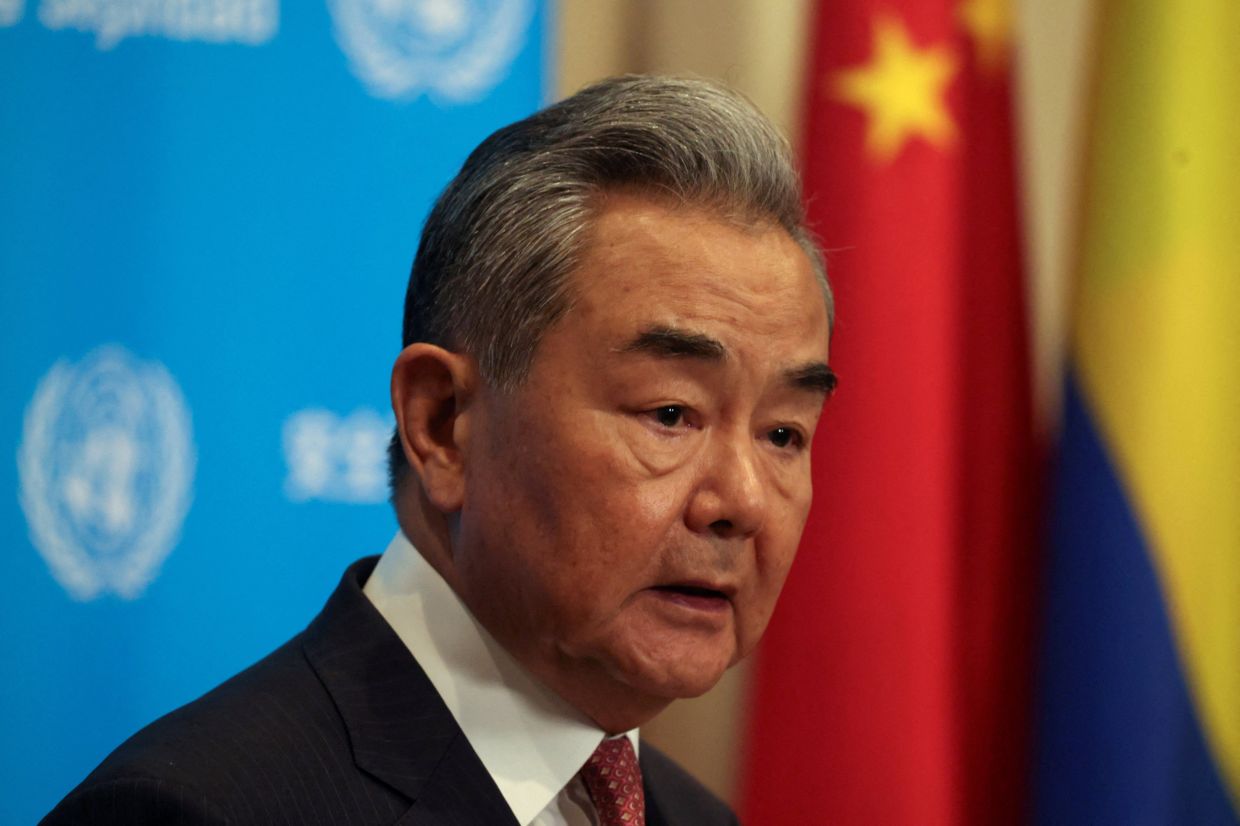
Chinese Foreign Minister Wang Yi delivered a pointed message to US Secretary of State Marco Rubio on Tuesday, urging him to treat Taiwan-related matters with utmost caution as tensions simmer beneath the surface of recovering Sino-American relations. The conversation underscores Beijing's anxiety over how the incoming Trump administration will navigate one of the world's most volatile geopolitical flashpoints, where Chinese sovereignty claims collide with American strategic interests in the Indo-Pacific region.
Wang emphasised that cultivating a constructive and strategically stable relationship serves the fundamental interests of both Beijing and Washington, as well as the broader international community. He stressed that achieving this goal demands more than rhetorical commitment, insisting instead on concrete actions, genuine reciprocal efforts, and sustained dedication from both capitals. This framing reflects China's frustration with what it perceives as inconsistent American signals on core issues, particularly regarding Taiwan's status.
The Foreign Minister outlined a framework for bilateral engagement that mirrors language used in recent high-level summits. He proposed lengthening the roster of cooperative ventures while simultaneously reducing contentious agenda items and more carefully managing the various risks and latent dangers embedded in the relationship. This dual approach—expanding collaboration while ringfencing disagreements—represents Beijing's preferred model for managing ties with Washington despite their profound structural competition.
China's sensitivity to Taiwan affairs has intensified following President Xi Jinping's May summit with former President Donald Trump. During that landmark meeting, Xi made clear that careless handling of the Taiwan question risked triggering military conflict and plunging bilateral relations into what he characterised as an "extremely dangerous situation". This was not merely diplomatic language but a carefully calibrated warning that Beijing would view any perceived shift in American policy on Taiwan as a red line that could upend the recent stabilisation of US-China relations.
The timing of Wang's call to Rubio carries particular significance given ongoing preparations for a potential reciprocal state visit by Xi to the United States. Such a visit would represent a dramatic rehabilitation of Sino-American ties and could reshape regional power dynamics throughout East Asia and beyond. However, the apparent brittleness of recent progress suggests that even modest miscalculations on Taiwan could derail these diplomatic advances before they take deeper root.
Washington has publicly portrayed the May summit as a transformative achievement, producing what officials describe as historic agreements benefiting American interests. The administration released detailed documentation outlining commitments it claimed Beijing had made to address longstanding concerns regarding supply chain vulnerabilities, particularly in critical sectors where Chinese dependency poses strategic risks. These claims, however, remain subject to implementation verification and may prove difficult to sustain if political tensions resurface.
Despite surface-level stabilisation in US-China relations since the May gathering, several recent developments hint at underlying instability. These strains suggest that both countries remain locked in fundamental competition over technology, regional influence, and military capabilities, even as they engage in cordial diplomatic theatre. The appearance of normality masks persistent disagreement over issues that neither side considers negotiable.
Wang's emphasis on Taiwan handling reflects Beijing's calculation that the new Trump administration, despite its pragmatic business-focused approach, might be vulnerable to pressure from Congressional hawks and allies in Japan, South Korea, and Australia who view Taiwan's security as integral to regional stability. China worries that careless rhetoric or military support decisions could trigger escalatory cycles that neither capital controls once initiated. The Foreign Minister's warning essentially tells Rubio that Beijing is watching carefully and will respond firmly to what it perceives as crossing established lines.
For Malaysia and other Southeast Asian nations, the US-China dynamic around Taiwan carries profound implications. Regional stability depends significantly on maintaining the current equilibrium, where American security commitments and Chinese economic integration coexist uncomfortably but without triggering direct confrontation. Any significant shift in the Taiwan question could force smaller nations to choose sides more explicitly, disrupting the strategic hedging that characterises ASEAN's approach to great power competition. Malaysia's own economic ties with both powers and its democratic credentials mean it has genuine interests in preventing US-China conflict from escalating.
The substance of Wang's message to Rubio amounts to a sophisticated negotiation over red lines. Beijing is essentially proposing that Washington compartmentalise its relationship with Beijing, separating security competition from economic cooperation and preserving certain issues—most critically Taiwan—as outside the normal realm of contestation. Whether the Trump administration accepts this framing will determine whether the recent diplomatic thaw becomes permanent or proves merely temporary.
Rubio's response to Wang's overtures will reveal whether the incoming administration intends to respect Beijing's sensitivities or pursue a more assertive Taiwan policy despite recent diplomatic gains. The apparent contradiction between America's May summit commitments and its longer-term strategic interest in containing Chinese power makes this question genuinely difficult to resolve. Wang's carefully worded caution represents Beijing's attempt to prevent American actions from forcing its hand into confrontation it would prefer to avoid.
Looking forward, Wang's Tuesday call establishes that while Sino-American relations have improved tactically since May, strategic mistrust remains profound. Both capitals have legitimate interests that cannot be fully reconciled, and Taiwan remains the issue most likely to expose this fundamental incompatibility. The coming months will test whether the diplomatic framework constructed in recent summits can withstand the real pressures that inevitably emerge when great powers pursue divergent visions for international order.

