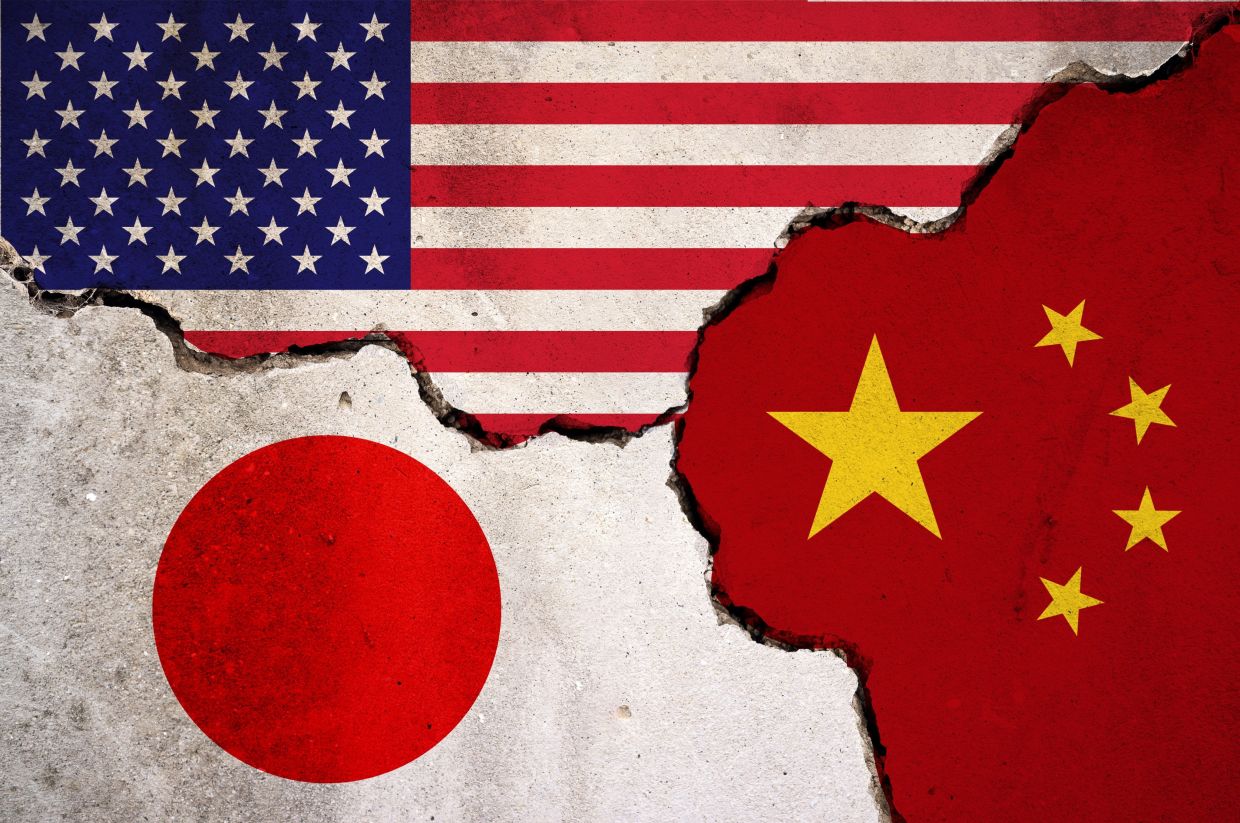
Seven months of relentless Chinese pressure against Tokyo has exposed a widening crack in the US-Japan partnership, leaving Japanese officials increasingly anxious about Washington's commitment to defending one of its most strategically vital allies in East Asia. Since November, when Prime Minister Sanae Takaichi openly characterised any Chinese military action against Taiwan as a potential existential threat to Japan, Beijing has responded with a calculated campaign of economic retaliation whilst Washington has offered little more than rhetorical reassurance. The situation reflects a broader recalibration of American priorities under President Donald Trump, one that privileges transactional diplomacy and personal considerations over the traditional alliance obligations that have underpinned regional stability for decades.
Takaichi's remarks, delivered to Japanese lawmakers in unambiguous terms, represented an unusual departure from the calculated ambiguity that has long defined Tokyo's public position on Taiwan. By stating that military action involving warships and combat operations "could by all means become a survival-threatening situation" for Japan, she articulated what defence analysts and policymakers have privately acknowledged for years: Japan's security is inextricably bound to Taiwan's status. Beijing's predictable fury over what it characterised as a violation of core red lines triggered immediate consequences. In January, China imposed restrictions on rare earth exports and implemented several retaliatory measures designed to signal displeasure and exert economic pressure on the Japanese government. Yet what proved more troubling for Tokyo was not Beijing's response—which followed established diplomatic patterns—but Washington's conspicuous reluctance to meaningfully support its treaty ally during a moment of acute vulnerability.
The disconnect between Japanese expectations and American actions has created a simmering resentment within Tokyo's policy circles. Privately, Japanese officials have escalated their appeals to the Trump administration over recent months, shifting from tentative initial requests to frequent, high-level discussions at cabinet and legislative levels specifically requesting that Washington press China to ease its economic restrictions. However, these entreaties have consistently been treated as secondary concerns rather than matters of strategic importance. According to sources familiar with the private negotiations, White House officials have acknowledged China's expanding economic coercion of Japan during meetings but conveyed the impression that the issue ranks low on their agenda. One source characterised the pattern bluntly: discussions about Japanese concerns gave way quickly to other subjects, suggesting a dismissive approach that has not escaped Tokyo's notice.
The Trump administration's relative passivity stands in sharp contrast to Cold War–era protocols where US presidents routinely reaffirmed commitments to allies facing external pressure. When Trump did raise the rare earths restrictions with Chinese President Xi Jinping, the conversation yielded few concrete results, prompting Japanese officials to grow increasingly frustrated with what they perceive as performative diplomacy. The contrast between Trump's willingness to engage China on trade matters and his apparent reluctance to leverage economic or diplomatic tools on behalf of Japan has created what analysts describe as a confidence gap. Tokyo expected that a Republican administration sceptical of Beijing would champion alliance interests more forcefully, making the tepid response all the more disappointing to Japanese officials who have invested considerable political capital in deepening defence ties and increasing military spending.
Several interconnected factors help explain Washington's seemingly inconsistent approach to regional security dynamics. The Trump administration's heightened focus on Middle Eastern affairs, particularly the conflict that erupted in February between Israel and Iran following Trump's endorsement of Israeli military action, has diverted resources, attention, and military assets away from East Asia. The president has redirected anti-missile systems and naval forces from the region to the Persian Gulf, signalling where his strategic priorities lie. However, since Takaichi's Taiwan comments predated the February conflict, this Middle East preoccupation does not fully account for Trump's muted initial response to Japanese concerns. Analysts suggest that multiple motivations shape Trump's approach, reflecting his characteristic pragmatism tinged with personal calculation. By maintaining distance from Japan's grievances against China, Trump may believe he preserves flexibility in his relationship with Xi Jinping, whether for a potential Washington summit later this year or ongoing trade negotiations where leverage and perceived favour-granting matter greatly.
Trump's broader ideological framework towards alliances compounds the difficulty. The president has long harboured scepticism about what he characterises as free-riding by security partners, viewing collective defence arrangements as arrangements benefiting others at American expense. This perspective conflicts fundamentally with the post-World War II architecture of bilateral and multilateral security arrangements, which Western strategists have long argued creates mutual security benefits. Japan, recognising this American sentiment, has responded to Trump's earlier calls for increased defence spending by substantially boosting military budgets and investing heavily in new capabilities designed to deter Chinese aggression. Tokyo has also actively participated in regional security initiatives and quadrilateral arrangements involving the United States, Australia, and India. Yet rather than appreciating these contributions, the Trump administration appears unmoved. When Japanese officials requested advance consultation on war plans or offered logistical support for Middle Eastern operations, Trump dismissed the overtures as unnecessary, reinforcing Japanese perceptions that the administration views alliance contributions instrumentally rather than as expressions of genuine partnership.
Beyond strategic calculations, analysts point to psychological and personal dimensions of Trump's decision-making that increasingly shape international relations. Sources close to the administration suggest that Trump's second-term focus has expanded beyond geopolitical concerns to encompass personal business interests, family property matters, and cryptocurrency ventures. More tellingly, his approach to governance appears driven increasingly by personal grievances, loyalty considerations, and a narrowly defined conception of presidential benefit rather than broader party or national interests. This personalisation of foreign policy creates unpredictability for allies seeking to understand American commitment levels. Japan faces a situation where alliance rhetoric remains intact, but actual support appears contingent on calculations about Trump's personal interests and perceived advantage rather than institutional commitments or strategic doctrine. The resulting asymmetry leaves Japanese policymakers uncertain about whether they can reliably count on Washington in future crises.
The gender dynamics of Trump's perspective on leadership and authority may also subtly influence his approach to Japan. Takaichi's prominence as a forceful female leader advocating explicit security positions may not align with Trump's traditional views about gender roles in politics and diplomacy. Some analysts hesitate to foreground this observation but acknowledge that Trump's historical comments about female leaders, combined with his apparent irritation at Takaichi's refusal to moderate her Taiwan statements, suggest that personal antipathy may reinforce policy distance. This interpretative layer, whilst delicate, reflects how deeply personal factors have penetrated decision-making at the highest levels of the current administration, extending beyond traditional security calculations into realms that previous administrations would have considered irrelevant to alliance management.
The strategic consequences of this fissure extend beyond bilateral US-Japan relations, reshaping the broader architecture of regional security in ways that concern defence analysts across Asia. China's pressure campaign succeeds precisely because Beijing calculates that Tokyo cannot simultaneously withstand economic coercion whilst feeling abandoned by Washington. By demonstrating cracks in the alliance, China signals to other regional partners that American commitments may prove conditional or contingent on the whims of individual presidents. This dynamic undermines the credibility of the extended deterrence framework that has stabilised the region for half a century. South Korea, Taiwan, the Philippines, and other partners increasingly question whether US security guarantees represent genuine commitments or mere transactional arrangements dependent on whether alliance partners prove useful to American leadership at any given moment.
Takaichi's original November statement, whilst breaking from carefully cultivated ambiguity about Taiwan, articulated what geography and strategic logic have long dictated: Japan's security fundamentally depends on Taiwan's status. Her willingness to voice this reality reflected genuine threat perceptions informed by Japan's proximity to Taiwan, its reliance on sea lanes passing through the Taiwan Strait, and the military implications of Chinese domination of the island. Yet in articulating this strategic truth, she exposed the vulnerability of allies dependent on American support for deterrence. Japan discovered that frankness about security concerns, rather than generating solidarity, instead triggered economic punishment with only muted American protest. This dynamic incentivises future Japanese leaders towards greater strategic ambiguity, potentially destabilising the very clarity necessary for deterrence.
Looking forward, the Japanese government faces an uncomfortable strategic recalibration. Tokyo cannot afford to break with Washington given the fundamental importance of US military presence and extended nuclear deterrence, yet it cannot passively accept a pattern whereby China imposes costs on Japanese interests whilst America remains neutral. Japanese policymakers are exploring independent options: deepening ties with India and Australia, accelerating military modernisation, and developing hedging strategies that reduce dependence on American decision-making. Simultaneously, Tokyo must manage frustration with Trump without publicly criticising its most important security partner, a diplomatic balancing act that inherently limits Japan's ability to shape outcomes. The administration's treatment of Japanese concerns as low priority suggests that only circumstances deemed urgent by Trump himself—whether personal grievances, election-year considerations, or direct Chinese actions—will generate American diplomatic activism. For now, Japan experiences the peculiar torment of an ally that has done everything asked of it yet receives diminished security commitment in return, a reality that no amount of defence spending or military cooperation can remedy if Washington's strategic attention remains elsewhere.

