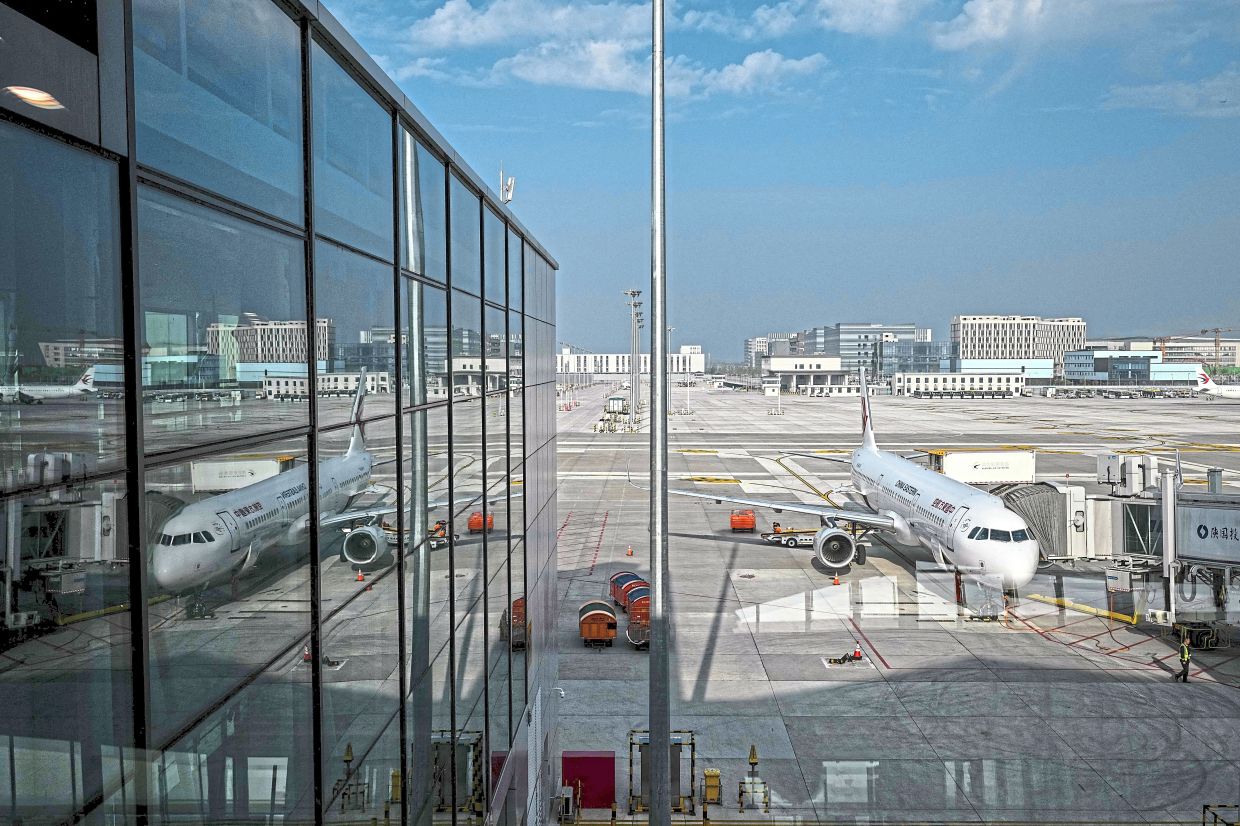
The financial pain being felt by China's aviation sector deepens with each passing quarter, as Air China, China Eastern Airlines and China Southern Airlines reported a combined net loss of approximately 8.2 billion yuan for the first half of the year. This marks the seventh consecutive year in which these three dominant carriers have ended a period in the red, a persistent weakness that underscores the structural fragility still gripping China's post-pandemic aviation recovery. The trio's struggles carry particular significance for Southeast Asian airlines and tourism operators, who compete directly with Chinese carriers on regional routes and face pressure from their discounted pricing strategies born of desperation.
What makes this downturn particularly striking is the dramatic reversal in fortune that occurred between the first and second quarters. The carriers had posted a combined profit of 4.82 billion yuan during the opening three months of the year, buoyed by surging Lunar New Year travel demand that temporarily masked deeper sector-wide vulnerabilities. This sharp swing highlights the volatility now characterising China's aviation market and the precarious nature of earnings that depend heavily on seasonal demand patterns. For investors monitoring the sector, the data suggests that near-term recovery prospects remain elusive despite what appeared to be a strong start to 2026.
The deterioration was steep across all three carriers. Air China, which operates as China's national flag carrier, recorded a net loss of 2.3 billion yuan compared to a 1.81 billion yuan loss in the equivalent period a year prior. China Eastern Airlines fared slightly better in absolute terms but still saw its losses deepen to 2.2 billion yuan from 1.43 billion yuan previously. China Southern Airlines experienced the most dramatic swing, posting a 3.7 billion yuan loss against a 1.53 billion yuan shortfall recorded in the first half of 2025. Each carrier's share price plummeted on the news, signalling investor disappointment and renewed concerns about when the sector might return to sustained profitability.
The primary culprit driving these losses is the sharp and sustained elevation in jet fuel costs, which have become the industry's most pressing operational burden. Fuel expenses at each of the three carriers surged between 35 and 38 percent during the first half compared to the same period a year earlier, creating an effective ceiling on profitability that has proven difficult for the carriers to overcome through revenue management alone. What distinguishes the Chinese carriers' predicament from their global counterparts is their minimal use of fuel hedging strategies. Unlike many Asian competitors or European airlines that actively protect themselves against oil price volatility through derivative instruments, Chinese carriers hedge little of their fuel purchases, leaving them acutely vulnerable to every fluctuation in crude markets. China Southern's own assessment was particularly candid, noting in regulatory filings that currently there exists "no effective means available" to manage exposure to jet fuel price swings.
Geopolitical factors have compounded this fuel-cost burden. The ongoing Middle East conflict has disrupted international aviation routes and sustained upward pressure on oil prices, effectively raising the cost floor for carriers operating across that region. Although fuel prices have retreated from their second-quarter peaks, they remain elevated at more than 50 percent above pre-conflict levels, meaning carriers continue operating with structurally higher input costs than they faced prior to 2025. This persistent elevation represents a genuine structural shock to the industry rather than a temporary spike, requiring carriers to fundamentally reassess their business models and route profitability.
Yet the carriers are not entirely without bright spots. Revenue across all three showed respectable growth during the first half, with Air China reporting top-line expansion of 10.5 percent, China Eastern 11.1 percent and China Southern 9.7 percent. International routes proved particularly resilient, driven partly by passengers seeking to avoid Middle Eastern hubs disrupted by regional tensions and partly by Europe's attractiveness as a destination. However, this revenue growth has been insufficient to offset the explosive growth in fuel costs, a mathematical reality that illustrates the limits of demand-side solutions when input costs are rising faster than pricing power allows.
Domestically, Chinese carriers face structural headwinds that prevent them from imposing substantial fare increases that might offset fuel inflation. Weaker macroeconomic conditions and rising competition from high-speed rail networks and self-drive holiday packages have eroded their pricing flexibility, particularly on trunk routes where rail alternatives exist. This contrasts sharply with American carriers, which have successfully implemented meaningful fare increases without severely damaging demand. The competitive landscape in China effectively prevents local carriers from adopting similar strategies, trapping them in a squeeze between rising costs and constrained pricing power.
The third quarter, normally the most profitable season for Chinese carriers due to summer holiday demand, has brought little relief and possibly further deterioration. An unusually intense typhoon season is disrupting domestic operations during precisely when these airlines most need reliable service and high load factors. Meteorological data reveals that 21 typhoons have developed in the northwestern Pacific Ocean and South China Sea during the year to date, a figure that exceeds the historical average by nine systems. This weather disruption arrives at a particularly vulnerable moment for carriers already struggling with margin compression.
Passenger traffic projections paint a concerning picture for the industry's near term. Flight Master, an aviation analytics firm, has forecast that Chinese carriers will transport just 142 million passengers on combined domestic and international routes during July and August, representing a year-on-year contraction of 3.6 percent. Should this forecast prove accurate, it would mark the first decline in peak-season passenger numbers since 2022, when covid lockdowns were still disrupting travel patterns across China. The psychological weight of a contraction occurring in what should be a growth phase of the recovery cannot be overstated, as it signals that structural demand pressures are not merely temporary.
Financial analysts have grown considerably more pessimistic about the sector's trajectory. HSBC economists now forecast that the three major carriers will combine for a staggering loss of approximately 16.8 billion yuan during 2026, a dramatic revision from market expectations of a modest 1.3 billion yuan combined profit. This forecast adjustment suggests that the current first-half difficulties are viewed not as anomalies but as indications of how the full year will unfold. The revision underscores how quickly investor sentiment can shift when companies report results significantly worse than guidance from just weeks prior.
The toll on shareholder returns has been substantial and visible. All three carriers' Shanghai-listed shares have declined by at least 36 percent during 2026, with share price declines accelerating following the release of first-half results. Perhaps most tellingly, none of the three carriers declared interim dividends to shareholders, a clear signal that management views cash preservation as more urgent than returning capital. This withholding of dividends reflects the genuine uncertainty pervading airline leadership about when the sector will stabilise and whether current cash reserves will prove adequate to weather an extended period of losses.
One glimmer of strategic investment visible in these results is the continuing expansion of fleets equipped with domestically manufactured COMAC C919 narrow-body jets. China Eastern increased its C919 fleet to 17 aircraft following three new deliveries during the first half, while both Air China and China Southern now operate 11 C919s each. This fleet transition serves China's ambitions to reduce reliance on foreign aircraft manufacturers and supports domestic industrial policy, though it occurs against a backdrop of weak operating economics. China Eastern has, however, revised downward its expected C919 deliveries between 2026 and 2028, taking 13 fewer aircraft than previously forecast, suggesting that even fleet expansion plans are being reconsidered as carriers confront the reality of sustained losses.

