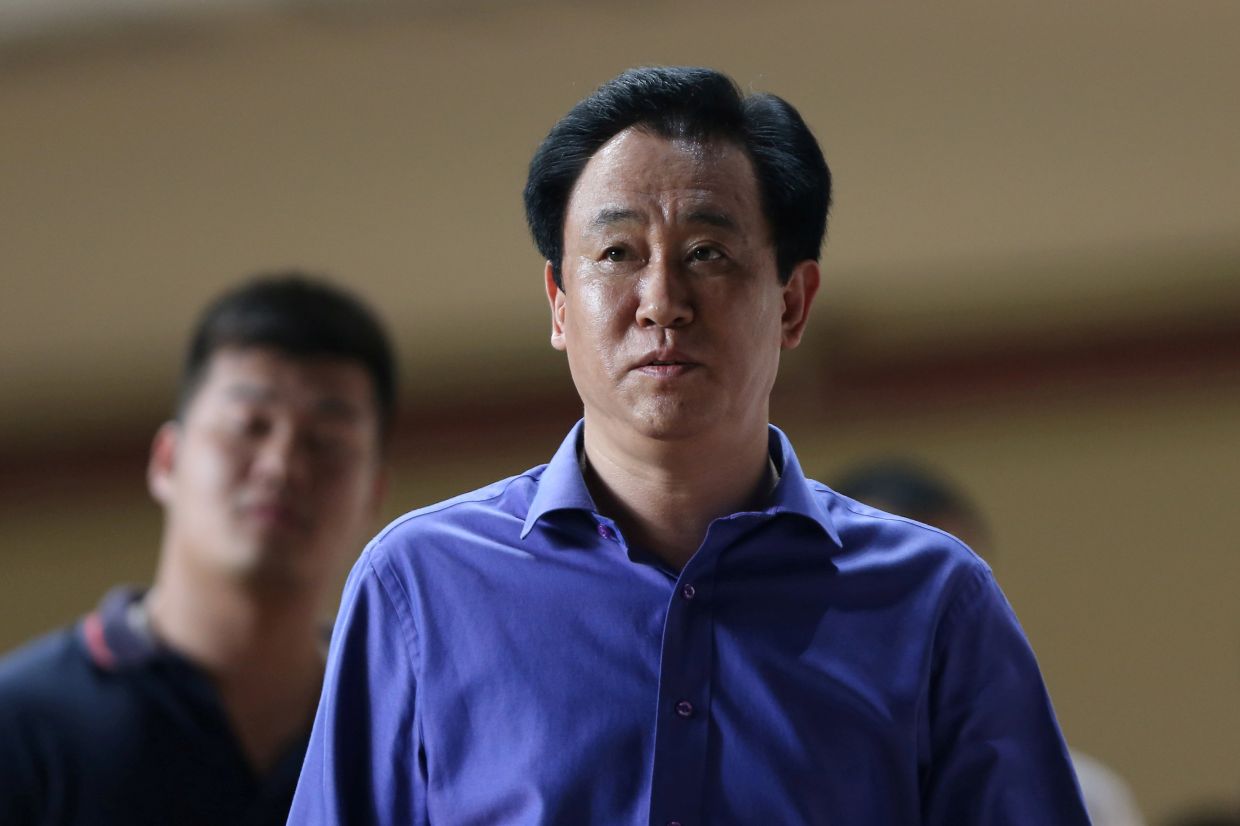
China's legal system has delivered a decisive verdict against one of Asia's most prominent property tycoons, with the Shenzhen Intermediate People's Court sentencing Evergrande Group founder Xu Jiayin to life imprisonment on Thursday and imposing a combined fine of 15.82 billion yuan (US$2.4 billion) on the developer and its real estate subsidiary. The judgment marks the formal reckoning for a company that once epitomised China's explosive growth in residential real estate but collapsed into default after accumulated debts spiralled beyond recovery.
The case against Xu and his empire reveals the mechanics of a financial collapse that has reverberated across China's economy and beyond. Between 2016 and 2021, Evergrande engaged in systematic and widespread financial fraud to artificially elevate its asset valuations whilst simultaneously concealing the true extent of its liabilities, according to court findings. This deliberate manipulation of financial records and fabrication of assets allowed the property firm to maintain investor confidence and access to credit markets despite deteriorating fundamentals, a deception that only unravelled when the company became unable to service its mounting obligations.
The charges against Xu encompassed a network of criminal conduct far exceeding typical corporate malfeasance. Beyond financial fraud, he was convicted of embezzlement and bribery, with the court establishing that he and associates used corrupt payments to gain control of financial institutions—a practice that enabled Evergrande to channel funds through the banking system and circumvent regulatory oversight. Xu had already tendered guilty pleas to these charges during an April court appearance, effectively conceding the substance of the allegations against him. The life sentence represents the maximum penalty available under Chinese law for the constellation of offences, whilst the confiscation of his personal property and permanent revocation of political rights ensure lasting consequences beyond incarceration.
Evergrande's trajectory from market darling to cautionary tale illuminates the pressures and distortions that accumulated within China's property sector during its boom years. For decades, residential real estate served as both an engine of economic growth and a repository for household wealth, with developers aggressively acquiring land and expanding debt loads under the assumption that price appreciation would continue indefinitely. Xu capitalised on this environment with extraordinary ambition, transforming Evergrande into a global property behemoth that ranked among China's largest corporations and cultivated an image of stability and expansion.
The turning point arrived when Beijing's regulatory authorities recognised that property speculation had reached unsustainable levels and introduced measures to constrain excessive leverage within the sector. These restrictions on developer borrowing, combined with cooling demand in major cities, created a sudden liquidity crisis for firms like Evergrande that depended on continuous access to new capital. When credit channels abruptly constricted in 2020 and 2021, Evergrande found itself unable to refinance maturing obligations or pay wages to construction workers, precipitating a default that shocked financial markets and raised fears of broader contagion throughout China's economy.
The ramifications of Evergrande's implosion extended far beyond the balance sheets of Chinese investors and international bondholders. Millions of Chinese homebuyers had prepaid deposits for residential units under construction, only to see projects stall when funding dried up, trapping their savings in incomplete buildings. This created profound social friction and prompted extensive government intervention to prioritise construction completion and protect consumers. The crisis also exposed systemic vulnerabilities in China's financial oversight, particularly the ability of major corporate figures to operate shadowy control structures and coordinate across multiple institutions.
Five additional senior executives at Evergrande received custodial sentences on Thursday, with terms ranging from six to eighteen years for their complicity in fraud schemes. This broader prosecution strategy underscores the Chinese government's determination to establish accountability throughout the organisation rather than concentrating consequences solely upon the founder. By pursuing multiple defendants, authorities signal that Evergrande's misconduct was not aberrant behaviour by a rogue leader but rather an embedded institutional culture of regulatory evasion and financial manipulation.
For Malaysian and broader Southeast Asian readers, the Evergrande episode offers instructive lessons regarding real estate market dynamics and the importance of regulatory vigilance. Several countries in the region have experienced rapid property sector expansion fuelled by foreign investment and speculative development, creating conditions superficially reminiscent of China's pre-2020 environment. The Chinese precedent demonstrates how rapidly confidence can evaporate when fundamentals deteriorate and how difficult it becomes to rescue property markets once they enter severe contraction, particularly when large portions of household wealth have been concentrated in illiquid residential assets.
The sentencing also reflects Beijing's evolving approach to corporate governance and anti-corruption enforcement. Rather than permitting prominent business leaders to negotiate behind-the-scenes settlements, Chinese authorities have increasingly prosecuted major cases through formal judicial processes that generate extensive public documentation. This strategy serves multiple objectives: it satisfies public demand for accountability, it deters other corporate leaders from emulating Evergrande's practices, and it reinforces the Communist Party's narrative that no individual—regardless of wealth or prominence—lies beyond the reach of the law.
Evergrande's debts, which exceeded US$300 billion at their peak, remain substantially unresolved, with creditors facing years of protracted negotiations and likely significant haircuts on their claims. The formal sentencing of Xu does not immediately clarify the resolution path for these obligations or restore capital to aggrieved investors. Nevertheless, the judicial action provides symbolic closure to the criminal dimensions of the company's collapse and establishes an official historical record of how the misconduct occurred.
The significance of this verdict extends to questions about market confidence and institutional integrity in Chinese finance more broadly. Chinese policymakers have sought to stabilise the property sector whilst maintaining stricter regulatory standards to prevent recurrence of the leverage excesses that characterised the pre-2020 period. Whether these efforts succeed in generating sustainable property market equilibrium remains uncertain, but the prosecution of Xu and his executives sends unmistakable signals that regulators will enforce rules with severity when violations are discovered.

