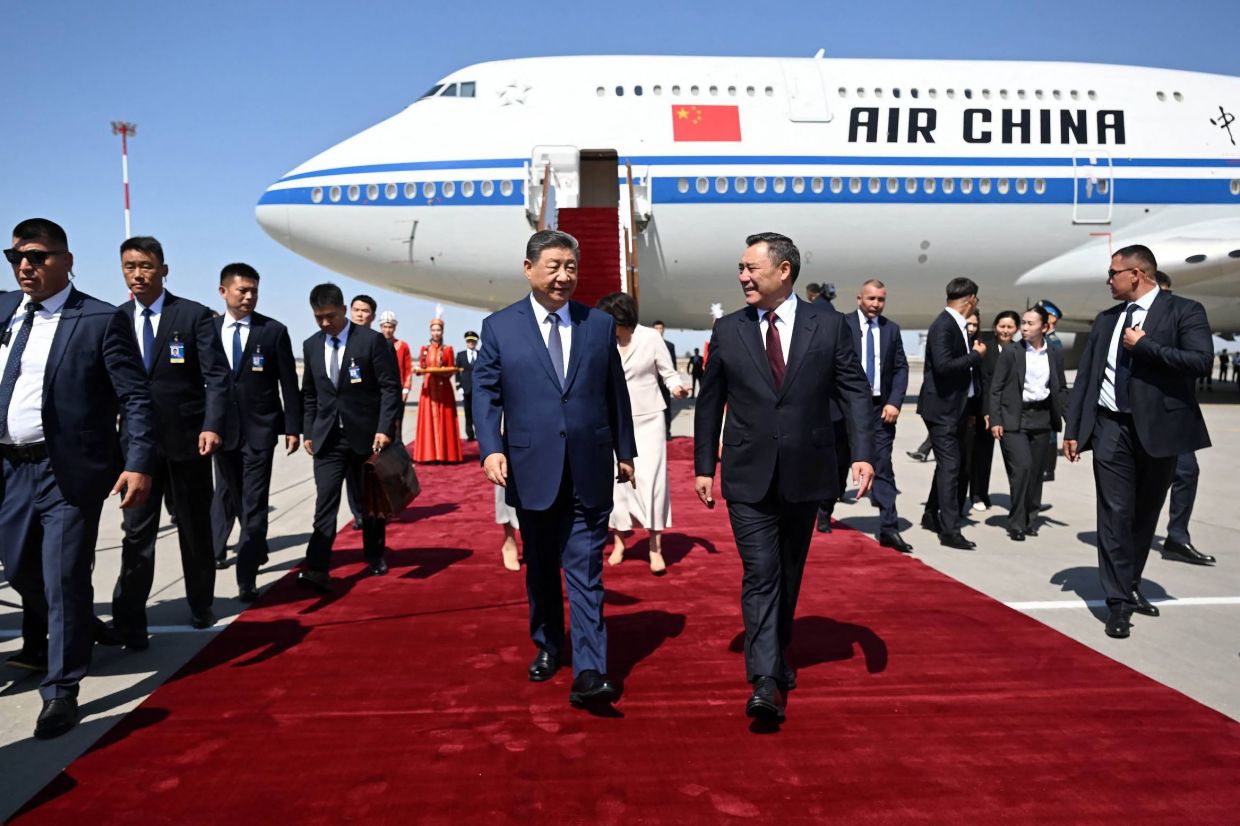
The capitals of the world's emerging powers converge this week in Bishkek, Kyrgyzstan, as the Shanghai Cooperation Organisation holds its latest summit with Chinese President Xi Jinping, Russian President Vladimir Putin and Indian Prime Minister Narendra Modi all in attendance. The gathering represents a carefully choreographed display of unity among nations positioning themselves as a counterweight to American global dominance, though the bloc's cohesion masks deeper strategic contradictions and competing interests among its ten member states.
Since its establishment in 2001 as a security forum linking China, Russia and four Central Asian republics, the SCO has evolved into a more ambitious platform for multilateral engagement spanning Eurasia. The organisation's expansion to include India, Iran, Pakistan, Belarus and the five founding Central Asian states reflects Beijing and Moscow's shared ambition to create institutional alternatives to Western-dominated structures such as the G7 and NATO. Where those organisations draw clear ideological boundaries, the SCO projects itself as a pragmatic mechanism for regional stability that welcomes diverse political systems and economic models.
Beijing has been particularly aggressive in reframing the SCO's mission beyond security cooperation into a vehicle for promoting what Chinese officials describe as a "new path for regional cooperation." This expansion reflects China's broader strategy of building an alternative international order centred on mutual development and financial partnerships rather than the conditional frameworks Western institutions impose. By pledging development assistance and infrastructure investment through the SCO mechanism, China seeks to bind member states more closely to its vision while simultaneously demonstrating that prosperity and influence flow from alignment with Beijing rather than Washington.
The timing of this summit carries particular weight given the geopolitical convulsions affecting key participants. Russia, now deep into its fourth year of full-scale invasion of Ukraine, faces sustained Western sanctions and diplomatic isolation that make strengthening ties with non-Western partners strategically imperative. Similarly, Iran's recent escalation in its conflict with Israel and the United States means the SCO provides Tehran with a valuable platform to reinforce relationships with major powers and signal that it maintains robust regional partnerships despite external pressure. For both nations, the summit functions as a public relations exercise demonstrating they remain central to Asian geopolitics regardless of their estrangement from Western capitals.
The schedule of bilateral meetings alongside the formal SCO sessions underscores the organisation's secondary importance to bilateral diplomacy. Putin's scheduled encounters with Xi and Iranian President Masoud Pezeshkian will likely consume more substantive discussion time than the plenary sessions, reflecting a reality analysts often overlook: the SCO's real value lies in providing legitimate diplomatic cover for bilateral relationships rather than generating unified bloc positions. These side meetings allow leaders to conduct sensitive negotiations within a multilateral framework that obscures the actual focus of their engagement.
India's participation presents a more complex calculus than Russia's straightforward solidarity with fellow sanction-targeted powers. New Delhi must navigate the competing demands of maintaining its position as a bridge between Western and non-Western worlds while demonstrating sufficient commitment to Asian alternatives to retain credibility with regional partners. The presence of Pakistan within the SCO, alongside China's rivalry with India, means Indian policymakers must carefully calibrate their engagement to project strength and reliability without being drawn into decisions that compromise New Delhi's carefully maintained strategic autonomy.
Analysts at institutions like Carnegie India note that for countries such as India, the SCO functions primarily as an intelligence-gathering and positioning mechanism rather than as an instrument for generating binding collective decisions. By maintaining a seat at the table, India gains firsthand insight into emerging regional dynamics, tracks the ambitions and concerns of larger powers, and preserves its capacity to shape outcomes through bilateral engagement rather than bloc loyalty. This approach reflects a distinctly Indian diplomatic philosophy that resists permanent alignment while maintaining maximum flexibility and influence.
Turkey's status as a dialogue partner rather than full member reflects both its strategic ambitions and the tensions within the SCO's membership. Ankara views the organisation as a natural platform for pursuing its increasingly independent foreign policy, one that maintains traditional ties to NATO and the Western alliance while expanding its reach into Central Asia and deepening partnerships across Eurasia. Turkish President Recep Tayyip Erdogan has repeatedly signalled Turkey's desire for full membership, which would signal a significant recalibration of Turkish geopolitics. However, Ankara's stalled EU membership bid for over two decades and its complex relationship with NATO allies suggest that Turkey sees the SCO as offering optionality and influence rather than permanent realignment away from the West.
While the SCO's presentation emphasises unity and common purpose, structural realities constrain the organisation's actual operational capacity. The membership includes states with fundamental disagreements—India and Pakistan remain locked in a strategic rivalry that periodically erupts into military confrontation, while China and India share an unresolved border dispute that continues to generate security concerns. These tensions mean the SCO cannot function as a unified political or military bloc making binding decisions about major geopolitical questions. Instead, the organisation provides a diplomatic forum where countries can strengthen bilateral relationships, signal their commitment to Asian alternatives to Western structures, and collectively project an image of rising non-Western power.
For Malaysia and other Southeast Asian nations observing from outside the membership, the SCO summit illustrates the evolving architecture of Asian geopolitics and raises important questions about regional positioning. The growth of non-Western institutional alternatives, regardless of their operational limitations, reflects genuine shifts in global power and the determination of major Asian states to construct frameworks that reflect their own interests rather than accommodating Western preferences. The balance between competing blocs and the space available for countries like Malaysia to maintain strategic flexibility will depend partly on whether the SCO can translate its rhetorical unity into substantive cooperation, or whether it remains primarily a platform for bilateral diplomacy dressed in multilateral garb.

