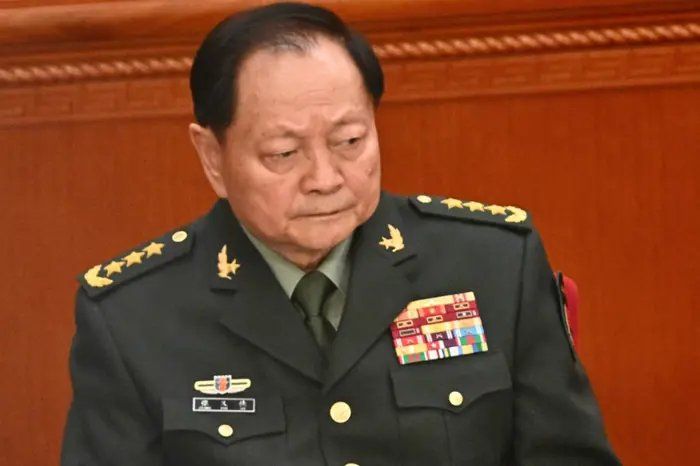
China's leadership has formally removed Zhang Youxia from his position as Vice Chairman of the Central Military Commission, marking a significant purge within the country's highest military echelon. The decision, announced Friday through state news agency Xinhua following a standing committee meeting of China's parliament, concludes an investigation initiated seven months earlier when the defence ministry disclosed that Zhang faced allegations of serious breaches of discipline and law—a term commonly understood in Chinese politics to encompass corruption charges.
Zhang's removal carries particular weight given his former status as the more senior of two vice chairmen on the Central Military Commission, a position that effectively made him China's highest-ranking general officer. His tenure in such an elevated post reflected considerable trust from Beijing's leadership, and his subsequent downfall has surprised international observers who had perceived him as enjoying close personal ties to President Xi Jinping. The fact that someone of such seniority could fall so dramatically illustrates the precarious nature of high office within China's military hierarchy, even for those perceived as trusted lieutenants of the top leadership.
Alongside Zhang, Liu Zhenli, another prominent military figure and CMC member, has also been removed from his post. Liu held responsibility as chief of staff of the CMC's joint staff department, the crucial administrative and planning body that oversees military combat strategy and operational coordination. His removal suggests that the investigation uncovered systemic issues that extended beyond individual misconduct, potentially implicating multiple officials across different branches of the military bureaucracy. The simultaneous removal of two significant officials indicates a coordinated effort to cleanse what leadership perceived as compromised elements within the armed forces hierarchy.
The investigation's announcement in January followed a long-established pattern in Xi Jinping's anti-corruption campaign, which has been a defining characteristic of his presidency since assuming power. The campaign has targeted officials across civilian government, the Communist Party apparatus, and increasingly, the military establishment itself. By extending this campaign into the upper ranks of the People's Liberation Army, Xi's administration signals its determination to assert civilian party control over the military and to eliminate what it views as corrupt networks that could undermine operational effectiveness or challenge central authority.
For Malaysian and Southeast Asian observers, these developments carry strategic implications. China's military remains central to regional security calculations, and instability or uncertainty within the PLA command structure—even when resulting from internal purges rather than external threats—can affect military decision-making and potentially influence Beijing's approach to regional disputes. The removal of senior commanders may temporarily create leadership gaps or affect institutional continuity, factors that could influence how China engages with neighbors on maritime disputes and military-to-military relations.
The use of the euphemism "serious violations of discipline and the law" rather than explicit corruption charges reflects standard Communist Party terminology, allowing the authorities flexibility in how the cases proceed internally. This linguistic approach has enabled the party to conduct thorough investigations while maintaining official narratives about rule of law and party discipline. However, the sustained focus on high-level military corruption also suggests genuine concerns within the leadership about endemic problems that could compromise military readiness or create factional tensions within the armed forces.
Zhang's fall from grace is particularly notable because it challenges any perception of untouchable inner circles within China's top leadership. In earlier decades, factional politics and patronage networks created de facto protections for senior officials, but Xi's campaign has demonstrated a willingness to pursue cases against individuals regardless of their perceived closeness to the top. This represents a significant shift in how accountability functions at China's highest levels, with profound implications for how PLA officers navigate their careers and make professional decisions.
The Central Military Commission itself remains the paramount institution governing China's armed forces, and its composition directly shapes military policy and strategic direction. By removing two vice chairmen simultaneously, the leadership is ensuring that it maintains firm control over the commission's deliberations and decisions. This restructuring may also create opportunities to promote officers more aligned with current strategic priorities or to reorganize command structures in ways the leadership deems necessary for addressing perceived vulnerabilities.
The timing of the formal removal, occurring months after the initial investigation announcement, reflects bureaucratic procedures that must run their course within China's political system. Parliamentary standing committees must formally ratify such major personnel changes, ensuring that removal decisions are embedded within constitutional processes rather than appearing as arbitrary executive action. This procedural formality, while ultimately affirming the party's underlying decision, provides a veneer of institutional legitimacy to what are effectively determinations made by higher political bodies.
Looking forward, these removals may signal the beginning of broader reorganization within the PLA's senior ranks. Military analysts in Southeast Asia and beyond will scrutinize appointments to fill the vacant positions, as new leaders may bring different priorities or strategic approaches. The replacements selected will indicate whether the leadership is consolidating power among trusted allies or attempting to build new coalitions within the officer corps. Such dynamics, while playing out within China's internal structures, ultimately shape the military posture and decision-making processes that affect the entire Indo-Pacific region and its stability.

