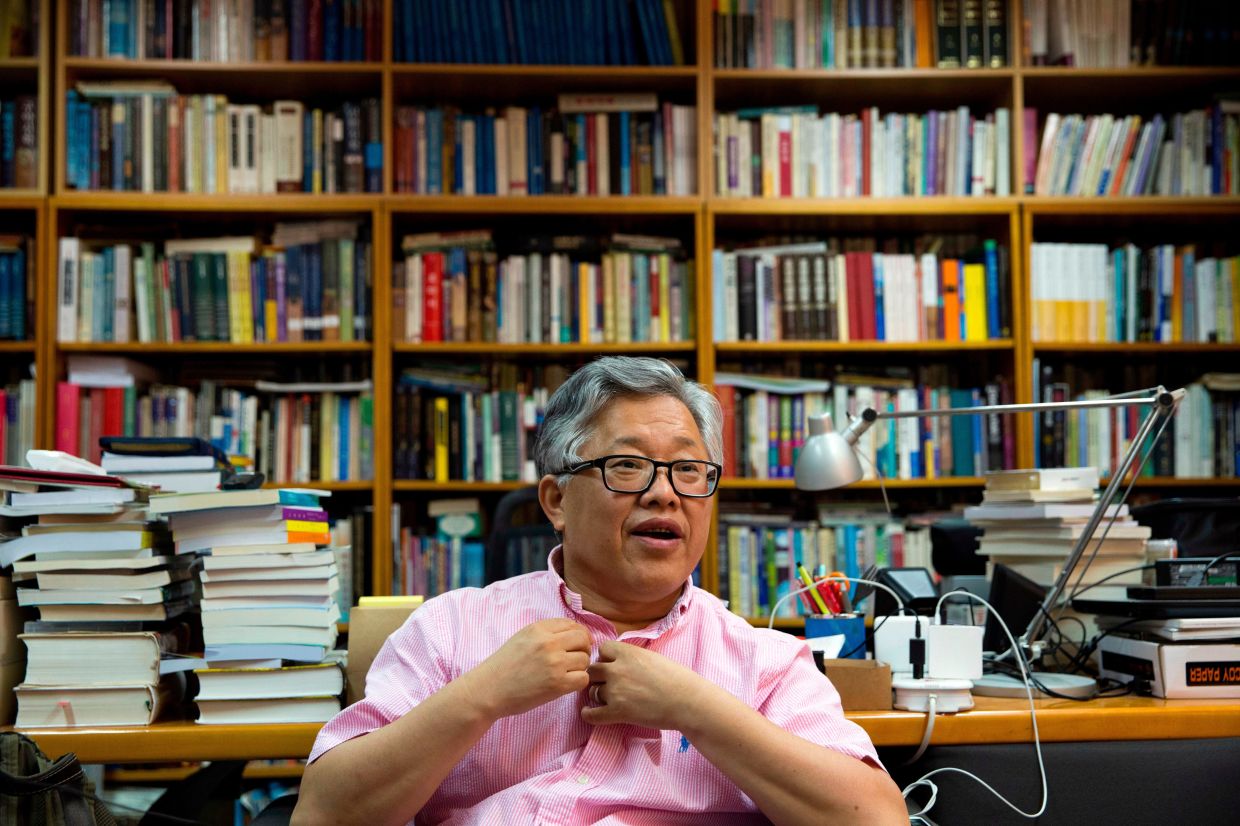
Pastor Ezra Jin, the founding leader of Zion Church, has been released from Chinese detention after spending months in custody on charges related to improper use of information networks. His freedom comes as a result of high-level diplomatic engagement between Washington and Beijing, specifically through discussions between US President Donald Trump and Chinese President Xi Jinping during a May meeting. The release represents an unusual instance of direct political intervention securing the freedom of a religious figure in mainland China, a country long characterized by strict state control over organized faith communities.
Zion Church occupies a particular space within China's complex religious landscape. It belongs to the category of unregistered congregations that operate outside state supervision, offering an alternative to officially sanctioned churches where the government exercises considerable oversight. Founded in 2007 in Beijing, the church expanded substantially to encompass approximately 1,500 members before authorities pressured it to cease physical operations in 2018. What distinguishes Zion Church's story is its adaptation to digital platforms, which allowed it to maintain and expand its congregation across roughly 40 Chinese cities even after its physical closure, demonstrating the evolving challenge authorities face in controlling religious expression in an increasingly connected society.
Jin and several fellow church members were taken into custody on October 10 last year under suspicion of illegally utilizing information networks, a charge often deployed against organizations that employ digital communication methods to organize or coordinate activities outside government oversight. According to church accounts, eight of the members detained alongside Jin remain incarcerated. The pastoral leader's case drew particular international attention, prompting Trump to specifically advocate for his release during his meeting with Xi in May. The US President stated that his Chinese counterpart would "strongly consider" freeing Jin, a statement that appeared to set the stage for subsequent negotiations.
On Saturday, international rights monitoring organization ChinaAid announced that Jin had successfully reached Los Angeles following his release. The organization disclosed additional details regarding the context of his freedom, noting that Chinese officials explicitly attributed his release to deliberations between the two presidents and characterized it as a goodwill gesture aligned with American Independence Day celebrations. This framing suggests that his case became embedded within broader bilateral relations between Washington and Beijing, transforming an individual detention matter into a diplomatic signal about potential shifts in how the two governments might engage on sensitive issues.
Jin's daughter Grace responded to her father's release with profound emotion, describing it as "a tremendous miracle" and expressing hope that the development might signal a positive trajectory for religious practitioners throughout China and for US-China relations more broadly. In her statement to media outlets, she explicitly credited Trump and his administration for their advocacy efforts, underscoring how the family views presidential intervention as instrumental to achieving Jin's freedom. The family's willingness to publicly acknowledge and thank American political leadership reflects their understanding that Jin's case transcended purely domestic Chinese matters and became a point of international diplomatic attention.
However, the broader context surrounding Jin's release reveals a more troubling reality for faith communities across China. The ruling Communist Party, particularly under Xi's leadership, has intensified its suspicion and regulation of organized religious activities, especially those existing outside official frameworks. Recent months have witnessed intensified enforcement actions targeting unregistered congregations throughout the country. In June, authorities raided an Early Rain Covenant Church service in Sichuan province's southwestern region, leading to the detention of leadership figures. That incident followed January detentions of other prominent members of the same congregation. Simultaneously, in eastern Zhejiang province, officials dismantled physical infrastructure at Yayang church, removing its cross and surrounding the structure with scaffolding in a visible assertion of state authority over religious spaces.
These enforcement patterns illustrate that Jin's release, while symbolically significant, does not necessarily portend fundamental changes in China's approach toward unregistered religious organizations. The simultaneous detention of eight remaining Zion Church members suggests that authorities may have released Jin specifically as a diplomatic gesture without fundamentally reconsidering their broader regulatory approach. This selective intervention raises questions about how religious freedom will be approached for other detained believers who lack similar high-level international advocacy or whose cases do not intersect with bilateral diplomatic considerations.
For Southeast Asian observers, Jin's case illuminates the persistent tensions between individual national governments' internal religious policies and external pressures from major powers invested in human rights advocacy. Malaysia and other regional nations face comparable complexities regarding religious registration, licensing, and the balance between state regulation and faith community autonomy. The willingness of a major power like the United States to directly engage on individual religious detentions with China suggests an evolving international norm around such advocacy, one that could have ripple effects across the broader region as countries navigate expectations regarding religious freedom standards.
Jin's personal journey adds another dimension to the diplomatic significance of his release. After his family relocated abroad following 2018 pressures, he chose to remain in China to continue ministry work with Zion Church, subsequently facing travel restrictions that prevented him from reuniting with family members, including two young sons. By his daughter's account, he had been separated from most family members for more than seven years before his detention. His confinement therefore represented not merely a constraint on religious activity but a profound personal and familial separation, one that his release now begins to address.
The intersection of religious freedom, diplomatic relations, and individual human cases in Jin's situation reflects broader global conversations about how international actors should engage with countries regarding internal governance matters. Trump's direct intervention, while ultimately successful in Jin's case, also raises questions about consistency and selectivity in such advocacy—whether religious leaders benefit from such intervention proportionally or whether high-profile cases receive disproportionate attention compared to less internationally visible detentions. For religious communities throughout China and the Asia-Pacific region, Jin's freedom offers some encouragement that international pressure can yield results, even as the continued detention of his church colleagues reminds observers that systemic change in state approaches toward unregistered religious organizations remains elusive.

