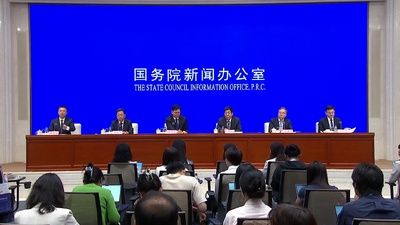
Beijing has categorically rejected claims by Western organisations and media outlets that Xinjiang Uygur autonomous region practises forced migration and coerced labour. Chen Ruifeng, minister of the National Ethnic Affairs Commission, made the denial on Wednesday, emphasising that China's constitutional framework and domestic legislation explicitly prohibit all forms of compulsory labour, a position that reflects the government's attempt to counter mounting international scrutiny of employment practices in the western region.
The timing of Chen's statement coincides with the introduction of new legal protections. The Law on Promoting Ethnic Unity and Progress, formally adopted on March 12 and set to take effect on July 1, introduces fresh safeguards including rights protection and legal assistance schemes for workers employed across provincial boundaries. According to the minister, these legislative measures are designed to shield the interests of labourers from all ethnic communities, demonstrating what Beijing describes as a comprehensive framework for worker welfare.
Chen characterised the allegations emanating from Western sources as fundamentally baseless, describing them in notably colourful language as "extremely absurd and ridiculous." His dismissal reflects the contentious nature of Xinjiang labour discussions, which have become increasingly polarised between Beijing's development narrative and international human rights advocacy groups' concerns about worker agency and conditions.
The minister framed labour mobility from Xinjiang as an economic opportunity mechanism rather than a coercive system. According to his account, residents who seek work outside the region do so driven by individual motivations—principally the desire to elevate family living standards and acquire new vocational capabilities. This portrayal positions employment transfers as part of a broader economic development strategy designed to enhance individual prosperity across ethnic communities.
Over the past five years, Xinjiang has experienced substantial employment creation, with government figures indicating the addition of more than 2.39 million new urban jobs through various policy initiatives. These figures form the statistical backbone of Beijing's argument that regional economic expansion has generated genuine employment opportunities rather than relied on compulsion. Agricultural labourers have accounted for 16.1 million work trips beyond their home counties during the same period, suggesting substantial labour market integration across the region.
Income growth metrics present another dimension of the government's economic case. Per capita disposable income for urban residents has expanded at an average annual rate of 5.3 per cent, while rural residents have seen comparable growth of 8.1 per cent annually. These figures, if accurate, would indicate genuine material improvement in household finances, underpinning the voluntary employment narrative that Beijing maintains.
The establishment of what Chen described as a "fair employment policy system" forms the institutional foundation for worker protections. According to the minister, Xinjiang has developed comprehensive labour rights mechanisms designed to ensure that all individuals with working capacity can access employment opportunities. This architecture purportedly maximises protections for voluntary employment and ensures dignified work conditions across all ethnic groups—a direct counterpoint to international allegations of systematic coercion.
For Malaysian and Southeast Asian observers, this dispute reflects broader tensions between economic development narratives and international labour standards. The region confronts similar challenges around migrant worker protections, as countries like Malaysia host significant numbers of cross-border labourers. Beijing's emphasis on voluntary movement and legal protections mirrors arguments advanced by other nations managing substantial internal migration, highlighting the global complexity of balancing economic mobility with worker safeguards.
The dispute also underscores how differently labour practices are interpreted across geopolitical divides. Western organisations cite documentation and testimony suggesting systematic coercion, while Chinese authorities emphasise economic data demonstrating opportunity and voluntary participation. This fundamental interpretive gap makes independent verification crucial—yet Xinjiang's restricted access for external observers complicates third-party assessment of conditions on the ground.
Chen's insistence on constitutional prohibitions and legislative safeguards represents Beijing's legalistic defence strategy, essentially arguing that systemic coercion would violate existing frameworks. However, critics contend that legal provisions may be unevenly applied or that definitions of voluntary consent differ significantly between Chinese and international labour standards, particularly regarding ethnic minorities in politically sensitive regions.
The introduction of the new ethnic unity law suggests Beijing recognises the need for reinforced legal architecture around cross-regional employment. Whether these provisions represent genuine protective advancement or primarily serve to consolidate government oversight of labour movements remains contested. What remains clear is that Xinjiang employment practices will continue attracting international attention, particularly as regional economic integration deepens and worker mobility patterns evolve.