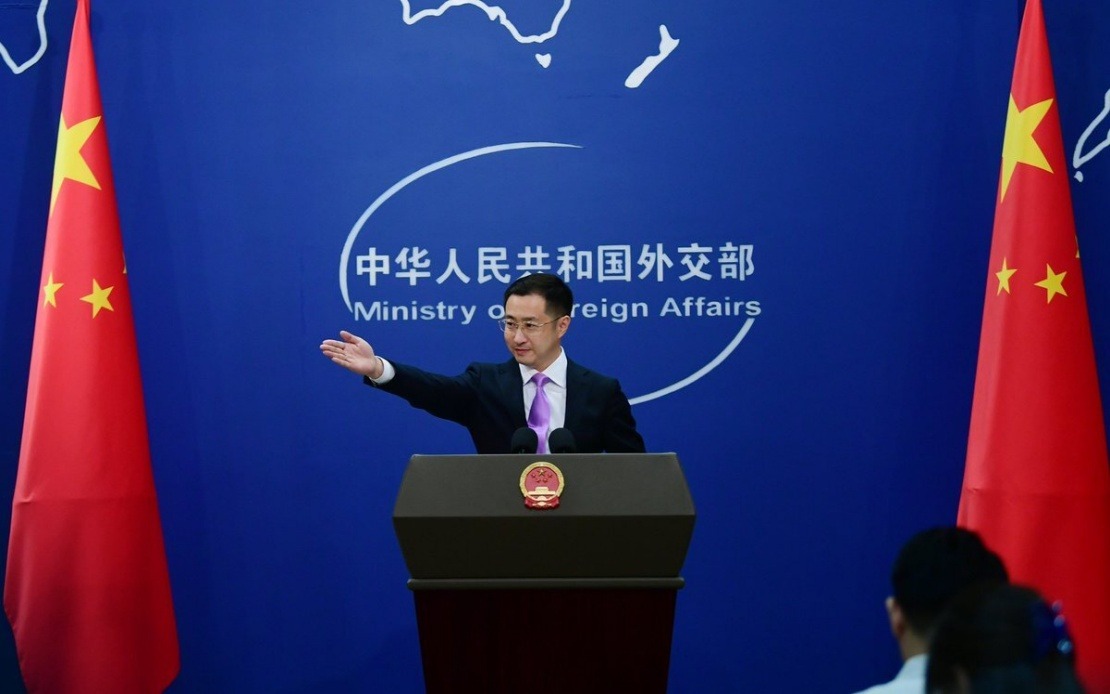
China has publicly praised Malaysian Prime Minister Datuk Seri Anwar Ibrahim for maintaining a firm position on the one-China principle, signalling Beijing's satisfaction with Kuala Lumpur's diplomatic stance on one of Asia's most sensitive geopolitical questions. The commendation came through official channels after Anwar articulated his view in an international media interview that Taiwan constitutes an integral part of China, a position that aligns with Beijing's long-standing sovereignty claims over the self-governing island.
The China Ministry of Foreign Affairs spokesperson underscored Beijing's confidence in the Malaysian leadership's commitment to this fundamental principle, posting on the social media platform X that nothing would prevent China from achieving reunification. This public acknowledgement reflects the significance China places on securing regional consensus around its core territorial assertions, particularly from a Southeast Asian nation that maintains strategic importance in global affairs and regional stability considerations.
China's foreign ministry spokesperson Lin Jian elaborated on Beijing's position during a regular press briefing in the capital, framing support for the one-China principle as both reflective of popular will and morally justified. Lin reiterated the long-standing Chinese government position that Taiwan remains an inalienable component of Chinese territory, describing reunification as an irreversible historical progression rather than merely a political objective. This language, with its emphasis on inevitability and historical determinism, underscores how Beijing conceptualises the Taiwan question within broader narratives of national destiny and restoration.
Prime Minister Anwar's recent interview with the international news network Al Jazeera provided the specific catalyst for China's public response. During that conversation, the Malaysian leader expressed his perspective unambiguously, stating that he regards Taiwan as part of China and that this position enjoys universal acceptance within the international community. His characterisation of the one-China principle as universally acknowledged carries diplomatic weight, effectively framing opposition to Beijing's stance as outlier behaviour rather than legitimate alternative viewpoints.
Malaysia's consistent recognition of the one-China principle reflects its broader diplomatic approach, which seeks to balance its economic and strategic relationships while respecting established international norms and the United Nations framework that has underpinned regional stability since the end of the Cold War. For Malaysian policymakers, maintaining this position provides a framework for managing relations with both Beijing and Western capitals that maintain different interpretations of Taiwan's international status, though Malaysia's official position remains unequivocal in supporting the one-China principle.
The timing and prominence of China's public commendation carries strategic implications for Southeast Asia more broadly. As regional nations navigate increasingly complex relationships with both China and the United States amid ongoing great power competition, Malaysia's reaffirmation of the one-China principle provides Beijing with diplomatic ammunition and evidence of sustained support among ASEAN members. This matters because China has consistently sought to build coalitions within the region to reinforce its interpretation of international norms and legitimacy regarding its core sovereignty claims.
From a Malaysian perspective, Anwar's statements and the subsequent Chinese response underscore Kuala Lumpur's balancing act in regional diplomacy. While the country maintains diverse partnerships and economic ties across multiple powers, its official position on the Taiwan question remains aligned with Beijing's fundamental assertion. This consistency helps Malaysia avoid the kind of diplomatic friction that might arise from contradictory statements, whilst allowing the nation to pursue pragmatic engagement with all relevant parties.
The international dimensions of this exchange warrant consideration, particularly given that several major economic powers maintain different official positions regarding Taiwan's status. However, Malaysia's adherence to the established diplomatic framework based on the one-China principle reflects broader ASEAN consensus and the structure of international relations that has prevailed for decades. This continuity provides predictability in Malaysia's foreign policy conduct, even as the broader geopolitical environment experiences significant turbulence and realignment.
Beijing's public appreciation of Malaysian statements also signals the importance China attaches to consolidating support within its immediate region and among developing nations more generally. As debates intensify globally regarding Taiwan's international status and the future of cross-strait relations, China has invested considerable diplomatic effort in securing affirmations from influential developing countries. Malaysia, as the chair of ASEAN and a significant economy within Southeast Asia, occupies a position of particular relevance to Beijing's broader diplomatic strategy in the region.
Moving forward, these exchanges between Malaysian and Chinese leadership demonstrate how regional diplomacy intersects with great power dynamics. The explicit Chinese appreciation for Anwar's position reflects both the substance of Malaysia's stance and the symbolic value China derives from having prominent regional leaders reaffirm positions that Beijing champions. For Malaysian observers and policymakers, this interaction illustrates how international relations operate at multiple levels simultaneously, with domestic political considerations, regional diplomatic requirements, and global strategic positioning all converging in statements about core principles like the one-China doctrine.

