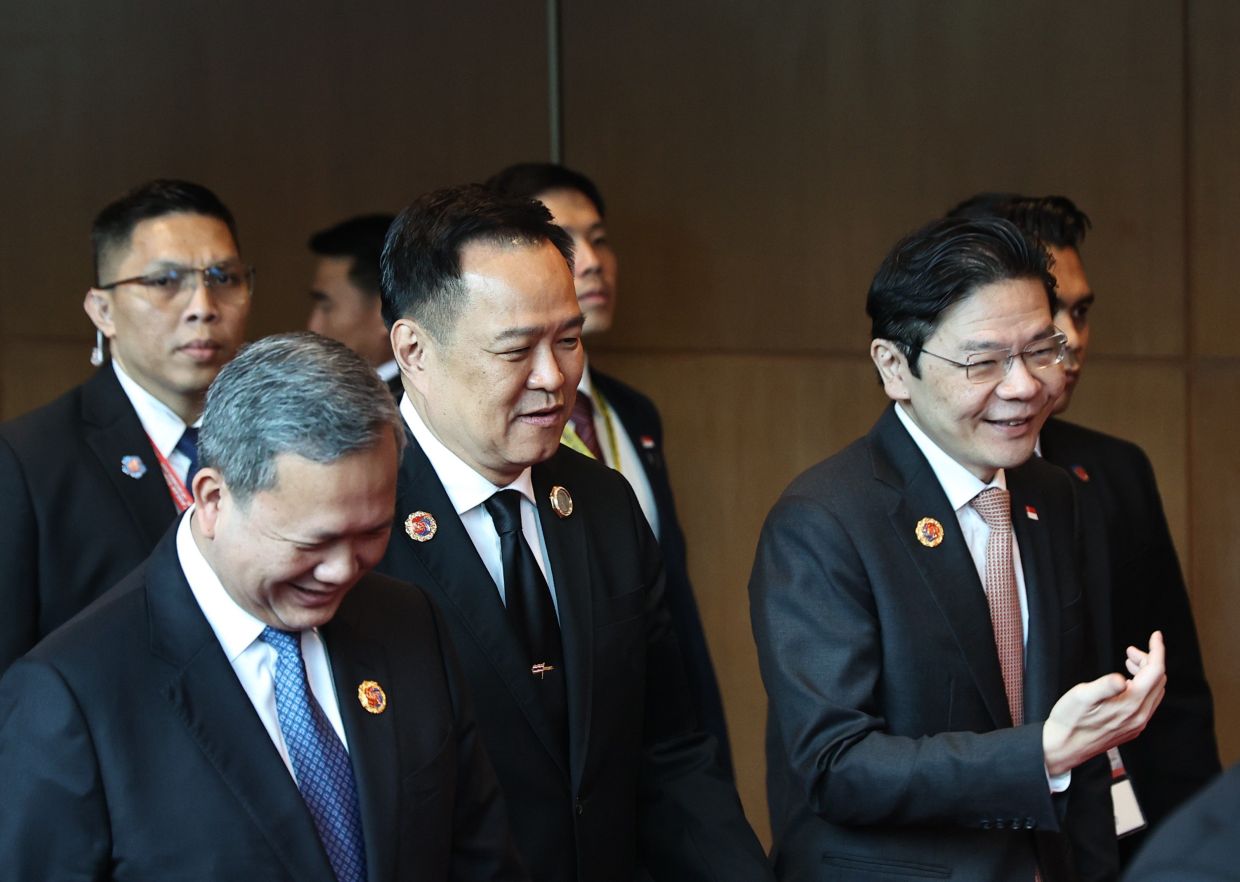
Prospects for Chinese diplomatic intervention in the Cambodia-Thailand border standoff have intensified this week as senior leaders from both nations visited Beijing and engaged Chinese counterparts on the escalating tensions. Prime Minister Hun Manet of Cambodia and Prime Minister Anutin Charnvirakul of Thailand each held separate discussions with Chinese officials, creating fresh momentum around Beijing's potential role in defusing a situation that has festered since last year. While neither country has formally requested mediation, their carefully calibrated signals suggest receptiveness to such an arrangement should Beijing decide to pursue it more actively.
Hun Manet's bilateral meeting with Chinese Premier Li Qiang on July 16 centred significantly on border developments, marking one of the most substantive discussions Cambodia has initiated with Beijing on this issue since tensions flared. The Cambodian Prime Minister, present in China for the 2026 World Artificial Intelligence Conference, used the platform to brief Li directly on Phnom Penh's perspective and to reiterate Cambodia's foundational commitment to peaceful resolution grounded in international law and existing bilateral instruments with Thailand. This approach reflects Cambodia's broader diplomatic strategy of maintaining close alignment with its most strategically significant partner whilst simultaneously demonstrating that it is actively engaged in managing the dispute through lawful means.
Li's reciprocal affirmation of Beijing's support for Cambodia, alongside his characterisation of the two nations as "ironclad friends," underscores the depth of the bilateral relationship and China's evident interest in Cambodian stability. The language deployed—emphasising partnership and shared commitment—creates diplomatic space for China to expand its role without appearing to impose solutions. By framing Cambodia as a steadfast ally deserving protection and support, Li subtly reinforced Beijing's investment in Cambodia's position whilst avoiding explicit commitment to mediation at this stage.
Thailand's signalling proved equally significant. Anutin, attending the same conference, indicated to Thai media that Bangkok would not reject Chinese involvement in tension-reduction efforts should Beijing volunteer such assistance. His carefully worded statement—that Thailand "has not asked China to mediate, but we are not closing the door" if China wishes to intervene—demonstrates Bangkok's pragmatic approach to multilateral diplomacy. By emphasising simultaneous preference for direct bilateral engagement with Cambodia whilst remaining open to Beijing's constructive participation, Anutin balanced domestic expectations of Thai negotiating autonomy with recognition that Chinese facilitation could prove valuable.
China's diplomatic positioning on the dispute has evolved gradually but consistently since border tensions first emerged. During last year's Asean Foreign Ministers' Meeting, Foreign Minister Wang Yi publicly declared Beijing's willingness to "uphold an objective and fair position and play a constructive role for the harmonious coexistence between Thailand and Cambodia." This formulation carefully avoided explicit mediation language whilst establishing Beijing's readiness to assist, creating a foundation upon which more active engagement could be built. Since Wang's statement, China has moved beyond passive pronouncements, hosting trilateral discussions involving senior officials from all three nations and supporting implementation of the ceasefire arrangement between Cambodia and Thailand.
The convergence of Hun Manet and Anutin in Beijing this week, despite no announced bilateral meeting between them, reveals the complex geometry of contemporary Southeast Asian diplomacy. Both leaders seized the opportunity to interface with Chinese decision-makers separately, allowing each to shape Beijing's understanding of their respective positions without the constraints of direct negotiation. For Cambodia, this approach protects space for independent action whilst leveraging the China relationship. For Thailand, it signals pragmatism and openness to external facilitation without surrendering negotiating leverage or appearing weak domestically.
Cambodia's broader diplomatic approach to the border dispute has encompassed simultaneous engagement with multiple channels and actors. Beyond maintaining the China relationship, Phnom Penh has welcomed Asean observer missions and pursued legal remedies under international law—mechanisms designed to create international scrutiny and constraints on Thai actions. This multi-track strategy suggests that whilst Chinese mediation might ultimately prove useful, Cambodia is building a diverse coalition of international support to underpin its negotiating position. The combination of Chinese backing, regional institution involvement, and legal recourse creates cumulative pressure on Thailand to demonstrate commitment to peaceful resolution.
The border issue itself remains fundamentally unresolved, with both nations claiming overlapping territory along their frontier. The current tensions represent the manifestation of longstanding jurisdictional ambiguities that previous bilateral agreements and international instruments have failed to conclusively address. Both governments have publicly committed to non-violent approaches, but the underlying territorial disagreements create recurring friction and potential for escalation. Chinese mediation, should it materialise, would likely focus on confidence-building measures and procedural frameworks for dispute resolution rather than attempting to broker territorial concessions that either side finds unpalatable.
Beijing's prospective mediatory role carries implications extending beyond Cambodia-Thailand relations into broader regional stability. As the dominant external power in Southeast Asia, China's involvement in local disputes shapes the strategic environment for all regional actors. Vietnamese policymakers, for instance, might view Chinese mediation between regional neighbours with interest given their own territorial tensions with China. Japanese and American observers similarly monitor Chinese diplomatic expansion in Southeast Asia for signs of expanding Beijing's strategic influence. A successful Chinese mediation in the Cambodia-Thailand case could establish precedent and demonstrate Beijing's capacity to solve regional problems, potentially enhancing its geopolitical standing.
For Malaysia and other Asean member states, the Cambodia-Thailand situation tests regional mechanisms for dispute resolution and collective security. Asean's traditional approach emphasizes non-interference in bilateral matters whilst simultaneously encouraging member states to resolve differences peacefully through dialogue. The potential entry of China as mediator raises questions about Asean's relevance in managing intra-regional conflicts and whether extra-regional powers should assume roles that Asean institutions might better occupy. Malaysian interests extend to maintaining Asean cohesion and demonstrating that the bloc can effectively manage member state disputes without constant external intervention.
The timeline for any formal Chinese mediation initiative remains unclear. Both Cambodia and Thailand have refrained from formally requesting Beijing's intervention, and China has consistently stopped short of volunteering such a role explicitly. The diplomatic language deployed by all parties suggests mutual recognition that mediation could prove helpful, coupled with apparent agreement that such involvement should emerge naturally from consultations rather than through formal requests that might be diplomatically costly to issue or accept. This suggests a gradual escalation scenario where China incrementally expands its facilitative role, deepening its involvement as both neighbours demonstrate continued receptiveness.
As Hun Manet and Anutin return from Beijing, their respective governments will likely interpret the meetings' outcomes domestically, seeking to demonstrate progress on border tensions whilst managing public expectations about what Beijing might realistically achieve. Cambodia will emphasize China's renewed commitment to its interests, whilst Thailand will highlight that Bangkok retains agency in the dispute and prefers bilateral resolution when possible. The reality is that neither country faces immediate pressure to settle the dispute comprehensively, suggesting that any Chinese mediation would likely focus on incremental confidence-building rather than comprehensive territorial settlement in the near term.

