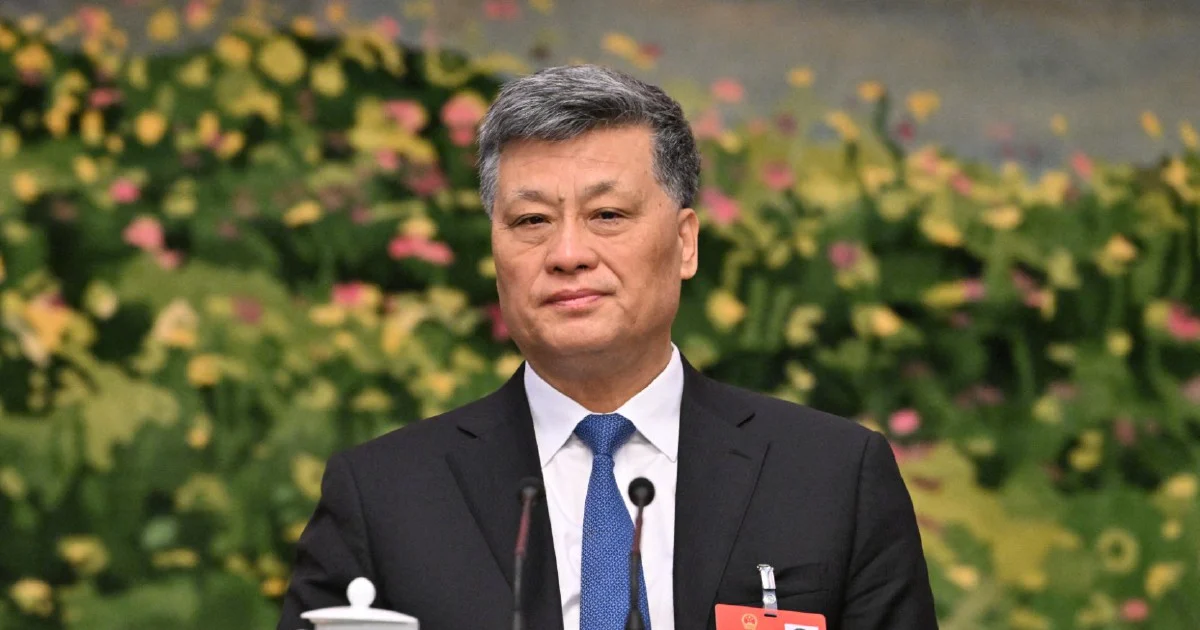
A prominent former administrator in Xinjiang has been formally expelled from China's Communist Party and removed from his positions after state authorities concluded he engaged in systematic graft and abuse of power. The disciplinary action, announced through official media channels on Tuesday, marks the latest move in Beijing's ongoing anti-corruption campaign, which has become a defining feature of the present administration's governance strategy.
The allegations against the official encompassed multiple categories of wrongdoing. Beyond conventional forms of corruption such as accepting bribes and nepotistic advancement of relatives within the bureaucratic hierarchy, the charges also included the misuse of state resources for personal gratification involving improper sexual conduct. The comprehensive nature of the accusations suggests an investigation that examined not only financial misconduct but also breaches of party discipline and personal conduct standards.
This expulsion represents a significant escalation in consequences for former officials in Xinjiang's administrative apparatus. While China has investigated numerous regional officials over the years, the public announcement and thoroughness of the measures taken underscore the seriousness with which central authorities are treating governance standards in the autonomous region. Such high-profile cases serve multiple purposes within the Chinese political system: they demonstrate commitment to internal party discipline, satisfy public expectations of accountability, and reinforce hierarchical control from Beijing.
Xinjiang has been a particularly sensitive area of focus for China's leadership, given the region's geopolitical significance, its substantial resource wealth, and Beijing's emphasis on tight administrative control. Officials who managed Xinjiang's complex governance structure wielded considerable power over budgetary allocations, personnel decisions, and policy implementation. The allegations against this particular official suggest that such concentrated authority created opportunities for personal enrichment and the exploitation of position for private benefit.
The anti-corruption apparatus in mainland China has expanded considerably in recent years, establishing parallel investigative structures that often operate with substantial discretion and limited transparency. Officials caught in these investigations face rapid removal from posts and expulsion from the party, outcomes that carry severe personal, financial, and social consequences. The speed and decisiveness with which the Communist Party acts in such cases reflects a calculated approach to maintaining party credibility and preventing the perception of institutional weakness.
The inclusion of sexual misconduct allegations in the formal charges is noteworthy, as it reflects evolving standards within the party regarding acceptable behavior. Historically, such personal matters were often handled discreetly or overlooked, but contemporary disciplinary proceedings increasingly incorporate behavioral standards that extend beyond purely financial misconduct. This shift indicates how the party attempts to respond to public expectations and international scrutiny regarding governance standards.
For Malaysian observers and broader Southeast Asian readers, this case illustrates the ongoing dynamics of power consolidation and internal control mechanisms within China's political system. While Western democracies typically address corruption through judicial proceedings with public trials and legal representation, China's approach relies on administrative discipline within party structures. Understanding these differences is essential for businesses and governments engaged with Chinese counterparts, as it shapes how disputes are resolved and how officials are held accountable outside conventional legal frameworks.
The implications for Xinjiang specifically are substantial. The region's development trajectory depends significantly on officials capable of executing Beijing's policies while maintaining public confidence in governance. When officials are exposed as corrupt, it can undermine public trust and create friction between central authority and local populations. Conversely, Beijing's willingness to remove compromised officials may be seen as an effort to strengthen governance legitimacy, particularly in regions where the government works to maintain tight administrative control.
The investigation and expulsion process also reveal something about the internal mechanisms of the Communist Party's discipline. The party maintains its own investigative commissions that operate parallel to state institutions, investigating members on party discipline grounds rather than criminal charges. This dual system allows the party to move swiftly against members while maintaining control over the narrative and preventing unwanted disclosure of information through judicial proceedings. The announcement through state media rather than criminal court filings exemplifies this approach.
For regional investors and trading partners, particularly those operating in northwestern China, such cases underscore the importance of understanding local governance dynamics and building relationships with officials whose tenures appear secure. Rapid changes in leadership due to corruption investigations can disrupt ongoing projects and alter regulatory environments. Companies must therefore maintain diversified networks and flexible strategies when operating in administrative regions undergoing leadership transitions.
The broader pattern of high-profile expulsions from the Communist Party reflects Beijing's determination to project an image of a disciplined organization capable of self-correction. However, critics argue that the anti-corruption campaign has also become a tool for eliminating political rivals and concentrating power. The distinction between genuine accountability and political maneuvering often remains opaque to outside observers, making it difficult to assess the true motivations behind individual cases.
Looking forward, this case will likely contribute to ongoing discussions within Chinese policy circles about strengthening institutional checks and oversight mechanisms in Xinjiang. Whether reforms will focus on genuine institutional improvement or simply rotation of personnel remains to be seen. For Southeast Asia, developments in Xinjiang governance matter because they affect the stability and character of China's regional policies, including its Belt and Road initiatives and cross-border engagement with neighboring countries.

