China's National Natural Science Foundation (NSFC) is deepening its scientific engagement with Iran through a joint workshop programme that explicitly includes rare earth exploration and processing—a development that underscores Beijing's determination to strengthen technological partnerships across the Middle East while the United States scrambles to diversify its critical mineral sources.
The collaboration reflects a significant broadening of China-Iran scientific ties that stretch back to a 2017 memorandum of understanding signed in Beijing between the two nations' science foundations. What began as a modest framework for cooperation across mathematics, biology and renewable energy has evolved into a more strategically focused initiative. The 2024 joint workshop programme expanded its remit considerably, with the rare earth component representing perhaps the most commercially and militarily consequential addition to the partnership.
Under the arrangement, China will contribute 30,000 yuan (approximately US$4,200) per workshop to cover operational expenses including venue costs, accommodation and domestic travel arrangements. The Iran National Science Foundation will assume responsibility for international travel expenses for Iranian researchers and accommodation for their Chinese counterparts during visits to Iranian research facilities. This cost-sharing mechanism signals genuine commitment from both sides rather than a purely symbolic arrangement, making the partnership operationally substantive.
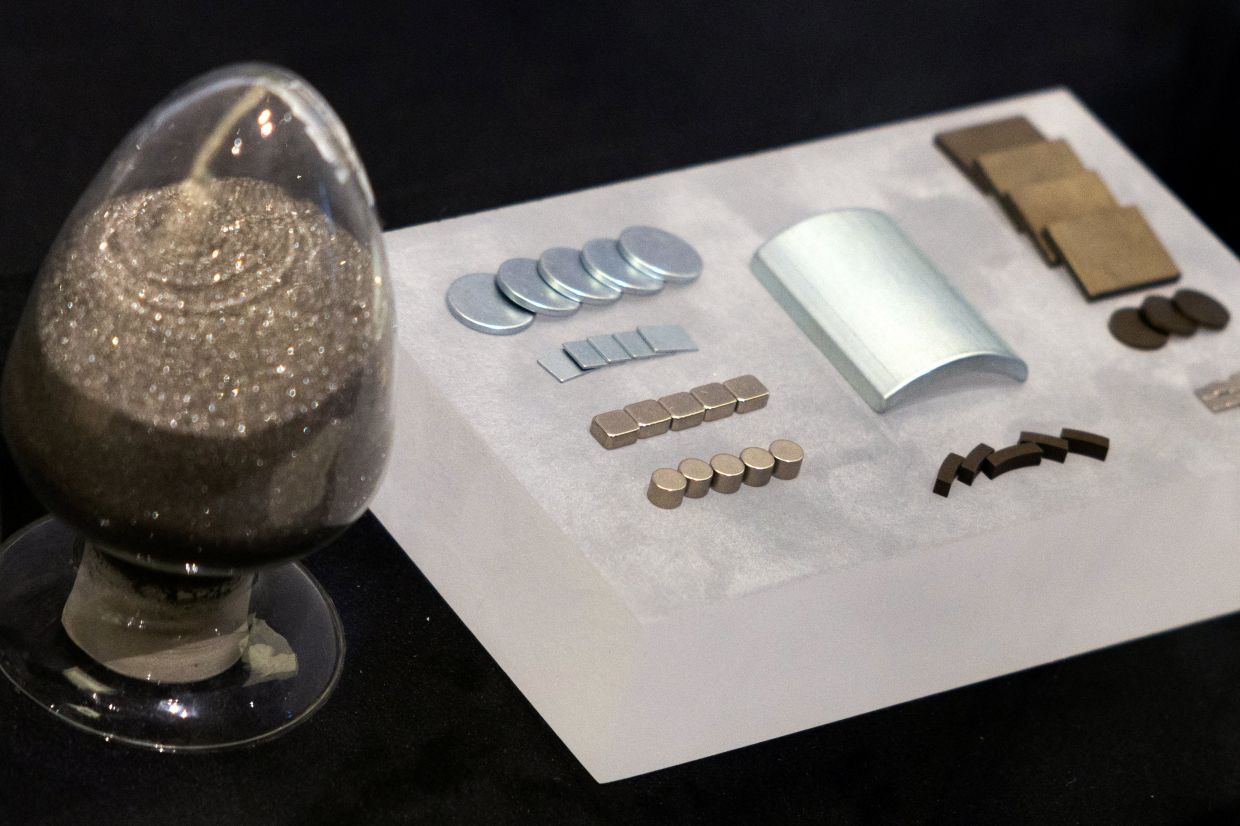
The timing of this expansion is fraught with strategic implications. Rare earths—comprising 17 chemically related metallic elements with extraordinary magnetic and electronic characteristics—have become indispensable for advanced military applications and modern defence systems. Contemporary weapons platforms ranging from precision-guided missiles and fighter aircraft to sophisticated radar systems and electronic warfare equipment all depend critically on rare earth compounds. The strategic importance of these materials extends far beyond military hardware into renewable energy installations, electric vehicles, semiconductor manufacturing and consumer electronics.
China's dominance in the global rare earth landscape is near-total. The country possesses the world's largest proven reserves of these minerals and controls approximately 70 percent of global production capacity while similarly commanding processing operations that turn raw ore into usable materials. More significantly, Beijing has progressively tightened restrictions on exporting rare earth processing technology to foreign countries, effectively leveraging this bottleneck into geopolitical influence. When Donald Trump initiated trade tensions with China in the preceding year, Beijing responded by implementing export controls on rare earths that created immediate supply disruptions for American manufacturers, starkly revealing Washington's precarious dependence on Chinese processing facilities.
This vulnerability prompted swift American response. The Trump administration announced US$3 billion in targeted investments specifically directed toward critical mineral extraction projects and battery production facilities within the United States. The strategy aims simultaneously to replenish depleted military stockpiles and insulate American defence contractors from supply-chain exposure to Chinese technology gatekeeping. The administration's moves represent a recognition that securing alternative sources of rare earths—whether through domestic extraction, allied partnerships or new processing partnerships—is now an essential element of national security policy.
Iran's potential contribution to this competitive landscape remains largely unmapped and poorly quantified. Geological surveys have identified conditions favourable for rare earth accumulation, particularly within iron ore and phosphate-bearing rock formations spread across significant portions of central Iranian territory. Research by the Netherlands-based Hague Research Institute identified rare earth anomalies distributed across approximately 7,000 square kilometres of Iranian geology, suggesting deposits that could potentially prove substantial. However, Iran currently lacks the industrial infrastructure, technical expertise and processing capacity to exploit these resources independently at commercially viable scales.
This is precisely where Chinese scientific and technological assistance becomes valuable to Tehran. Rather than attempting to develop extraction and processing capabilities in isolation, Iran can benefit from Chinese expertise accumulated through decades of rare earth dominance. Joint workshop programmes ostensibly focused on academic collaboration provide channels for technology transfer, methodological instruction and institutional capacity-building that could accelerate Iran's trajectory toward meaningful mineral extraction. For China, such partnerships secure access to alternative sources of rare earth raw materials while simultaneously strengthening Beijing's influence within a country already closely aligned through its Belt and Road Initiative infrastructure investments.
The broader scientific cooperation framework provides diplomatic camouflage and intellectual legitimacy for these strategically charged arrangements. The current workshop programme encompasses other research domains including nano-materials for medical diagnostics, environmental pollution monitoring, earthquake-resistant building techniques and sustainable manufacturing processes. These genuinely important scientific pursuits create a portfolio of collaborative activities that appear balanced and mutually beneficial, even as particular components like rare earth development advance strategic calculations for both participating nations.
For Malaysia and other Southeast Asian countries navigating increasingly tense great-power competition, the China-Iran rare earth partnership carries important implications. Expanded Chinese access to alternative mineral sources reduces Beijing's reliance on any single supplier and strengthens its capacity to manipulate global rare earth markets. Simultaneously, it demonstrates how technological partnerships, framed within scientific cooperation frameworks and developmental initiatives like the Belt and Road, can advance strategic geopolitical objectives beyond their stated academic purposes. As regional nations develop their own mineral resources and scientific capabilities, understanding these dynamics becomes essential to avoiding dependence on either Beijing or Washington while building indigenous capacity.

