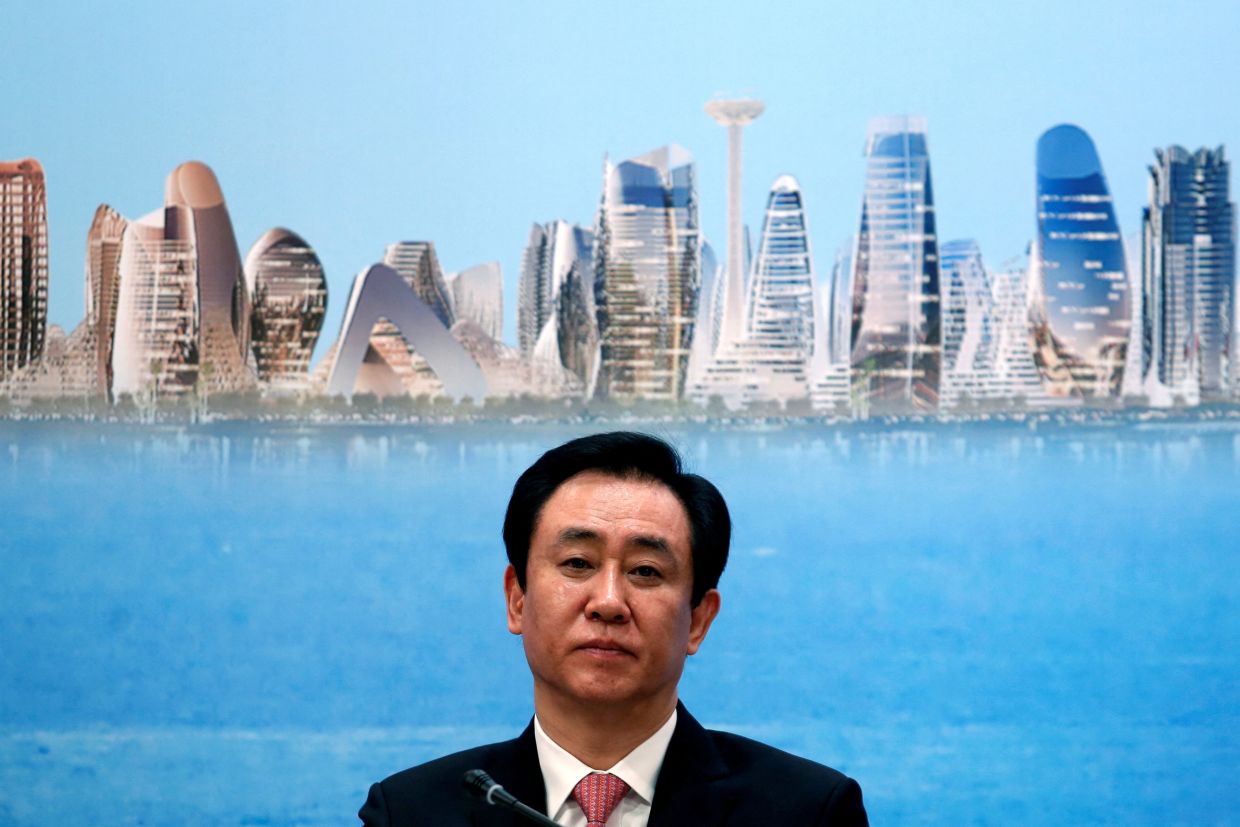
A Shenzhen court has imposed a life sentence on Hui Ka Yan, the founder of China Evergrande Group, concluding a remarkable criminal case that has captivated Asia's financial world. The verdict, delivered in the southern manufacturing hub on Thursday, arrives nearly five years after the spectacular implosion of Evergrande triggered a cascading crisis throughout China's property sector and reverberated across global financial markets. Hui's conviction represents the most visible symbol of Beijing's determination to hold billionaire entrepreneurs accountable for their role in destabilising the world's second-largest economy.
The 67-year-old tycoon, whose journey from rural obscurity to commanding a $45.3 billion personal fortune in 2017 once exemplified China's economic transformation, stood before the court in a navy collared shirt as magistrates recited charges of audacious criminal conduct. During an earlier guilty plea in April, Hui accepted responsibility for eight separate offences spanning misuse of funds, orchestrating fundraising fraud, illegally collecting deposits from members of the public, wrongfully dispersing loans, fraudulently issuing securities, and corruption. The court's statement emphasised the staggering scale and moral gravity of his crimes, noting that Hui, Evergrande, and its subsidiary Hengda Real Estate had inflicted "particularly significant economic losses" and caused "particularly serious social harm" warranting severe punishment under Chinese law.
Evergrande's collapse has cast an enduring shadow over China's property market and broader economic stability. Once recognised as China's dominant residential developer by contracted sales volumes, the conglomerate accumulated approximately $300 billion in liabilities through aggressive expansion financed by mounting debt obligations. The developer has now defaulted on virtually all of these obligations, leaving an unprecedented mountain of unpaid claims. This historic implosion has come to symbolise a deep structural malaise afflicting the property sector, which has functioned as a crucial pillar supporting China's economy for decades. The financial tremors from Evergrande's failure have extended far beyond property, touching manufacturing, retail, and employment across multiple regions and sectors.
The sentencing package extends beyond imprisonment. Chinese authorities have ordered complete confiscation of Hui's personal assets and imposed fines totalling 8.82 billion yuan (approximately $1.31 billion USD) on Evergrande itself, while its principal subsidiary Hengda faces a separate penalty of 7 billion yuan. Five additional senior company executives received sentences ranging between six and eighteen years of imprisonment, alongside financial sanctions. In total, court proceedings on Thursday resulted in sentences handed down to fifty-six individuals connected to Evergrande, reflecting the systematic nature of wrongdoing throughout the organisation's management structure.
The court's determination has done little to ease the suffering of Evergrande's millions of creditors scattered across multiple continents. Domestic wealth-management investors, predominantly ordinary Chinese workers and retirees from lower-income brackets, have seen their life savings evaporate as the company defaulted on billions of dollars in investment products. Social media discussions among affected homeowners reveal deep frustration and anguish, with many questioning whether Hui's imprisonment provides meaningful restitution. One common refrain among victims suggests that incarceration paradoxically protects the billionaire from potentially violent retribution from ruined investors. Others note bitterly that their capital remains lost regardless of judicial proceedings, with homeowners demanding answers about recovery prospects.
Hui's biography traces an extraordinary arc typical of China's reform-era entrepreneurship. Raised by his grandmother in a modest rural village within Henan province in central China, he escaped agricultural poverty through technical training as a steel worker. In 1996, he founded Evergrande and methodically constructed a titanic property empire through ruthless capital accumulation and debt-fuelled expansion. By 2017, his personal wealth had reached $45.3 billion according to Forbes calculations, establishing him as Asia's wealthiest individual. This accumulation occurred within an economic system that rewarded aggressive property development and allowed entrepreneurs to lever increasingly sophisticated financial structures to fund growth, a model that eventually collapsed under its own contradictions.
The liquidation proceeding initiated by Hong Kong courts in 2024 has revealed the catastrophic extent of Evergrande's financial deterioration. Hong Kong's securities exchange subsequently delisted the company, terminating a turbulent trajectory from market darling to corporate catastrophe. Liquidators managing the unwinding process report glacially slow asset sales, with only approximately $255 million in property and investments sold through August despite creditor claims approaching $45 billion. This massive gap between realisable assets and legitimate obligations ensures that structured recovery will take many years and that most creditors will ultimately recover only small fractions of their capital.
Fortunately for offshore creditors, Hong Kong liquidators are pursuing aggressive legal strategies to recover assets shifted abroad. These efforts particularly target dividends and executive compensation exceeding $6 billion that flowed to Hui and former company executives during Evergrande's peak profitability, payments now regarded as legally questionable given the subsequent financial collapse. Court proceedings in multiple jurisdictions have been initiated seeking to freeze offshore holdings belonging to Hui and his former spouse, recognising these assets as potentially recoverable resources for international creditors.
China's securities regulator has moved independently to address securities-specific violations. In 2024, authorities imposed an administrative fine of $6.6 million against Hui personally and permanently banned him from participating in Chinese securities markets. These penalties stemmed from investigative findings that Evergrande's listed flagship company deliberately inflated reported earnings and engaged in systematic securities fraud misrepresenting its financial condition to investors. This regulatory determination preceded criminal sentencing and reflected a parallel process of holding company leadership accountable through administrative mechanisms.
The implications for Southeast Asian markets and investors warrant careful consideration. Many Malaysian, Indonesian, and Thai investors held exposure to Evergrande bonds and wealth products, either directly or through mutual funds and institutional portfolios. The company's failure and Hui's imprisonment demonstrate that even seemingly invincible billionaire-led developers operating in Asia's largest market can encounter sudden catastrophic failure. Regional investors have learned costly lessons about concentration risk, the dangers of leveraged property development models, and the importance of corporate governance scrutiny regardless of management celebrity status. Malaysian financial regulators and institutional investors have presumably reviewed their exposure frameworks following Evergrande's collapse.
The broader ramifications for Chinese economic policy extend beyond Evergrande. Hui's sentencing signals Beijing's willingness to pursue aggressive criminal prosecution against prominent entrepreneurs whose business models destabilised national financial stability, a departure from earlier periods when government seemed reluctant to publicly humiliate wealthy tycoons. This judicial stance suggests potential precedent for similar cases involving other troubled conglomerates, sending cautionary signals throughout corporate boardrooms concerning financial risk-taking and regulatory compliance. The message appears calculated: extraordinary wealth combined with reckless financial conduct now invites serious legal consequences regardless of prior accomplishments or political connections.
Evergrande's deterioration continues shaping China's property market psychology and consumer behaviour. Purchasing confidence in residential property has deteriorated as buyers confront evidence that even enormous developers cannot guarantee project completion. This psychological shift, persisting years after Evergrande's initial crisis, constrains demand growth and complicates the sector's recovery prospects. Manufacturing supply chains and employment levels across multiple provinces remain depressed due to reduced construction activity and related business contractions.
The sentence represents judicial closure for Hui's individual case but provides scant comfort to his creditors. Authorities have imposed severe punishment on the man principally responsible, confiscated his personal wealth, and sentenced fellow executives to imprisonment. Yet these measures have generated approximately $255 million in tangible asset recovery against $45 billion in legitimate claims. The vast majority of Evergrande's creditors, whether wealthy international financial institutions or ordinary Chinese retirees, will likely recover only fractional amounts of their capital. Justice, as administered through criminal courts, and financial restitution, as mediated through liquidation proceedings, have proven tragically divergent outcomes in this epochal business failure.

