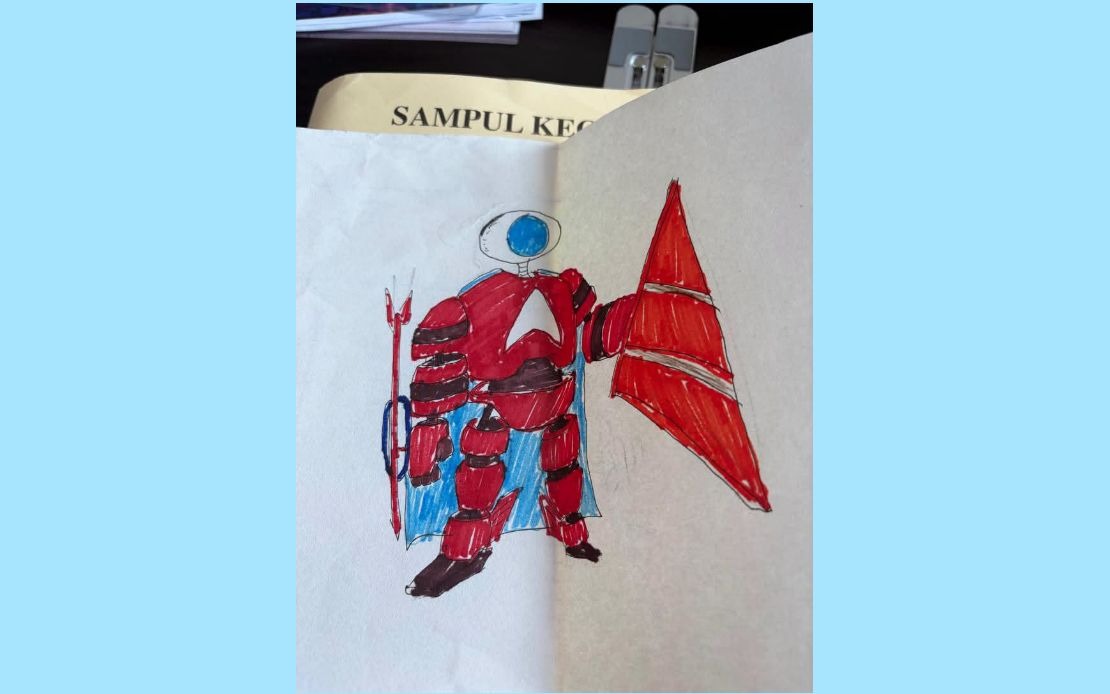
Prime Minister Datuk Seri Anwar Ibrahim has expressed his appreciation for a drawing presented to him by a child with special needs during a recent Temu Anwar dialogue session in Negeri Sembilan, describing the gift as profoundly meaningful. In a Facebook post, Anwar reflected on the moment the artwork was handed to him by the young artist, who was being held by his father at the event, emphasizing how the encounter remained vivid in his memory.
The drawing itself depicts a striking robot character garbed in red and blue armour, wielding a staff-like object in its left hand. While seemingly simple in its execution, the artwork carries particular significance given the circumstances of its creation and presentation. For Anwar, the gift transcends the physical artwork itself, representing instead a moment of human connection during his public engagement schedule.
Temu Anwar functions as a cornerstone of the Prime Minister's direct engagement strategy with Malaysian society. The platform creates structured opportunities for dialogue between the nation's highest executive authority and citizens spanning diverse demographic groups—youth, professionals, community leaders, and families from all socioeconomic backgrounds. These sessions embody a governance philosophy centred on accessibility and open communication, distinguishing them from more formal state occasions.
The programme's importance lies not merely in its logistical reach but in its symbolic messaging about inclusive governance. By actively soliciting input and engagement from citizens across various life circumstances, including families with children facing developmental challenges, Temu Anwar signals that all segments of Malaysian society merit direct access to policy-makers. This approach recognises that insights and perspectives from marginalised communities often remain unheard through conventional consultation channels.
For families navigating special needs care in Malaysia, such moments carry amplified significance. Access to leadership figures and formal government platforms can feel distant and intimidating. When a child with special needs gains the opportunity to present artwork to the Prime Minister—and when that presentation receives genuine acknowledgment and appreciation—it sends a broader message about social inclusion and the value placed on all citizens' contributions, regardless of ability status.
Anwar's decision to publicly commemorate this exchange through social media further amplifies its impact. By sharing the memory with his broader audience, he normalises and celebrates the participation of children with special needs in civic spaces. This visibility can shift perceptions and encourage other families to engage with government initiatives, knowing their participation will be met with respect and recognition.
The artwork itself, though described in relatively straightforward terms, likely holds personal meaning for its young creator. The robot imagery—with its combination of strength and stylised design—may represent aspirations, imagination, or interests meaningful to the child. The deliberate choice of colours and the inclusion of the staff suggest intentionality in its creation, not merely random marks on paper.
From a policy perspective, such encounters provide leadership with unmediated contact with citizens' experiences and priorities. While a single drawing cannot drive policy reform, the cumulative effect of thousands of such micro-interactions shapes a leader's understanding of public sentiment and lived realities. For Anwar's administration, maintaining these touchpoints serves both practical governance functions and legitimacy-building purposes.
The broader context of Malaysian society's approach to inclusion and special needs provision remains complex. While awareness of developmental conditions and neurodiversity has increased, systemic barriers in education, employment, and public infrastructure persist. Government engagement that visibly celebrates the participation and contributions of children with special needs can gradually shift cultural attitudes and create pressure for policy improvements in service provision and accessibility standards.
Moments like these also matter for the families involved. The father accompanying his child, the child's experience of being heard and appreciated at a national level, and the subsequent public recognition all constitute memories that shape how individuals relate to government institutions. Such experiences can foster civic engagement and trust in democratic processes among populations that historically feel marginalised by bureaucratic systems.
Moving forward, Anwar's public valorisation of this exchange may serve as an implicit call to other government agencies and officials to similarly prioritise inclusive engagement. When the Prime Minister visibly treasures a gift from a child with special needs, subordinate officials receive a signal about the administration's values regarding accessibility and representation in public affairs.
The simplicity of the gesture—a child's drawing, a heartfelt thank you, a shared social media moment—masks its broader significance within Malaysia's evolving approach to governance and inclusion. In an era marked by polarisation and competing demands on leadership attention, such moments of genuine human connection between elected officials and citizens remain surprisingly rare and consequently more meaningful when they occur.

