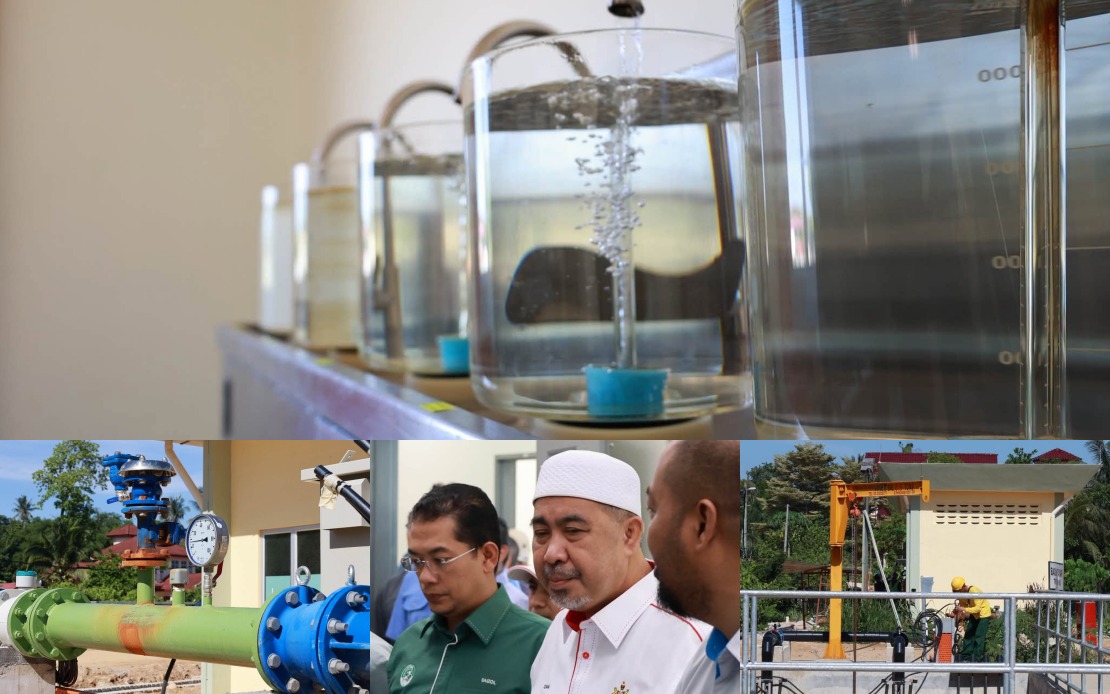
Kelantan is preparing to launch a significant water infrastructure upgrade that promises to transform service delivery across multiple districts. The Chicha 2 Water Treatment Plant, situated in Pasir Hor near Kota Bharu, is nearing completion after nearly two years of construction and stands ready to commence operations in September with the capacity to serve more than 13,000 residents across the surrounding region. According to Datuk Dr Izani Husin, chairman of the State Public Works, Infrastructure, Water and Rural Development Committee, the RM54.98 million project has achieved 97 per cent physical progress, putting it on track to meet its launch timeline and deliver measurable improvements to water supply reliability in the state.
The treatment facility represents a substantial investment in the state's water security infrastructure, designed to serve consumers across five administrative divisions. Water from the Chicha 2 WTP will flow to residential and commercial users in Pasir Hor, Telipot, Kota Seribong, Mulong and Tunjong, addressing persistent supply gaps that have affected these communities for years. The plant's daily production capacity of 20 million litres positions it as a meaningful contributor to Kelantan's overall water supply architecture, though state officials acknowledge that this single facility forms part of a larger strategy to resolve the state's chronic water challenges that remain among Southeast Asia's most intractable.
What distinguishes the Chicha 2 WTP is its use of innovative treatment methodology seldom deployed in Malaysia's water sector. The facility taps groundwater reserves accessed through excavation reaching depths of 100 metres, then employs an aeration system to purify and condition the water before distribution. This aeration-based treatment approach marks the first application of its kind within Kelantan and demonstrates the state's willingness to experiment with alternative technologies to supplement traditional surface water sourcing. The 1.84-hectare site incorporates this methodology as a potential model for future water treatment plants across the state, suggesting that Kelantan officials view the project's success as a template for scaling water production capacity through diverse technical means.
One particularly significant dimension of the project involves reactivating dormant consumer connections that have accumulated across the service area. Officials estimate that approximately 10,000 inactive accounts exist within the Chicha 2 WTP's coverage zone, representing households and businesses that previously disconnected from the water network due to service unreliability or supply failures. Reconnecting these dormant consumers would represent a substantial boost to service coverage, though it also suggests the scale of frustration that has accumulated among Kelantan residents over years of inadequate water supply. The ability to reactivate these accounts depends not only on the new plant's completion but also on the state's parallel efforts to reduce system losses and improve network reliability throughout the distribution system.
The broader context for this project extends far beyond Pasir Hor, reflecting Kelantan's ambitious plan to resolve its water crisis through a phased infrastructure overhaul spanning the remainder of this decade. State authorities have committed to achieving comprehensive water supply security across the state by 2030 through the systematic implementation of multiple major projects and the construction of additional treatment facilities beyond Chicha 2. This multi-year roadmap acknowledges that no single infrastructure investment can address Kelantan's water deficiency, requiring instead coordinated development of multiple sources, treatment capacity, and distribution networks simultaneously. The timeline suggests that officials expect persistent challenges throughout the current decade even as new capacity comes online.
A critical challenge underlying Kelantan's water strategy involves the state's alarming non-revenue water rate, which currently exceeds 50 per cent according to official disclosures. This figure—meaning that more than half of treated water is lost before reaching consumers—points to systemic inefficiencies within the distribution network that new treatment capacity alone cannot remedy. The losses stem from multiple sources including ageing pipe infrastructure corroded by decades of service, underground pipeline ruptures that go undetected for extended periods, and malfunctioning water meters that fail to record consumption accurately. Addressing these problems requires substantial investment in network rehabilitation and replacement, not merely increases in treatment plant capacity, representing a parallel burden on state finances and infrastructure management resources.
For Malaysian readers accustomed to relatively reliable urban water supply, Kelantan's situation illustrates the complex technical and financial challenges facing water utilities across developing regions of Southeast Asia. The state's persistent supply deficits have prompted repeated appeals for federal support and technical expertise, yet responsibility for resolution ultimately rests with state-level authorities operating under budgetary constraints. The Chicha 2 WTP represents the state government's commitment to progressively addressing these constraints through capital investment, even as the underlying infrastructure challenges demand ongoing attention and expenditure across multiple fronts. The project demonstrates how water security requires simultaneous advances across production, distribution, and loss management rather than investments in any single component.
The September operational timeline for Chicha 2 also reflects confidence that final testing, commissioning, and connection procedures can be completed within the next two months despite the complex nature of water treatment infrastructure. Any delays in reaching this target would extend the already lengthy period that affected residents have endured inadequate supply, underscoring the political sensitivity surrounding water projects in states facing chronic shortages. Officials' public commitment to the September date suggests that construction teams have maintained momentum on the project and that no major technical obstacles have emerged that would prevent timely completion. However, the distance between project completion and meaningful impact on consumer experience depends partly on how quickly the state can simultaneously execute network improvements to reduce system losses.
Looking forward, the successful commissioning and operation of Chicha 2 WTP will provide both practical water supply benefits and valuable operational data regarding the viability of deep-groundwater aeration systems in Kelantan's hydrogeological context. If the facility performs as designed and achieves reliable long-term operation, it could inform decisions regarding similar infrastructure investments elsewhere in the state. The project's success would also validate the state government's broader 2030 water security strategy, demonstrating that coordinated infrastructure development across multiple sites can progressively improve supply reliability even in regions with historically challenging water conditions. Conversely, any operational difficulties would force reconsideration of the technical and financial assumptions underlying the state's longer-term water plans.

