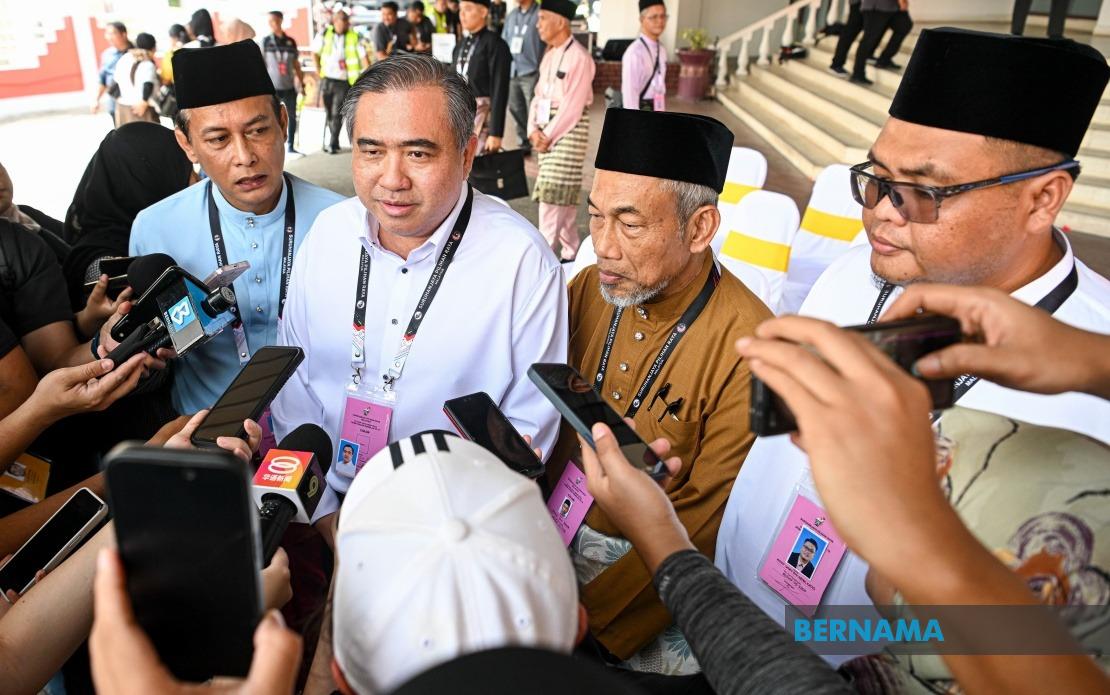
The Chennah state seat has emerged as a strategic battleground in Negeri Sembilan's upcoming election, with Transport Minister and incumbent Anthony Loke designating it among the four most critical constituencies within the Jelebu parliamentary division for Pakatan Harapan's bid to maintain governmental control. Speaking during nomination proceedings at Dewan Besar Kuala Klawang, Loke emphasised the seat's outsized importance to the coalition's electoral calculus, underscoring why PH strategists view this particular contest as a significant indicator of their broader performance across the state.
The political significance of Chennah cannot be divorced from Negeri Sembilan's broader political trajectory since 2018. The state has served as a critical testing ground for Pakatan Harapan's ability to translate initial electoral momentum into sustained governance, making each constituent seat a micro-level referendum on PH's administrative competence and developmental programmes. Loke's acknowledgment that both Chennah and Kelawang were instrumental in establishing PH's initial state government in 2018 reveals how tightly the coalition's Negeri Sembilan fortunes remain tied to performance in specific constituencies within the Jelebu parliamentary division.
The contest itself carries additional weight given Loke's stature within the national political landscape. As Transport Minister and a prominent PH figure, his personal involvement in defending the Chennah seat signals the coalition's determination to retain momentum in Negeri Sembilan rather than cede ground to Barisan Nasional. His direct participation, rather than delegation to a lesser-known party figure, communicates to voters the importance PH attaches to this particular contest and the coalition's broader state-level ambitions.
PH's strategy in Negeri Sembilan rests fundamentally on its track record across the 2018 and 2022 state elections. The party leadership has consistently pointed to developmental achievements and administrative stability as the foundation for voter support, arguing that two consecutive terms demonstrate both capability and commitment. Loke's insistence that PH has "proven" its capacity to deliver progress and stability appeals to a particular voter demographic that prioritises tangible outcomes over political rhetoric or personality-driven campaigns.
The straight fight dynamic between Loke and Barisan Nasional's Siow Kong Choon eliminates the complexity that three-cornered contests introduce into electoral mathematics. For PH, this binary choice offers strategic clarity: voters must choose between continuity under the incumbent coalition or a return to BN governance. This simplification potentially favours the ruling coalition, as swing voters often default to incumbents when presented with binary choices, particularly in states where the current government has established administrative credentials.
However, BN's presence in Negeri Sembilan cannot be dismissed as residual or marginal. The opposition coalition has maintained organisational structures and grassroots networks across the state, and the selection of Siow Kong Choon as BN's candidate suggests the coalition views this seat as genuinely contestable territory. The fact that BN mounted a challenge through a direct contest indicates confidence in their electoral position, rather than conceding the seat by default to the PH incumbent.
The broader Jelebu parliamentary constituency context matters significantly for understanding Chennah's strategic importance. Loke's reference to four critical state seats within his parliamentary division suggests a tiered electoral strategy, with Chennah occupying a tier-one position. This categorisation implies that PH's internal polling and analysis have identified these constituencies as swing seats where the outcome remains genuinely uncertain, distinguishing them from seats the coalition considers safely retained or definitively lost.
For Malaysian political observers, the Negeri Sembilan election functions as a barometer of PH's capacity to consolidate power in a state it captured relatively recently. Unlike Selangor or Penang, where PH has governed for extended periods, Negeri Sembilan remains fresh territory for the coalition, with voters still assessing whether the change from 2018 has delivered promised benefits. Individual contests like Chennah provide windows into whether PH has successfully translated its national victory into state-level acceptance and whether voters perceive meaningful improvements in their daily lives.
The developmental narrative that Loke emphasised reflects PH's broader electoral strategy across Malaysia. Rather than engaging in personality-driven attacks or ideological contests, the coalition has positioned itself as the party of competent administration and tangible development. In Negeri Sembilan specifically, this approach attempts to consolidate voters who prioritise infrastructure improvements, economic opportunity, and administrative efficiency over factional politics or sectarian considerations.
Regional implications extend beyond Negeri Sembilan's borders. State elections in Malaysia frequently signal shifting political dynamics that influence broader national calculations. A strong PH performance in Negeri Sembilan would reinforce the coalition's national credibility, while setbacks would provide ammunition to opposition figures arguing for PH's declining electoral fortunes. Southeast Asian political analysts monitoring Malaysian democratic developments will view state-level contests like Negeri Sembilan's through the lens of whether electoral competition remains genuinely competitive and whether ruling coalitions can sustain voter support across multiple electoral cycles.
Loke's explicit confidence in retaining the seat should be read within the context of PH's electoral positioning. Incumbent politicians typically project confidence in public statements, regardless of private polling assessments. However, his strategic emphasis on Chennah's importance and his detailed acknowledgment of the seat's 2018 contribution to state formation suggest genuine focus on this particular contest, rather than formulaic campaign rhetoric. The coalition's leadership appears convinced that Chenah, while potentially competitive, remains winnable through mobilisation of the existing voter base and demonstration of developmental achievements.

