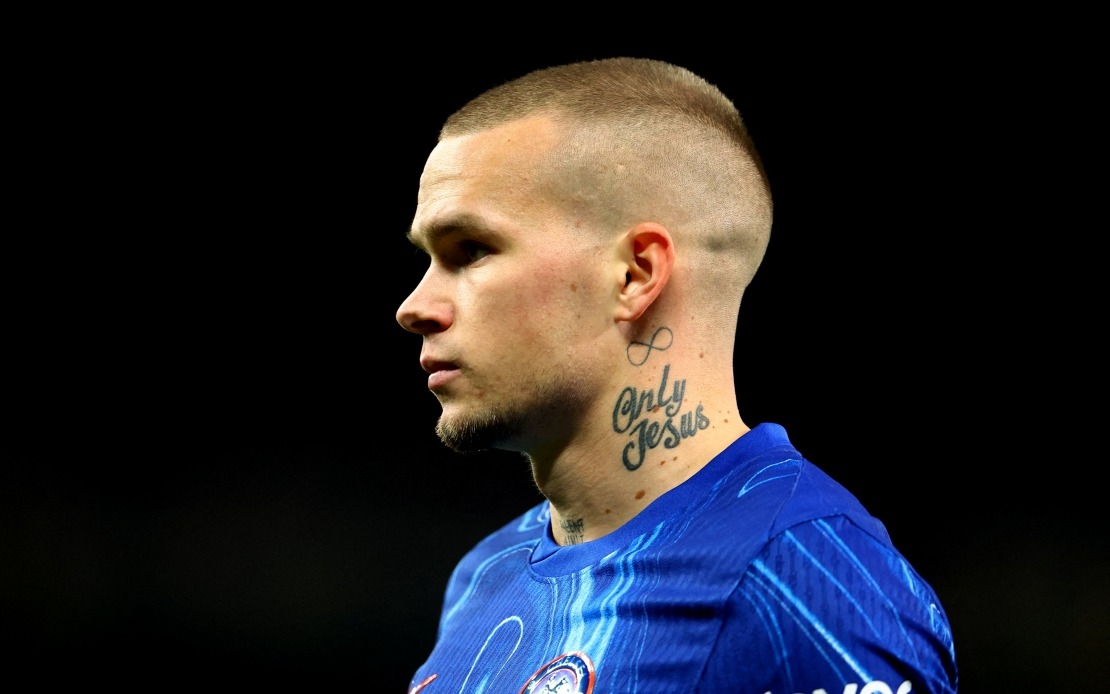
Mykhailo Mudryk's four-year suspension from professional football has ended following a breakthrough agreement between the Football Association, the World Anti-Doping Agency, and the Ukrainian winger's legal team. The 25-year-old Chelsea player can now return to competitive action with immediate effect, concluding a protracted legal battle that began after he tested positive for meldonium, a prohibited substance, in 2024.
The resolution hinges partly on significant advances in anti-doping testing procedures that have taken place since Mudryk's original failed test. According to the FA, evolving scientific standards for detecting banned substances mean that if Mudryk's sample were to be analysed under current technical requirements, it would not have registered as a positive test at all. While these procedural changes are not retroactive and therefore did not automatically overturn his original ban, they formed a critical part of the foundation for negotiating the settlement.
Mudryk had consistently maintained his innocence throughout the disciplinary process, asserting that he never knowingly or intentionally consumed any prohibited substance. He stated that he remained puzzled about how traces of meldonium had entered his system. This position, combined with the acknowledgement that modern testing protocols would have produced a different outcome, created space for dialogue between all parties involved in the dispute.
As part of the agreed settlement, Mudryk formally accepted responsibility for the anti-doping rule violations that had been charged against him. However, the governing bodies credited the time he had already served under suspension towards his ineligibility period, which effectively brought his ban to an end. This approach represents a pragmatic resolution that allows both the integrity of anti-doping enforcement and the player's rehabilitation to move forward simultaneously.
The 2023 transfer to Stamford Bridge from Shakhtar Donetsk for £62 million had appeared to mark the beginning of an exciting chapter in Mudryk's career. Before his suspension, he had made 73 appearances for the London club and scored nine goals, demonstrating that his considerable investment in his development was yielding results on the pitch. His sudden removal from competition created a significant gap in Chelsea's squad planning and left questions about how quickly he might reintegrate into the team's playing structure.
Chelsea issued a statement expressing relief that the matter had reached a conclusion, emphasizing the club's unwavering support for the player throughout the ordeal. The statement acknowledged both the exceptional difficulty of the period for Mudryk and the importance of respecting the integrity of the anti-doping system that protects the sport. The club indicated that its focus now centres on facilitating Mudryk's smooth return to the squad and providing the necessary support to help him rebuild his career momentum.
For Malaysian and Southeast Asian football enthusiasts, Mudryk's case provides important perspective on how modern sport handles the complex intersection of scientific advancement and disciplinary processes. The resolution demonstrates that anti-doping frameworks can evolve and adapt when new evidence emerges, though the precedent remains limited. The footballer's experience underscores the significant personal and professional cost of prolonged uncertainty in professional sport, regardless of eventual outcomes.
Mudryk's agent, Vadim Shablii, praised the player's conduct during the suspension, describing his handling of the situation as a demonstration of resilience, professionalism, and strong character. The support network around the player evidently played a role in maintaining his mental and professional preparedness for eventual return to competition. This human dimension of sports administration often receives less attention than the technical and legal aspects but remains crucial for player welfare.
The implications for Chelsea's squad planning are significant. The club has invested substantially in Mudryk and now faces the practical question of how to reintegrate a player who has been absent from competitive football for an extended period. His return adds depth to Chelsea's attacking options and provides manager Enzo Maresca with additional tactical flexibility as the squad prepares for the coming season.
From a broader perspective, Mudryk's case highlights how scientific progress can intersect with sporting governance in unexpected ways. The evolution of meldonium detection thresholds and reporting standards reflects improvements in anti-doping science that benefit the sport's credibility. However, it also raises questions about fairness for athletes whose cases predate these improvements, a tension that governing bodies must navigate carefully as testing technology continues to advance.
The resolution brings closure to what Mudryk himself described as the most difficult period of his career, a statement that carries weight given the professional pressures young elite athletes already face. His ability to move forward represents not just a personal victory but also a validation of the principle that anti-doping systems should evolve in line with scientific understanding while maintaining their protective function.
Looking ahead, Mudryk's return to competitive football presents an opportunity for the player to demonstrate the potential that originally attracted Chelsea's significant investment. His experience also serves as a reminder to athletes across Southeast Asia and beyond about the importance of rigorous compliance with anti-doping protocols and the value of maintaining thorough records regarding any substances consumed, even those obtained legitimately through medical channels.

