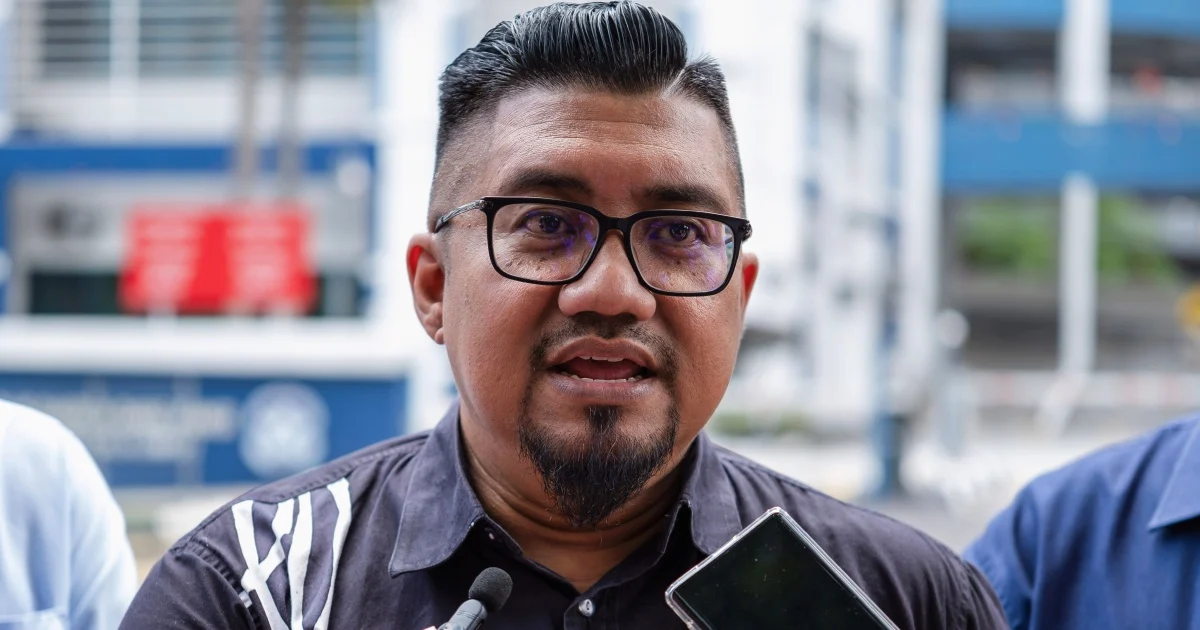
Political activist Badrul Hisham Shaharin, widely recognised by his online moniker Chegubard, entered a not guilty plea at Seremban Sessions Court today in response to sedition charges centring on Facebook posts allegedly criticising the Negri Sembilan Royal Institution. The case marks another flashpoint in Malaysia's ongoing discourse surrounding the boundaries between free expression and content deemed prejudicial to the monarchy—an exceptionally sensitive constitutional matter in the country's governance framework.
The sedition charge represents a significant legal challenge for Chegubard, whose activist presence on social media has frequently attracted official scrutiny. His continued reliance on digital platforms to express political commentary reflects broader patterns among Malaysian civic activists who leverage Facebook and other networks to reach constituencies and articulate grievances outside traditional media channels. The contrast between his online reach and the formal courtroom setting underscores the widening gap between digital activism and legal accountability mechanisms designed in an earlier era.
Chegubard's decision to contest the allegations rather than accept a plea agreement suggests his defence team believes substantive grounds exist to challenge the prosecution's characterisation of the posts as seditious. This approach introduces complications for authorities intent on establishing that the Facebook content crossed legal thresholds protecting royal institutions. Courts examining sedition cases involving monarchical references must determine where legitimate political commentary concludes and unlawful incitement commences—a distinction that has proven notoriously difficult to adjudicate consistently across Malaysian jurisprudence.
The Negri Sembilan Royal Institution occupies particular significance within Malaysia's constitutional architecture. As one of nine hereditary sultanates comprising the Federation, Negri Sembilan maintains specific prerogatives and public standing that statutory provisions explicitly protect. Charges framed around alleged attacks on royal institutions consequently carry substantial consequences beyond individual cases, implying broader ramifications for how political figures and activists navigate discussion of monarchy-related matters statewide.
Sedition prosecutions in Malaysia have intensified over recent years, with authorities invoking Section 4 of the Sedition Act 1948 against individuals whose speech encompasses criticism of government policies, constitutional arrangements, or royal institutions. These prosecutions have generated considerable debate among civil society organisations, which argue that the Act's broad formulation inhibits legitimate discourse essential to democratic functioning. The tension between protecting constitutionally-enshrined institutions and preserving space for political expression remains unresolved within Malaysian legal culture.
Chegubard's case arrives amid heightened attention to how digital platforms and social media challenge established regulatory frameworks. Facebook posts generate instant distribution across networks encompassing thousands of viewers, enabling rapid amplification of messages in ways traditional media cannot replicate. Prosecutors must therefore establish not merely that problematic content existed, but that its online dissemination created genuine risks of sedition—a more complex burden than historical cases involving pamphlets or speeches.
The Sessions Court proceedings will require examination of the specific Facebook posts alleged to constitute sedition. Defence arguments will likely focus on interpreting particular language, contextualising statements within broader political discussions, or arguing that criticism, however pointed, does not satisfy legal criteria for seditious intent. Such textual analysis has proven determinative in previous cases, where courts distinguished between permissible political commentary and content genuinely threatening public order or institutional stability.
Chegubard's activism credentials inform how observers interpret these proceedings. His established history of political engagement suggests his defence will emphasise consistency with prior public statements and the genuine political motivations underlying his commentary. This contextual framing attempts to rebut characterisations of malicious or destabilising intent, positioning his Facebook activity as continuation of ongoing advocacy rather than aberrant expression warranting criminal sanction.
The broader Malaysian context surrounding royal institution protections has shifted somewhat in recent years. Younger demographics, particularly those engaged digitally, increasingly question whether constitutional safeguards for monarchy should remain as comprehensive as historically framed. Chegubard's case therefore resonates beyond individual legal liability, touching generational questions about how Malaysia negotiates reverence for hereditary institutions alongside contemporary expectations for open political debate.
Several comparable cases currently navigating Malaysian courts involve similar allegations regarding social media commentary about royal or governmental matters. The accumulation of such proceedings suggests a systematic approach to constraining digital political speech, particularly when directed toward constitutionally protected subjects. The outcomes of cases like Chegubard's therefore establish precedents influencing how activists, journalists, and ordinary citizens calibrate future online expression.
Chegubard's not guilty plea initiates a trial process that may extend considerably given the legal complexities surrounding sedition determinations. The Sessions Court must balance competing interests: protecting institutional authority that the Constitution establishes as fundamental to Malaysia's political system, while simultaneously recognising that excessive constraint on speech undermines democratic participation and public accountability. This balancing act, though judicially managed, ultimately reflects deeper questions about what forms of political expression Malaysian society wishes to accommodate.

