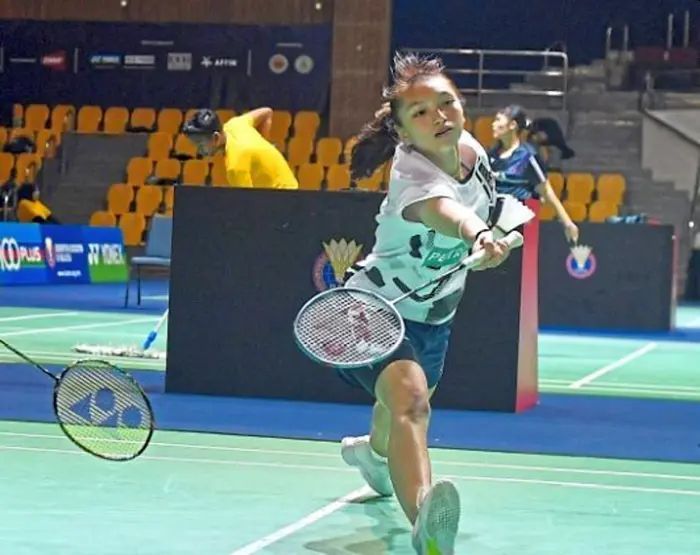
Rising Malaysian shuttler Noraqilah Maisarah Ramdan possesses the technical arsenal and competitive instincts to become a formidable force in international badminton, but her mixed doubles coach Nova Widianto cautions that raw talent alone will not guarantee a flourishing career. The 19-year-old's impressive displays across women's and mixed doubles have caught attention, yet Nova emphasises that psychological resilience and personal maturity must develop hand-in-hand with her evolving game if Noraqilah is to sustain the trajectory many expect of her.
Nova has observed Noraqilah's evolution since her junior years, and his assessment reflects a nuanced understanding of what separates accomplished players from true champions. While he acknowledges without reservation that her technical proficiency is exceptional, he recognises a deeper challenge lurking beneath surface-level success. The coaching staff remain conscious of the pitfalls that accompany early recognition, understanding that premature praise and mounting expectations can destabilise younger athletes whose mental frameworks have not yet fully crystallised.
The coach articulates a concern that resonates throughout Malaysian badminton circles. When emerging talent attracts plaudits and support swells around a player, the psychological burden intensifies. Nova frames the coaching team's broader mandate as custodians of holistic development rather than merely tactical instructors. His philosophy extends beyond court positioning and stroke refinement to encompass the mental scaffolding necessary for players to navigate the pressures inherent in elite sport.
Malaysia's historical strength in badminton has always rested on discovering exceptional technical talent, yet sustained success at Olympic and world championship levels requires more than gifted individuals. The nation's coaching fraternity increasingly recognises that character building—encompassing discipline, resilience, humility, and mental fortitude—determines whether promising juniors translate potential into tangible achievements. Nova's comments reflect this maturing perspective within Malaysian badminton development.
Noraqilah's recent performances have demonstrated her adaptive capacity across different competitive formats. Her partnership with scratch partner Ong Xin Yee yielded the women's doubles title at the second leg of the Under-21 National Championship held in Kuantan, showcasing her ability to function effectively with different partners. Simultaneously, her established women's doubles combination with Low Zi Yu achieved a quarter-final berth at the Australian Open, elevating their world ranking to a career-high position of No. 70. These accomplishments underscore her technical versatility and competitive readiness.
In the mixed doubles sphere, where Nova guides her development, Noraqilah and partner Loo Bing Kun progressed to the second round during the Sydney leg of the international circuit. Their current world ranking of No. 115 indicates steady momentum, though Nova's measured perspective suggests patience and strategic planning must temper the enthusiasm surrounding rapid ascent.
Yet Nova voices a pragmatic assessment about the limitations of competing simultaneously across multiple disciplines at the highest level. While he supports Noraqilah's current approach of testing herself in both women's and mixed doubles during her formative years, he believes strategic focus becomes inevitable if Olympic ambitions drive her career trajectory. The coach's position reflects established wisdom within badminton circles: players competing for podium finishes at the Summer Games typically concentrate their energy on a single event, maximising training efficiency and mental preparation.
The distinction Nova draws between developmental phases and elite competition underscores thoughtful coaching strategy. For a teenager still refining her game and exploring her capabilities, exposure to multiple formats provides valuable learning opportunities and prevents premature specialisation that might restrict her understanding of her own potential. However, as players transition toward their mid-twenties, when competitive windows for Olympic qualification narrow considerably, strategic narrowing becomes essential.
Noraqilah's situation exemplifies a broader challenge facing Malaysian badminton development structures. The nation possesses considerable talent across age groups, yet realising that potential demands more than technical coaching excellence. Nova's insistence on character development alongside skill refinement speaks to a holistic vision increasingly prevalent among leading badminton nations. Players who combine technical mastery with mental resilience, emotional intelligence, and intrinsic motivation tend to sustain their performance under pressure and adapt successfully to evolving competitive landscapes.
The coach's perspective also acknowledges the specific vulnerabilities young athletes face when early success generates external validation. Maintaining equilibrium between confidence and humility, between ambition and contentment, requires psychological maturity that often takes years to develop. Nova's emphasis on keeping Noraqilah grounded reflects his understanding that this internal balance frequently proves more consequential than ranking points or tournament victories.
Looking forward, Noraqilah's trajectory will merit close observation. Should she maintain her current trajectory while developing the character attributes Nova emphasises, she could emerge as a significant contributor to Malaysian badminton's competitiveness over the next Olympic cycle. Conversely, if early success proves psychologically destabilising or if focus becomes scattered across too many competitive avenues, her considerable potential may remain unrealised. The coming years will test whether Nova's coaching wisdom successfully instils the mental foundations necessary for sustained excellence.

